
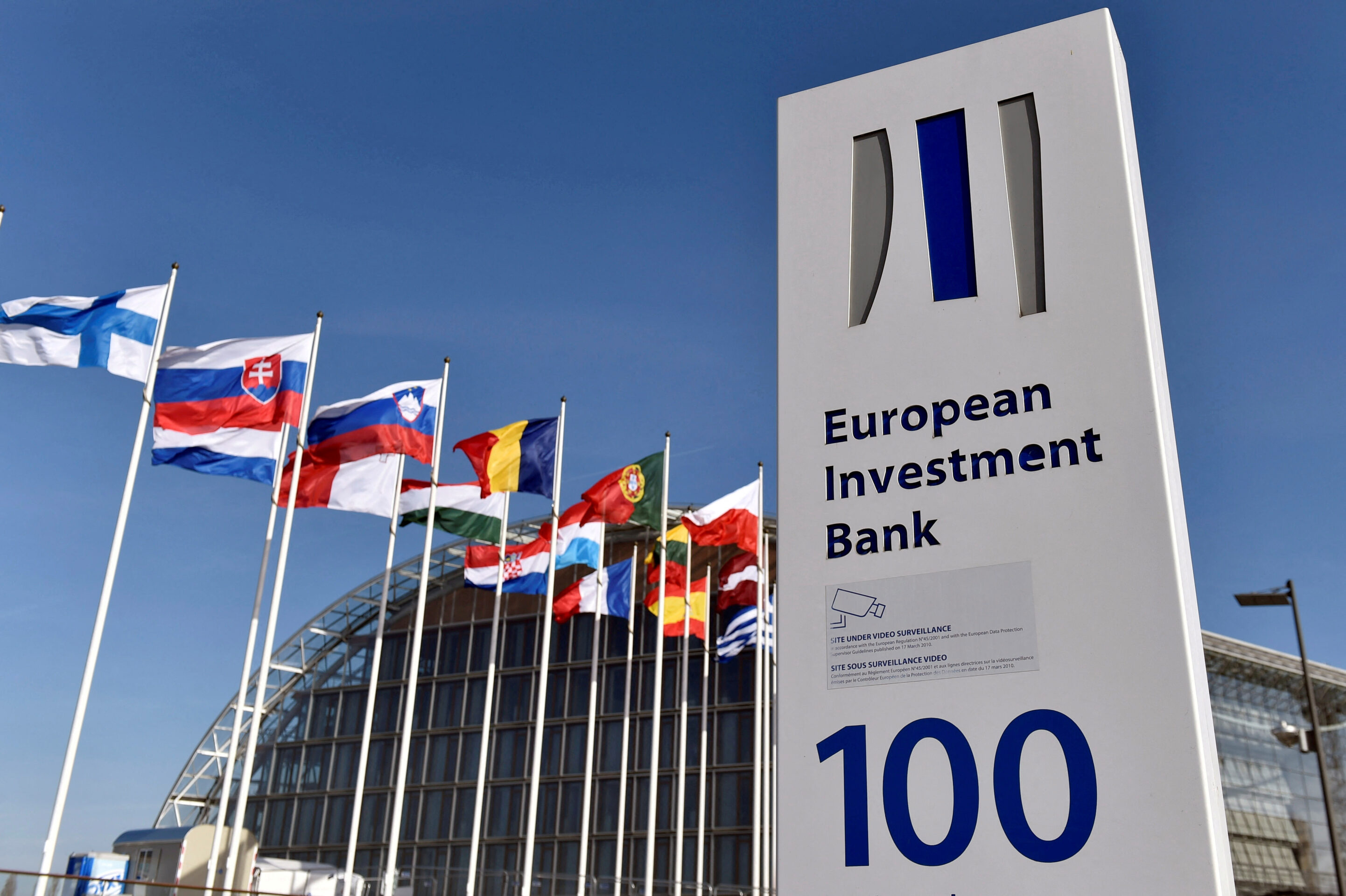
The European Investment Bank has made its first ever investment in a mini nuclear reactor project. This change of policy could be significant for Europe’s energy transition, in particular a sector that is proving difficult to decarbonise.
The EIB is owned by the 27 EU member states and its main objective is to fund projects that support the union’s main policy priorities. It also has to fulfil the mantra of every other bank in the world and not lose money.
That is primarily the reason why the EU’s triple-A rated lender has shied away from putting money up for nuclear projects. Wind power, hydro, storage, even some gas projects have all enjoyed millions in funding, but no atom-smashing.
Nuclear is extremely expensive and there was not really any role for a lender like the EIB to play in any new reactor projects. Some funding has been allocated for reactor extensions, maintenance, safety training and waste management.
But the EIB has somewhat broken with precedent this week by announcing a €40 million injection into a Finnish startup and its plans to build a small modular nuclear reactor.
SMRs are much smaller than conventional nuclear reactors and should theoretically avoid many of the huge costs and permitting headaches associated with their larger cousins.
In the future, mass production of SMRs also promise even greater cost reductions but so far, the nuclear industry has not managed to standardise a design or set up the kind of supply chains that would unlock significant savings.
SMR advocates say that if the manufacturing and economics of the technology can be solved, mini-nukes could offer 24/7 baseload power for heavy industry, energy-thirsty data centres and infrastructure like harbours and airports.
Critics of SMRs though have also pointed out that the power output offered by these power generators can in many cases be matched by wind, solar and batteries for a lower cost, casting doubt on what kind of role SMRs can actually play in the energy system.
That is where the Finnish project gets really interesting, because their SMR plan does not involve generating power but heat, which would be fed into a district heating network of underground pipes and connected to homes and businesses.
It is a promising application for the technology because heating and the decarbonisation of heating is still a stubborn obstacle for the energy transition to overcome.
Solutions like heat pumps and reusing waste heat from heavy industry and data centres exist, but the scale of the heating challenge is massive and it is where fossil fuels are still very much hanging in there.
Considering that the Finnish SMR plan would rely heavily on existing reactor designs, so it will theoretically be easier to build, and it will be buried underground, so the safety concerns could well be mitigated, it is possible that nuclear-for-heating might take off.
It will all depend on whether the necessary R&D, testing and licensing can be completed and meet expectations and whether a business case can truly be made for it when compared to the other solutions that can be deployed.
The fact that the EIB has given the project a big nod of approval carries a lot of weight though, so the long-awaited moment of truth for SMRs might finally be upon us.
The clock is ticking though. Technologies like heat pumps are set to take off the more Europe electrifies and as more data centres come online, there will be plenty of waste heat that can be utilised. By the time SMRs get their act together, the market for heat may well already be saturated.
Want more updates and analysis of what is happening in the world of energy and climate? Interested in finding out more information about public tenders and consultations? Sign up to our Energy Rundown newsletter here!
