
From Passa Porta’s multilingual literary hub to the dazzling Tropismes, the reborn Filigranes, Standaard Boekhandel and a century-old English bookselling tradition at Waterstones, Brussels has a remarkably varied bookstore scene. Jon Eldridge explores how the capital’s bookshops are adapting to changing habits, championing writers and finding new ways to bring readers together.
On the roof terrace above the Passa Porta bookstore on Rue Dansaert, a quiet buzz is stirring. A cameraman and reporter from Flemish television have arrived to capture the reaction of Lieselot Mariën, a co-worker at the organisation, to the breaking news that her debut novel has made the shortlist for the prestigious Libris Dutch-language fiction prize.
Meanwhile, in a meeting room at the back of the terrace, a dozen or so podcasters and creatives chat around a large oval table. Next door is a wooden sound booth for recording, while nearby are writing spaces and a studio with a bed and shared kitchen and bathroom facilities that can be rented for a small fee by translators, academics, literary professionals and authors.
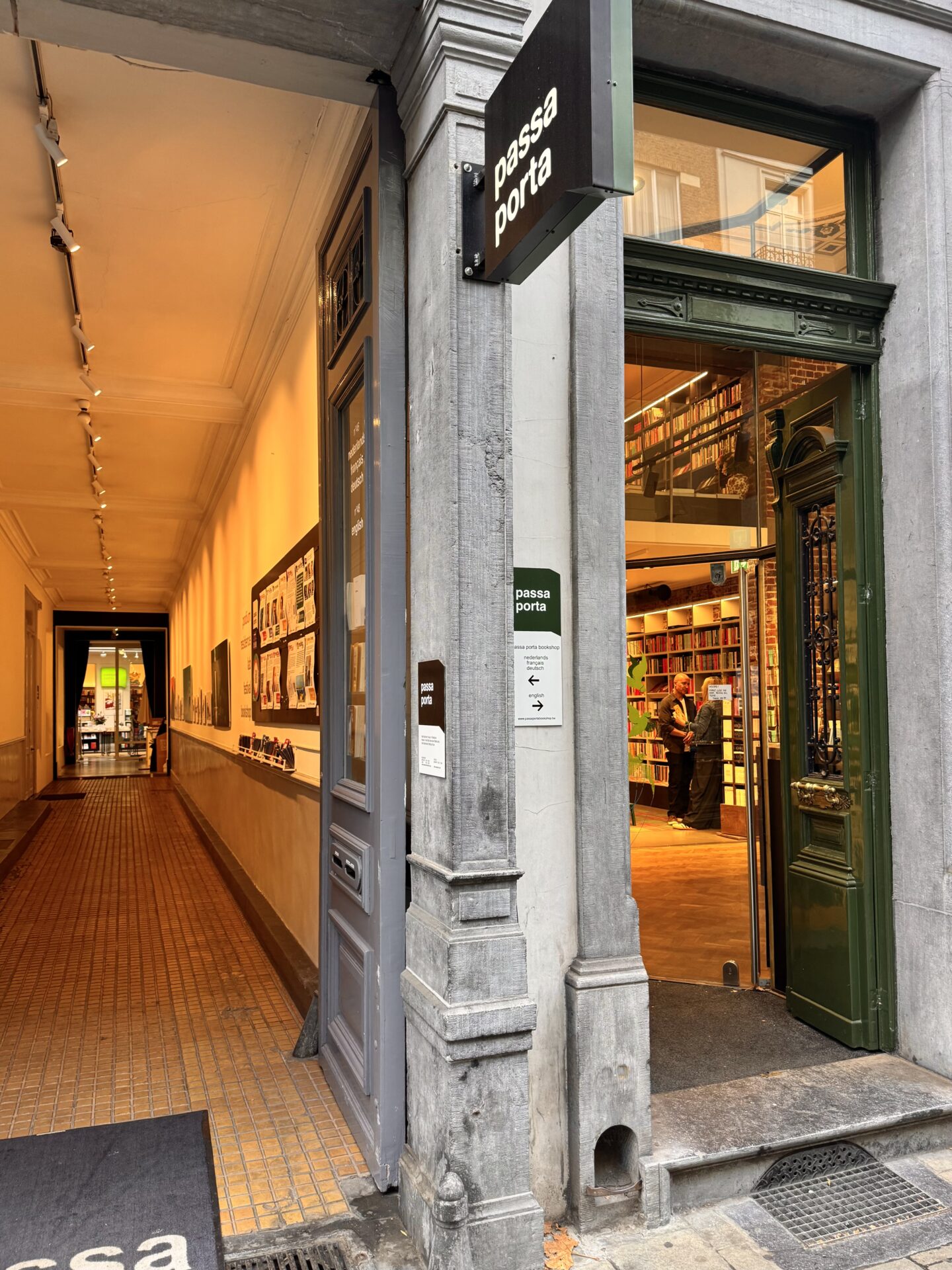
Many visitors browsing the bookstore below are scarcely aware of what is going on above their heads.On a sunny morning, it is warm enough to meet Passa Porta director Hendrik Tratsaert in a newly erected glass pod on the roof terrace. He explains that the non-profit International House of Literature, founded in 2004, preceded the commercially run bookshop.
Credit: Passa Porta
Its founder and first director, Paul Buekenhout, soon realised that a literary organisation without books lacked something fundamental. A shop would also make the centre more visible.“There was something missing: the presence of books,” Tratsaert says. “A lot of writers want to come by, have a talk and sign their book.”
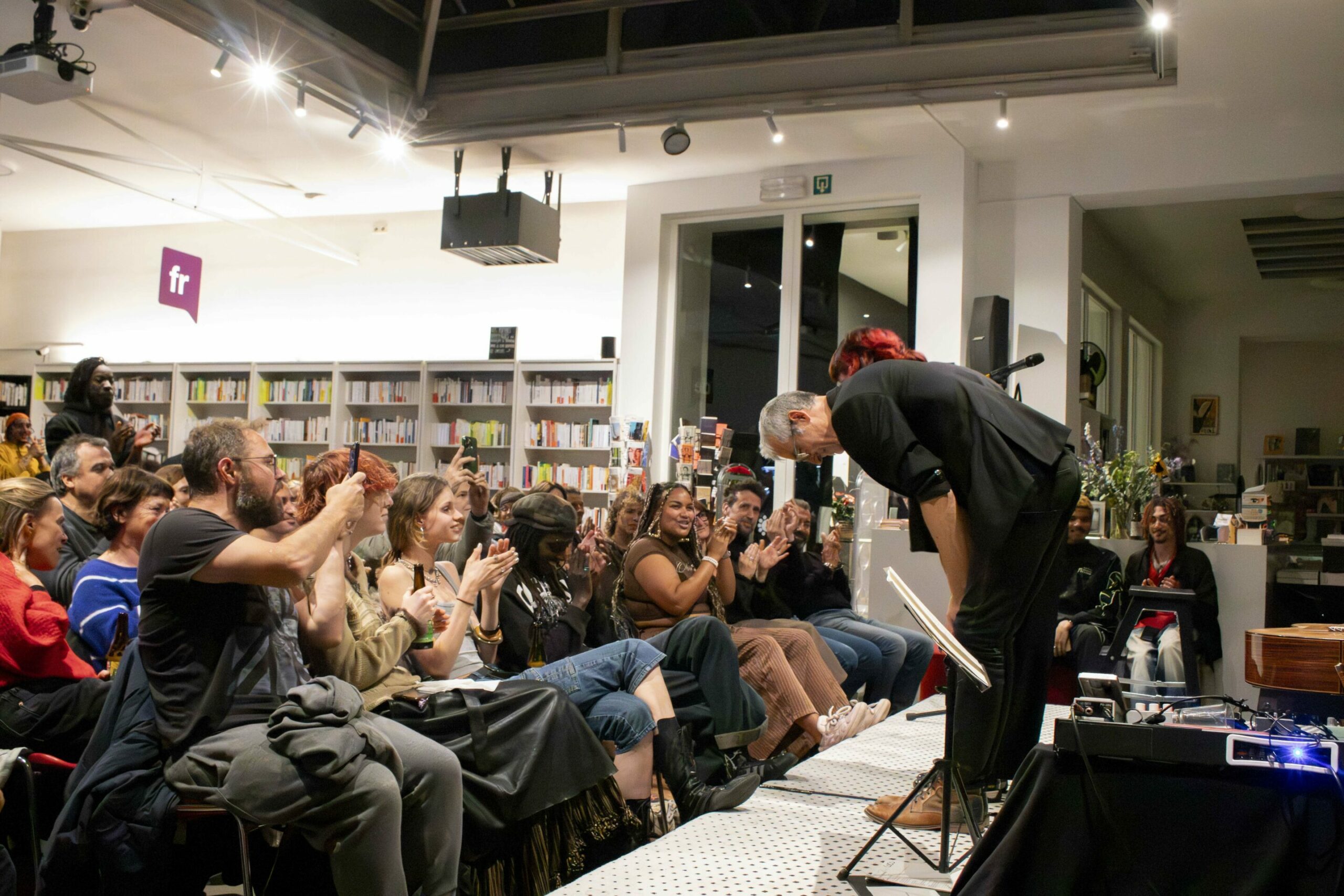
Such talks, typically involving readings followed by questions and answers, are regularly held in the shop after its 7pm closing time. For bigger names, including John Irving and Jeanette Winterson, Passa Porta partners with larger venues such as Bozar and Flagey, which will host British historian Timothy Garton Ash in September.
Then there is the biennial Passa Porta Festival, spread across venues aroundBrussels, which has attracted authors ranging from Norwegian novelist Karl Ove Knausgaard to Turkish Nobel laureate Orhan Pamuk.
Writer in the house
Passa Porta also supports authors more practically. Writers can apply for a residency in its large apartment above the bookstore, with cleaning, accommodation and a modest per diem provided as part of what Tratsaert calls a “full service”, typically for a month.
I would have liked to look around, but the apartment is occupied by Sudanese writer Abdelaziz Baraka Sakin, who has come to work on his new novel, The Other Lives of Zakaria, about the strange existence of a black Iraqi refugee unsure to which country, language or people he belongs.
Applicants must explain why being in Brussels or Belgium matters to their project. “Mostly, their latest work has a direct connection with Belgium,” Tratsaert says. Previous writers in residence include Booker Prize winner Alan Hollinghurst and US novelist Richard Powers. The programme has also been expanded, including sending Belgian writers abroad to Berlin, Amsterdam and Rome.
This literary side of Passa Porta is funded mainly through five-year public grants. The Flanders Department of Culture, Youth and Media provides the largest share, with additional subsidies from the Wallonia-Brussels Federation and Brussels Region, as well as some private donations.
Passa Porta Credit: Caitlin Rega
Tratsaert does not appear overly concerned for now about potential cuts as government budgets are squeezed, although he acknowledges that private donors could play a greater role in future.
The centre organises around 50 events a year and employs about 12 people,with a mixture of native French and Dutch speakers.“We started as a Dutch-speaking initiative, but we expanded it to a plurilingual activity programme and organisation,” Tratsaert says. “But it’s a fact that as soon as we present a foreign author, the common language is English.”
Passa Porta also remains involved in Brussels City of Stories, launched in 2021 to give a voice to the roughly 180 nationalities living in the capital.
Story collectors were dispatched to Brussels terraces to gather “the best, the craziest, the strangest stories,” which actors later performed around the city.
A Brussels institution reborn
Across town, another familiar name in Brussels bookselling has undergone a much more dramatic transformation.
Filigranes is now thriving in a new home on Boulevard de Waterloo, surrounded by high-end fashion boutiques. Its move followed the bankruptcy of the former business at the end of 2024 and its subsequent purchase by department store Mayfair.
The new owners negotiated a lease for the empty building next to Mayfair, and Filigranes was reborn there, retaining most of its 30 employees, according to general manager Gregory Hankar.
Hankar insists that its mission has not changed under the new ownership. “Mayfair and Filigranes, our goal is exactly the same. What we try to provide first is a service – advice – and then we try to offer the best of the best thing that we sell,” he says.
Central to that service is employing people who know and care about books. While many bookstores highlight staff recommendations on small display cards, Filigranes goes further, devoting entire sections of shelving to suggestions from individual “trusted” employees.
In the French-language fiction area, I count half a dozen names. “We have, on a daily basis, people coming here and going directly to those shelves because they know that they loved previously what the recommendation was from Sarah or Hugues, or whomever,” Hankar says. “They trust our experience, our quality, our knowledge.”
Filigranes
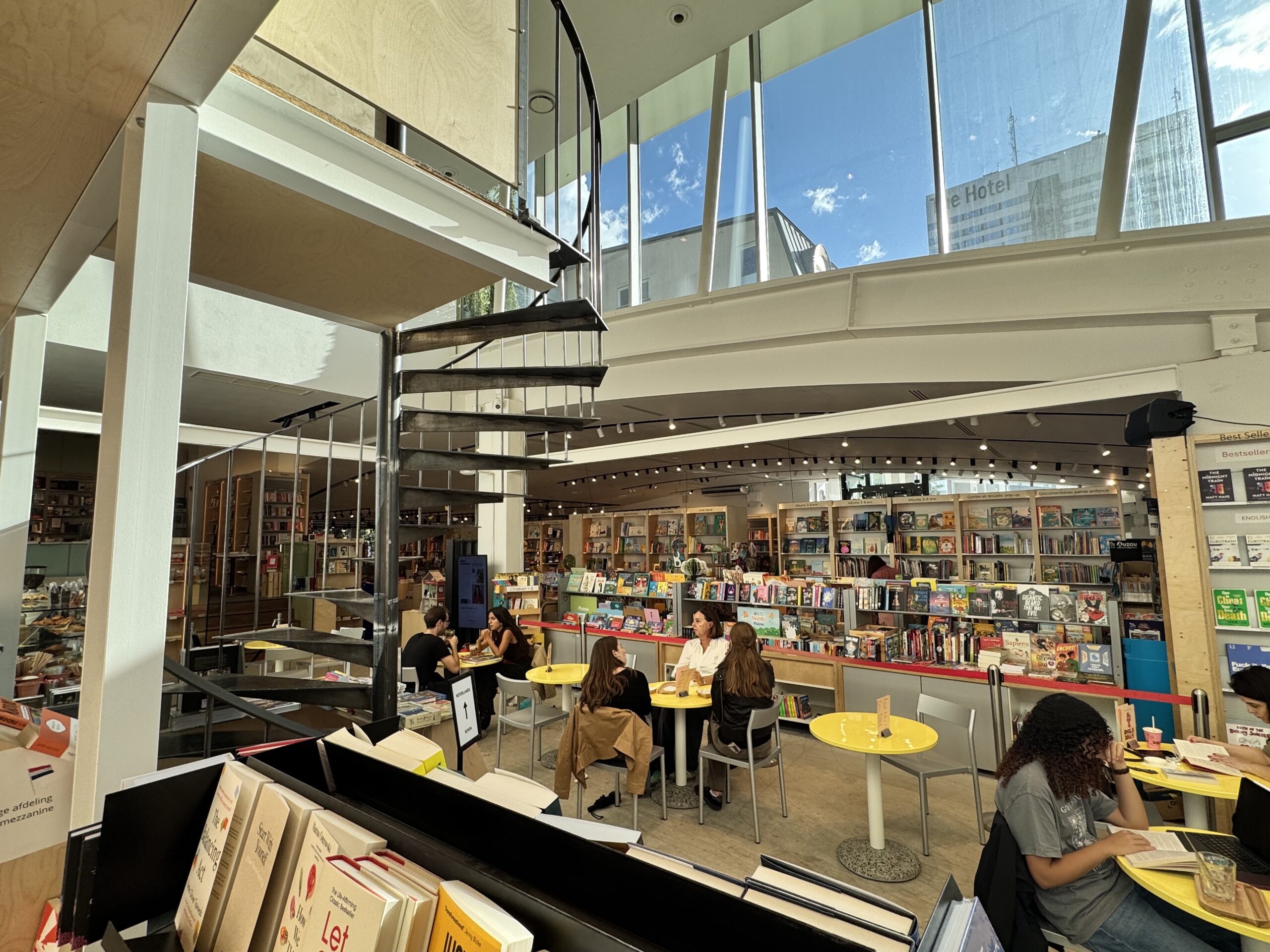
Over coffee in the shop’s airy, independently run mezzanine café, Hankar explains that books can be displayed more effectively here than in Filigranes’ former, more “complicated” premises. Despite the move, it has retained an offer of around 150,000 titles.
The café can also become an event space for more than 100 people, allowing Filigranes to host readings and Q&As. Intriguingly, Hankar says these do not necessarily have much impact on sales.
“Our purpose is to find a way to highlight books and people writing books. So that’s the goal,” he says. Hankar also acknowledges the commercial challenge. “The business of books is tough because the margins are extremely small,” he says.
Yet he rejects the familiar prediction that internet retail will eventually kill off traditional bookstores. Sales of English and Dutch-language books at Filigranes have actually risen by 25% over the past year, an increase Hankar attributes partly to Mayfair customers who speak those languages.
The new building has helped too. At the former location, English and Dutch titles were at the back of the shop and easy to miss. They now occupy a much more prominent position close to the café.
It is a small example of an advantage physical bookstores still possess: encouraging people to stumble across something they had not necessarily intended to buy.
Aladdin’s cave
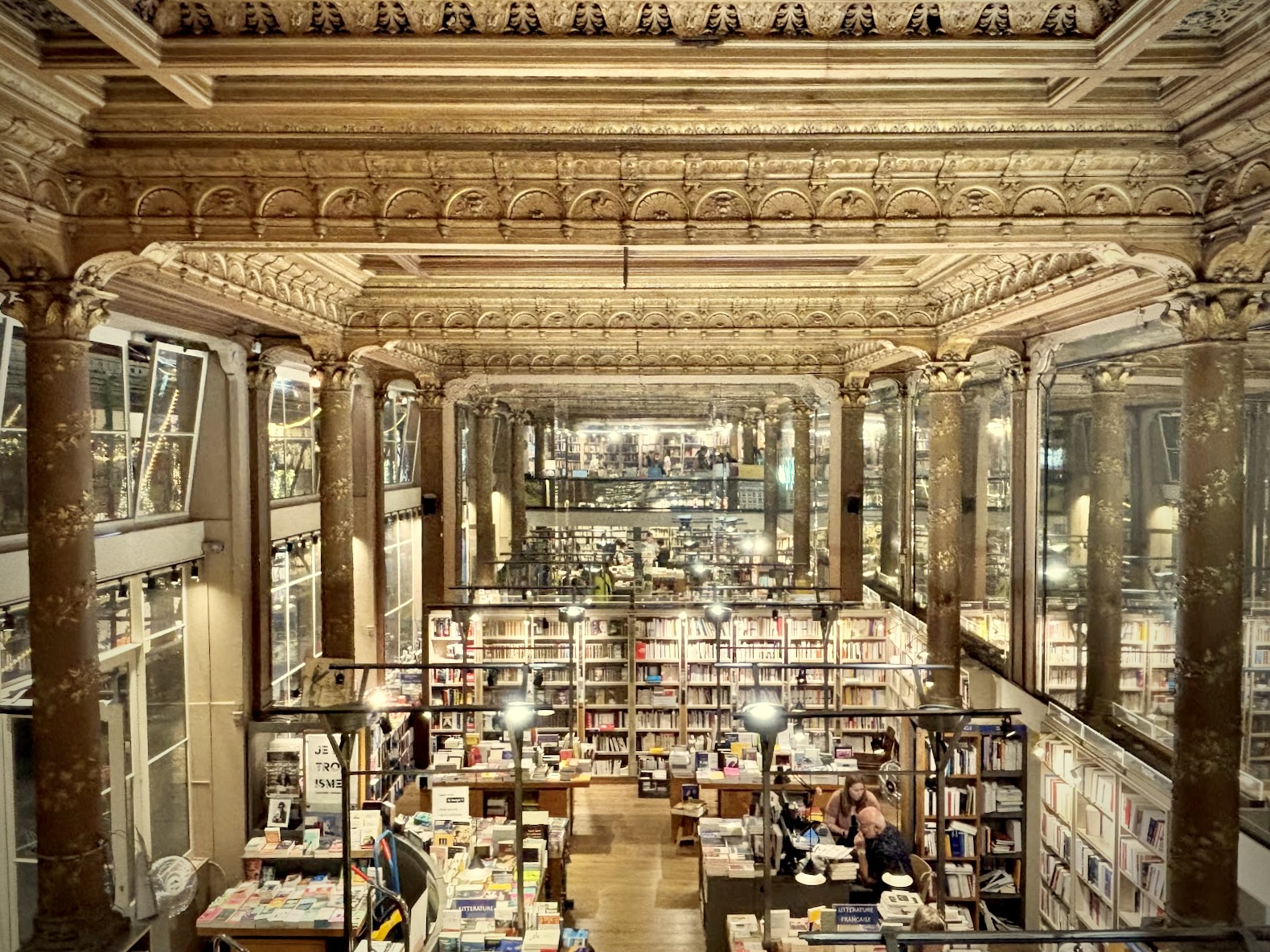
Bookstores are often likened to treasure troves that contain tucked-away gems. But the mostly French-language shop, Tropismes, in Les Galeries Royales Saint-Hubert is a treasure in itself. Located in a high-ceilinged space in the Galerie des Princes side wing of the grand 19th century building opposite the Grand Place, the store is a jewel of a find for those who have only traversed the main gallery.
Its ornate cast-iron columns and long bevelled mirrors speak of another age, and indeed of another incarnation. The glass-ceilinged galleries were finished in 1847, two decades before Milan’s famous Galleria, and the bookshop’s first occupant was an elite dance school.
It later that century became a brasserie, while before opening its doors as Tropismes in 1984, it was home to Blue Note, a happening jazz club, whose heyday was the 1960s.
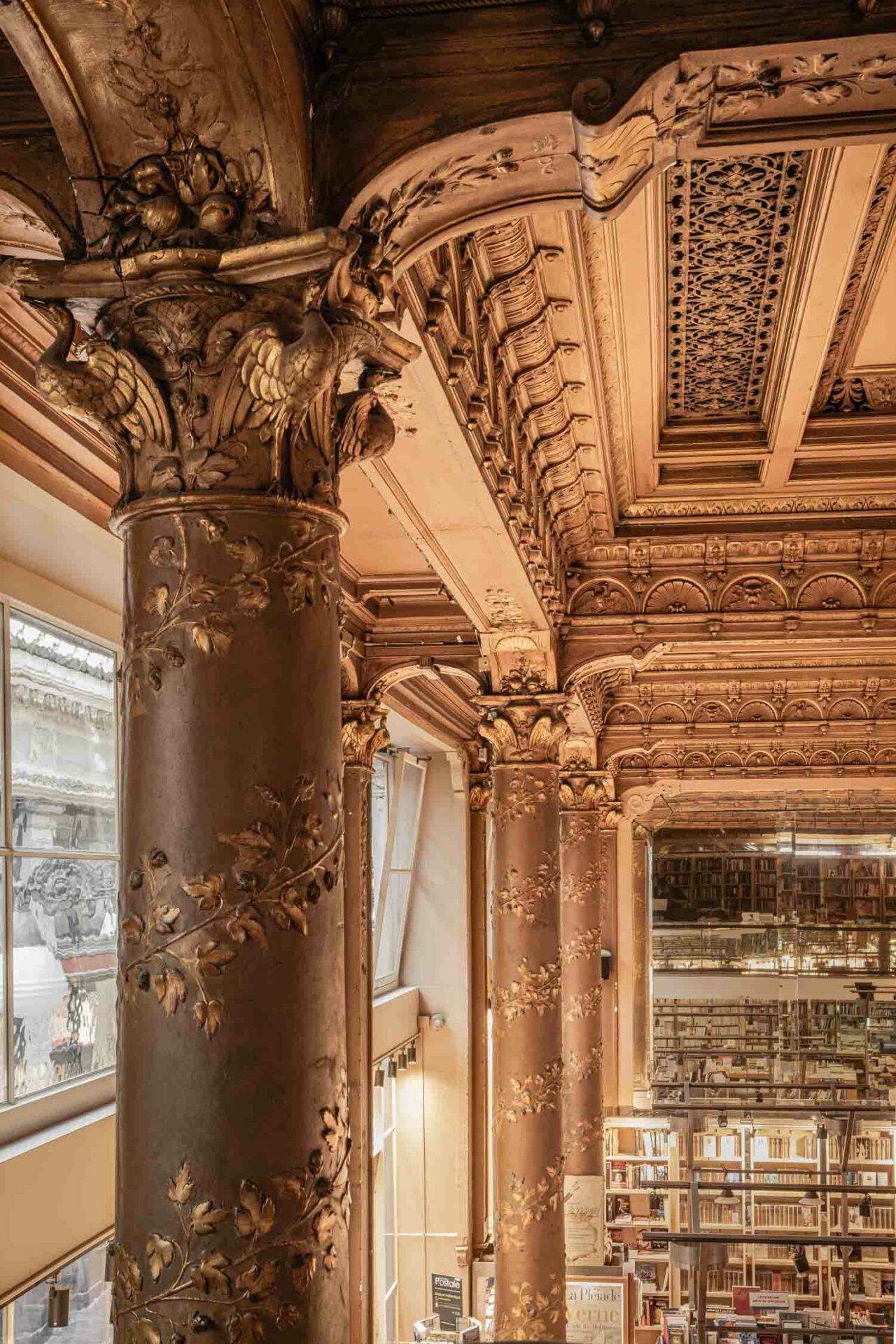
Tropismes. Credit: Philippe Petitjean
It naturally benefits from much tourist footfall, which Manuela Federico, the store’s literature and English manager. I spot English translations of works by Amélie Nothomb and Georges Simenon that must be a hit with readers looking to absorb some Belgian fiction during their stay in Brussels.
The store also runs an active author event programme, with four soirees already planned for September. These hour-long plus events generally starting at 7pm can attract up to 120 attendees, says Federico, with book tables cleared away to create space in the store.
The readings and interviews are predominantly in French, with writers able to receive compensation for expenses from the store and the French-speaking community.
Standaard class
Supporting local authors is also central to Standaard Boekhandel, the Flemish chain with eight stores in Brussels, including a prominent outlet on Boulevard Anspach.
Marketing and product director Karen Vanstaen says national and local authors are given prominent positions when their books are released, often on tables or in thematic displays. The chain works particularly closely with writers from the region or town around individual shops, “allowing readers to discover new talent close to home”.
That local emphasis is part of a broader mission to encourage reading. Standaard offers exclusive editions of some titles and has placed particular emphasis on young adult books, with dedicated sections in some branches and an annual young adult day.
Signings and author events likewise form part of its effort to “contribute to a vibrant reading culture”, Vanstaen says.
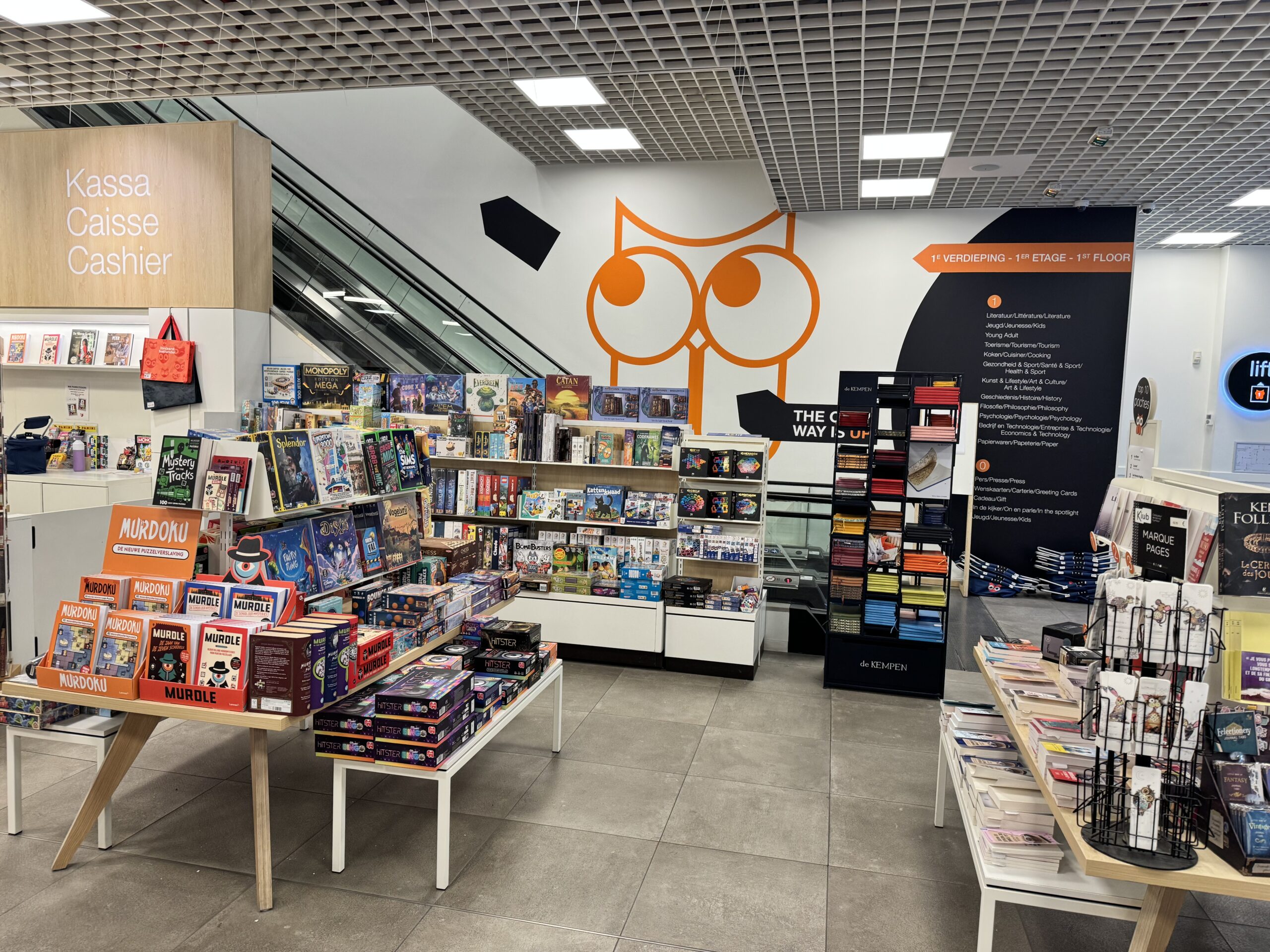
Standaard Boekhandel.
Standaard remains predominantly Dutch-language. When I visit, Prime Minister Bart De Wever’s opus tops the non-fiction bestseller list. But the chain also stocks English books – another sign of how even an institution rooted firmly in one of Belgium’s linguistic communities has to adapt to multilingual Brussels.
A few minutes’ walk away, Muntpunt performs a different role. Strictly speaking, it is not a bookstore at all, but a Dutch-language library, information centre and meeting place on Place de la Monnaie/Muntplein. Yet books and literature are central to its purpose, and its prominent position in the heart of Brussels gives it a significance that extends beyond lending books.
Muntpunt is part of the Flemish cultural infrastructure in a city where Dutch speakers are a minority. In that sense, promoting Dutch-language and Flemish literature also has a political dimension: it helps maintain the visibility of Flemish culture in the capital and creates a public space in which Dutch-language writers, readers and ideas can meet.
Its programme of literary activities and collaborations – including Brussels City of Stories with Passa Porta – makes it another important part of the ecosystem supporting Flemish writing in Brussels.
A century of English books
For English-speaking readers, meanwhile, few Brussels addresses are as familiar as Waterstones on Boulevard Adolphe Max.
The current branch opened in 1997 and is probably the capital’s best-known seller of English-language books. A second site on Avenue Louise is set to open later this year. But the site’s British bookselling connections stretch back much further.
From the 1920s until the outbreak of the Second World War, it was home to WH Smith, the British newsagent, bookseller and retailer, giving the address a literary tradition of around a century. After Brussels was liberated by Allied forces in 1944, the site reportedly became an officers’ mess, providing meals and a place for socialising.
In more recent years, it has returned to literary pursuits, hosting events including meetings of the Brussels Brontë Group.
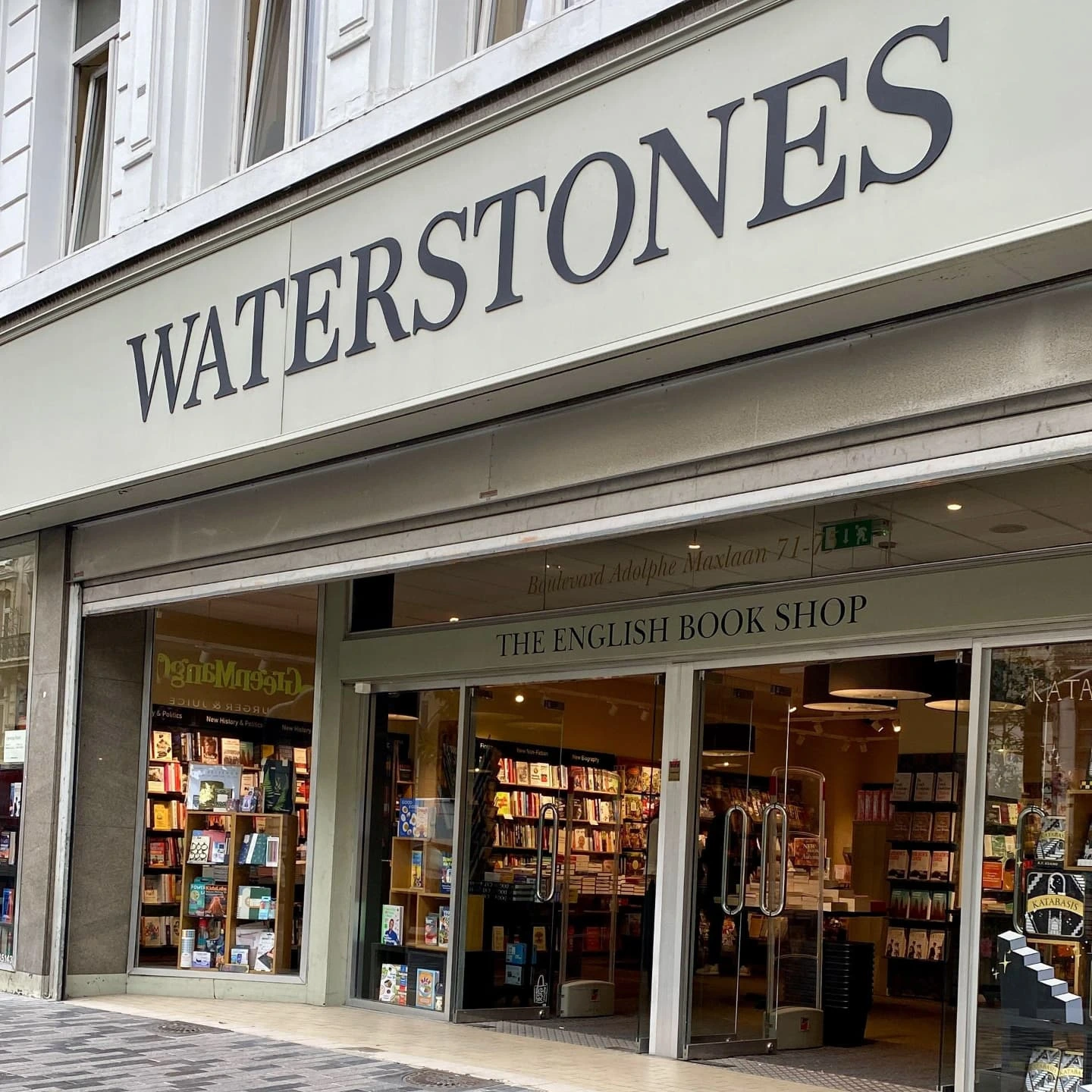
Waterstones.
Literary love
All these stores offer a snapshot of an unusually diverse bookselling city. There are cafés, readings, festivals and signings; writers’ residencies and workspaces; recommendations from booksellers whose tastes customers learn to trust. They provide opportunities to meet authors, discover unfamiliar books or simply spend time among other readers.
What they share is the conviction that a bookstore can offer something beyond the simple transaction of buying a book.
The internet may be ruthlessly efficient at delivering a title you already know you want. Brussels’ bookshops are betting that there remains a place for something less predictable: expertise, browsing, discovery and a sense of community.
Other bookstores in Brussels....
- -Librebook: Chaussée de Wavre, Ixelles
- Bozar Bookstore (mainly art books): Inside BOZAR., Brussels
- FNAC (big book sections): City 2 and Porte de Namur
- Peinture Fraîche: Rue Lesbroussart, Ixelles
- Librairie Candide: Place Brugmann, Ixelles
- Taschen (showcase for the publisher): Place du Grand Sablon, Brussels
- The European Booshop (specialised EU books): Rue de l'Orme 1, Etterbeek
- Tulitu: Rue de Flandre, Brussels
- À Livre Ouvert: Wolubilis, Cours Paul-Henri Spaak, Woluwe-Saint-Lambert
- Evasions (second-hand books): Rue du Midi, Brussels
- Pêle Mêle (second-hand books: Branches in the city centre, Ixelles and Waterloo
- Tulibris (second-hand books): Chaussée d’Ixelles, Ixelles
- NiJiNSKi (second-hand books): Chaussée d’Ixelles, Ixelles
- Het Ivoren Aapje (mainly Dutch-language): Begijnhofplein/Place du Béguinage, Brussels
- Piola Libri (wine bar, bookshop, literary events and concerts): Rue Franklin, Brussels
- Punto y Coma (Spanish-language books): Rue Stevin, Brussels
- Gutenberg Buchhandlung (German books): Rue d’Argile, Kraainem
- Slumberland (comic books): Four shops: the Comic Strip Museum, Tour & Taxis, Woluwe-Saint-Lambert and Uccle
- Forbidden Zone (comic books): Chaussée de Waterloo, Saint-Gilles
- Librarie Flagey (comic books): Place Flagey, Ixelles
- La Maison de la Bande Dessinée (comic books): Boulevard de l'Impératrice/Keizerinlaan, Brussels
