
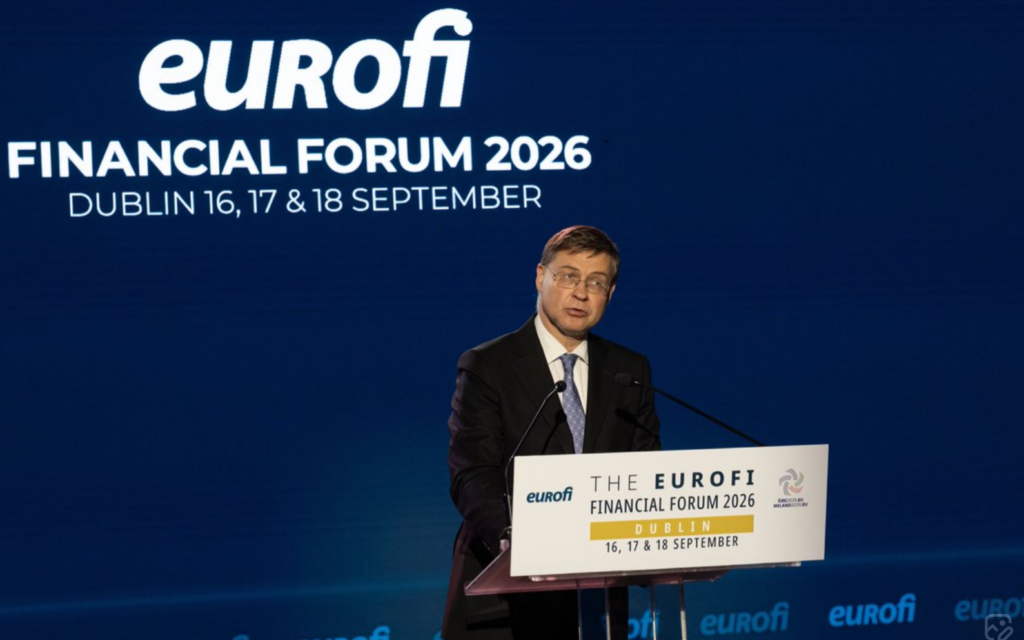
Europe’s economy is expected to slow next year despite performing “somewhat better than expected” in the first half of this year, EU Economy Commissioner Valdis Dombrovskis said after a Eurogroup meeting in Dublin.
Dombrovskis said “numerous headwinds” were expected to weigh on growth, including energy-related disruptions and the impact of this summer’s extreme weather events, according to his remarks released by the European Commission on Friday.
He also warned that higher borrowing costs could add pressure for some EU countries, saying sovereign bond yields have risen across most advanced economies and that the impact would be felt gradually in Europe — particularly by member states with higher public debt.
Dombrovskis called on governments to prioritise “prudent fiscal policies” and to keep energy support “targeted and temporary”, adding that countries should stick to targets in their medium-term plans.
Digital euro and competitiveness
The commissioner said the EU should strengthen the international role of the euro and push to complete legislative negotiations on the digital euro by the end of this year, referring to the Commission’s work on a digital form of the currency for electronic payments.
He also noted that the European Parliament adopted an own-initiative report on the global role of the euro earlier this week, describing it as a contribution to the work.
On competitiveness, Dombrovskis said Europe has “a productivity problem” with implications for long-term welfare, prosperity and security, and called for full and timely implementation of the EU’s competitiveness agenda, including steps on simplification and the “One Europe, One Market” roadmap.
