
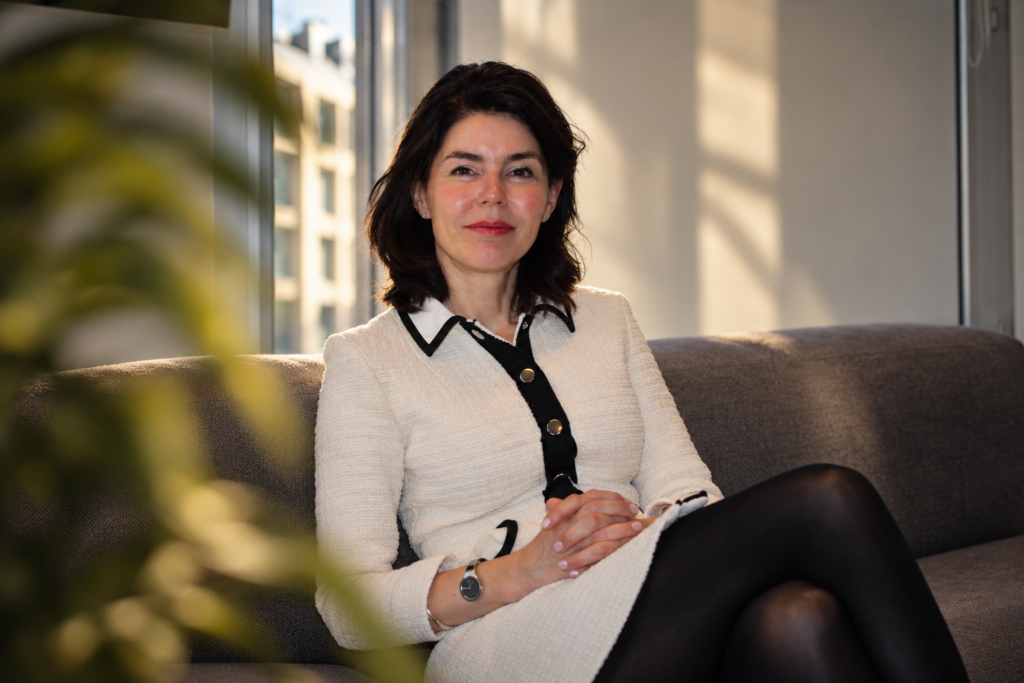
Belgium’s French Community Education Minister Valérie Glatigny (MR) is adamant that more money alone will not fix an ailing education sector that needs "an electroshock".
There’s a perfect saying in French that sums up Glatigny’s attitude when it comes to her job as an education minister: être droit dans ses bottes (which literally translates to "being firm in her boots"); she sticks to her positions when it comes to decisions that affect not only teachers but 900,000 pupils, millions of parents and potentially a whole generation of French-speaking Belgians.
Nonetheless, that does not resonate well with an ailing education sector, which often accuses her of dodging debate and having a "we know what is best for you" and "very top-down" approach, as Imane Kenfaoui, the headteacher of the Institut Maris Stella in Laeken, described it to The Brussels Times.
A situation that perfectly encapsulates Glatigny's (lack of) popularity at the moment: she had to arrive early for the inauguration of a nursery and a primary school in Ten Brielen, a hamlet of roughly 875 inhabitants in the Hainaut province, to avoid 50 teachers attempting to express their frustrations and concerns. Aftwerwards, she left through the back door.
"How do you want to conduct an education policy without involving the people working in the sector?" Kenfaoui wondered.
The French-speaking Belgian education system comes from a culture where discussions with on-the-ground actors are paramount to "build something that works".
As a former journalist and EU official, Glatigny knows a thing or two about communication. She explicitly told The Brussels Times that she did not enter politics thinking about the next election and that those who brought bad news were often not popular: "I am doing this for the next generation."
“So yes, I will say it: the reforms and cuts might not be popular today – that's obvious – but they are being made so that our children aren't faced with a debt that has become impossible to repay. They are also being made so we can keep paying our teachers, funding support for our pupils, and renovating our school buildings," she said.
"That's why we're doing this. It's not because we're some kind of dangerous sadists; it's simply because the situation is very bad."
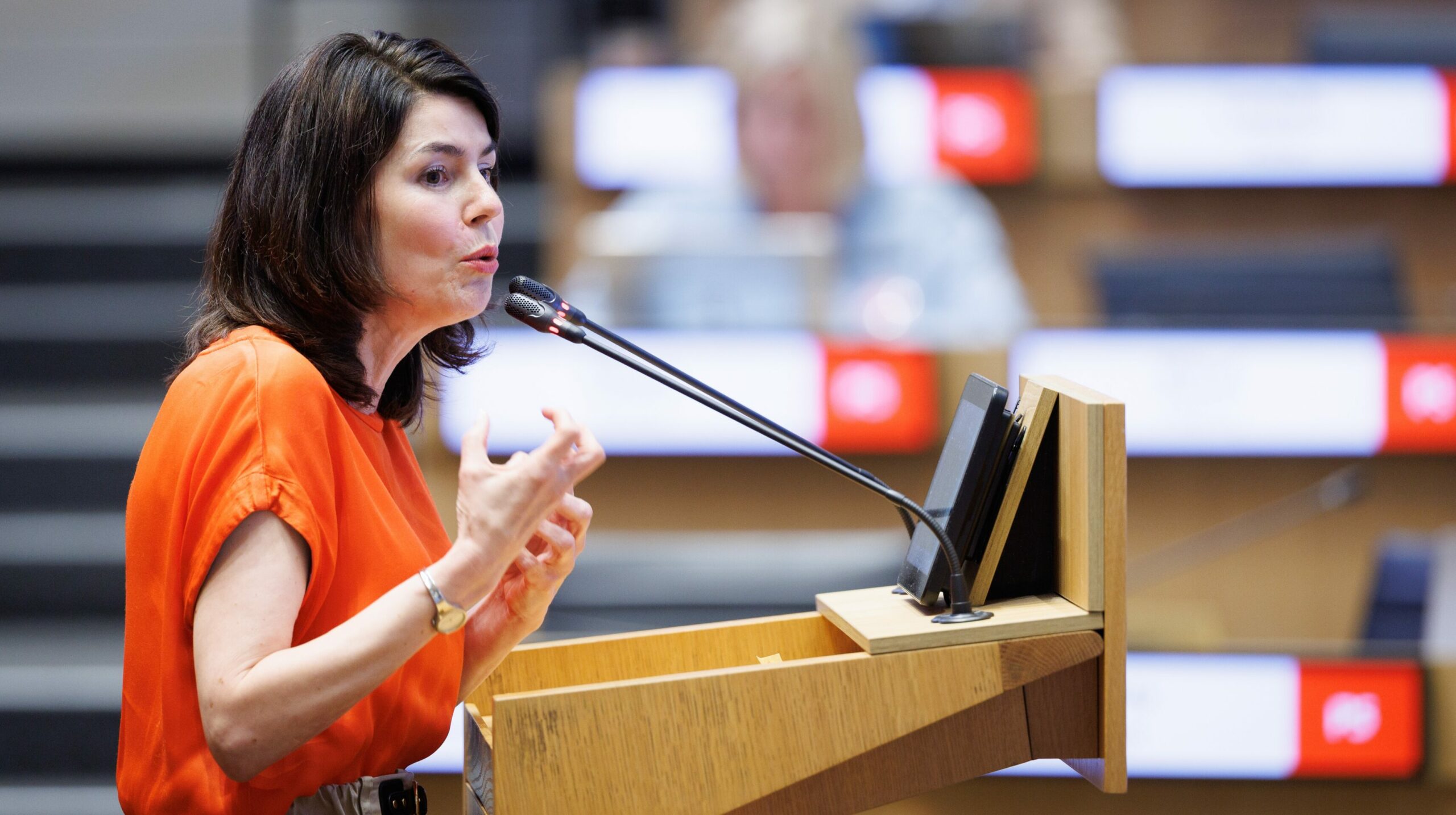
Glatigny pictured during a plenary session of the Parliament of the Federation Wallonia-Brussels in Brussels, 9 September 2026. Credit: Belga/Benoit Doppagne.
The reforms come as the French-speaking government seeks to rein in its growing debt, with education expected to save €86.7 million in 2026. This includes €35 million from increasing the teaching hours of some secondary teachers from 20 to 22 periods a week and €15 million from changes to sick-leave arrangements.
Beyond money talks, Glatigny insisted standards needed to be higher and schools ought to adapt to a new digital era where pupils’ attention spans are reducing, which is why she banned recreational use of smartphones and connected watches since 2024 – a measure came into force in 2025-2026.
The measure also intended to reduce cyberbullying and excessive use of social media. She also aligns with banning them altogether for those younder than 15 year old. “I support Federal Minister Vanessa Matz (Les Engagés) on the introduction of a digital age of consent,” she said.
Related News
- French Community lags significantly behind declining Flanders in PISA results
- Does Belgium's high spend on education make for highly-educated children?
Her push for quality and "tougher" academic expectations and "mastering basic skills" is explained by one of the most symbolic changes that will come in June 2027, when the pass mark of CEB (awarded at the end of primary school), CE1D (certifies completion of the first stage of secondary education) and CESS (the secondary-school leaving certificate, paramount to entering higher education) exams will rise.
Pupils will need at least 50% in each assessed subject and 60% overall; CE1D and CESS require 60% in each external exam.
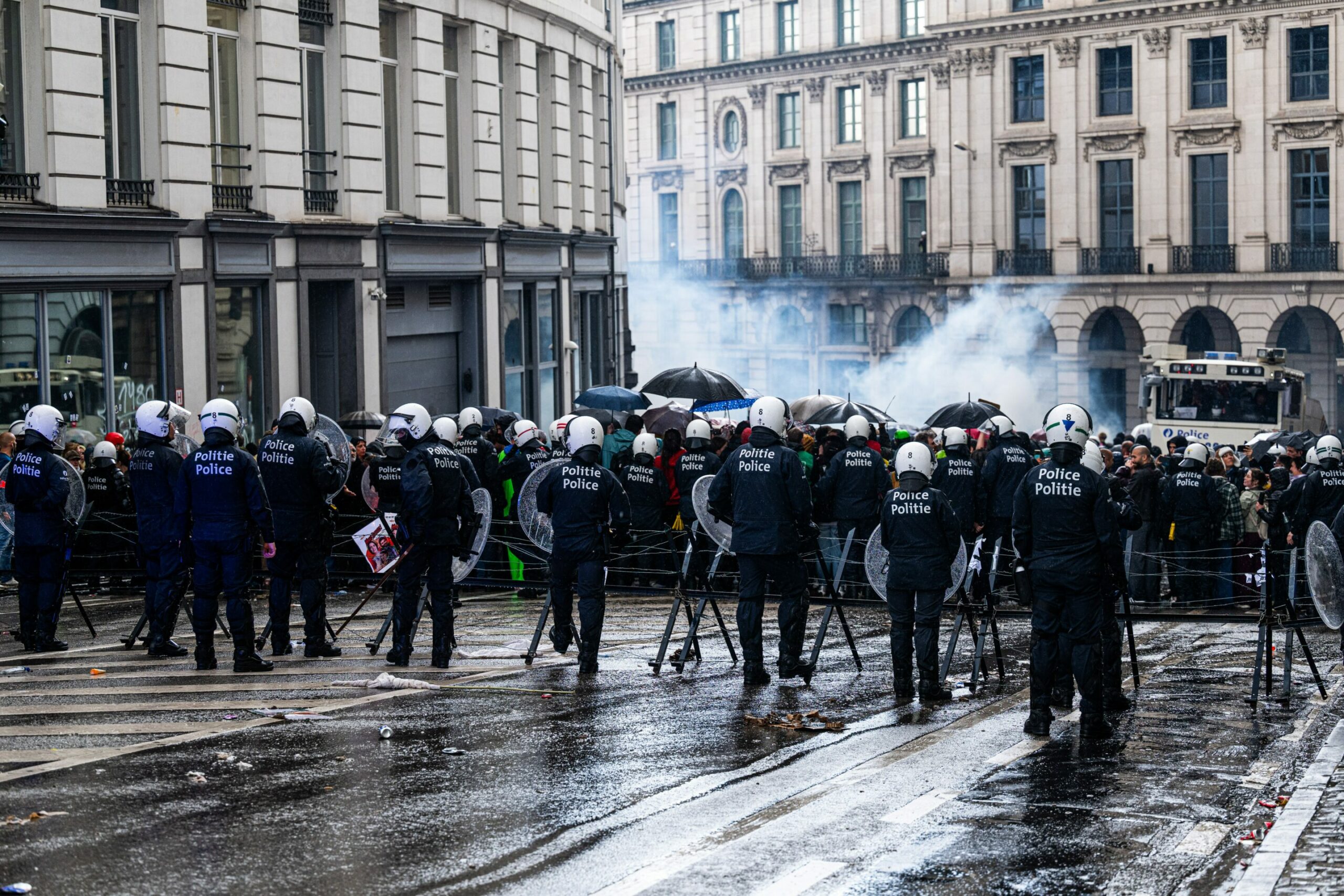
Riot police pictured at a gathering of teachers and students in front of the Federation Wallonia-Brussels parliament in Brussels, on Thursday, 4 June 2026. Credit: Belga/Emile Windal
However, she emphasised, tougher does not mean leaving out pupils who are struggling. Already started this year, Glatigny said a new test dubbed CLÉ, covering reading, writing and maths, will be taken at the start of the fourth year of primary school.
The non-certifying test is intended to identify gaps before they become harder to address, while 220 additional posts are being introduced in the third and fourth years of primary school to provide personalised support.
Raising standards might seem like the providential solution, but this is often not the reality for teachers and pupils, especially in Brussels; two children can live in the same municipality, even the same neighbourhood, and be educated in entirely different systems.
Glatigny wants everyone to enrol their child wherever they want. “I'm not sure we should enter into a logic of competition between schools to attract pupils at all costs. I think, above all, that we need to try to provide the highest-quality education possible, and that is my responsibility.”
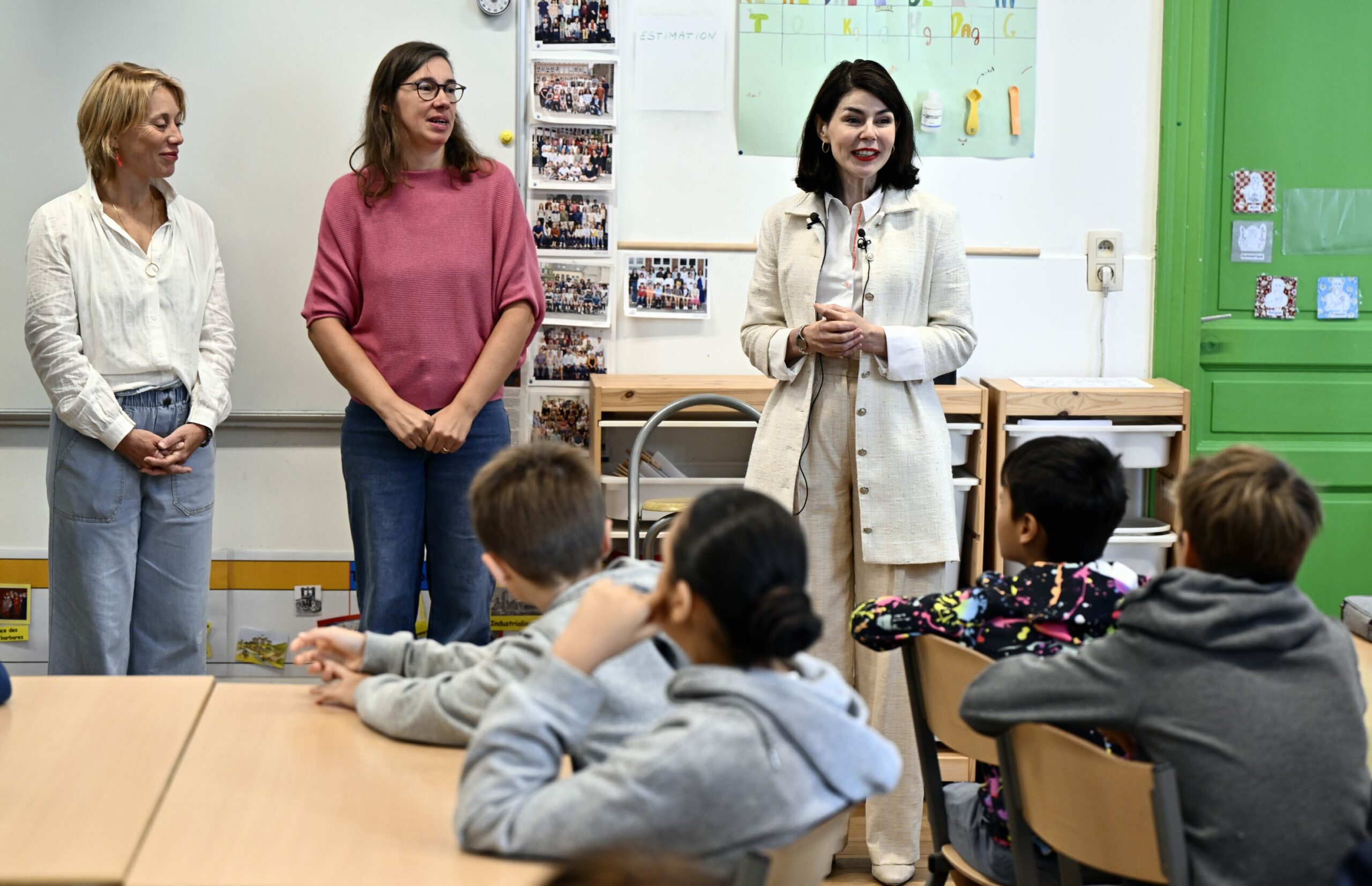
Belgium's French-speaking 15-year-olds scored 489 points in mathematics, 479 in reading and 491 in science in the latest PISA assessment, with results having declined substantially over the past two decades. In the picture, the minister is pictured during a visit to Ecole Sainte-Marie in Namur on the first day of the new school year, 25 August 2025. Credit: Belga/Eric Lalmand
She reasons that reducing educational inequality comes from improving the overall quality of every school in the French Community of Belgium, so choosing a local one does not mean compromising a child’s education.
To her, schools cannot be expected to compensate for every difficulty children face outside the classroom. The education system must give struggling pupils the support they need, she insisted, but she also places part of the responsibility on families, arguing that parents have a role in ensuring children arrive at school ready to learn and in supporting their education at home.
Potty-training in nursery schools, for instance. “An occasional accident is normal, but if a child has never been taught to use the toilet and the task is left to the nursery teacher, there is a problem," Glatigny said.
Teachers, she added, should focus on socialisation, language, reading and other early learning rather than substitute for parents. "Parents have to play their role," she said, adding that education works best when "the school and the family work hand in hand".
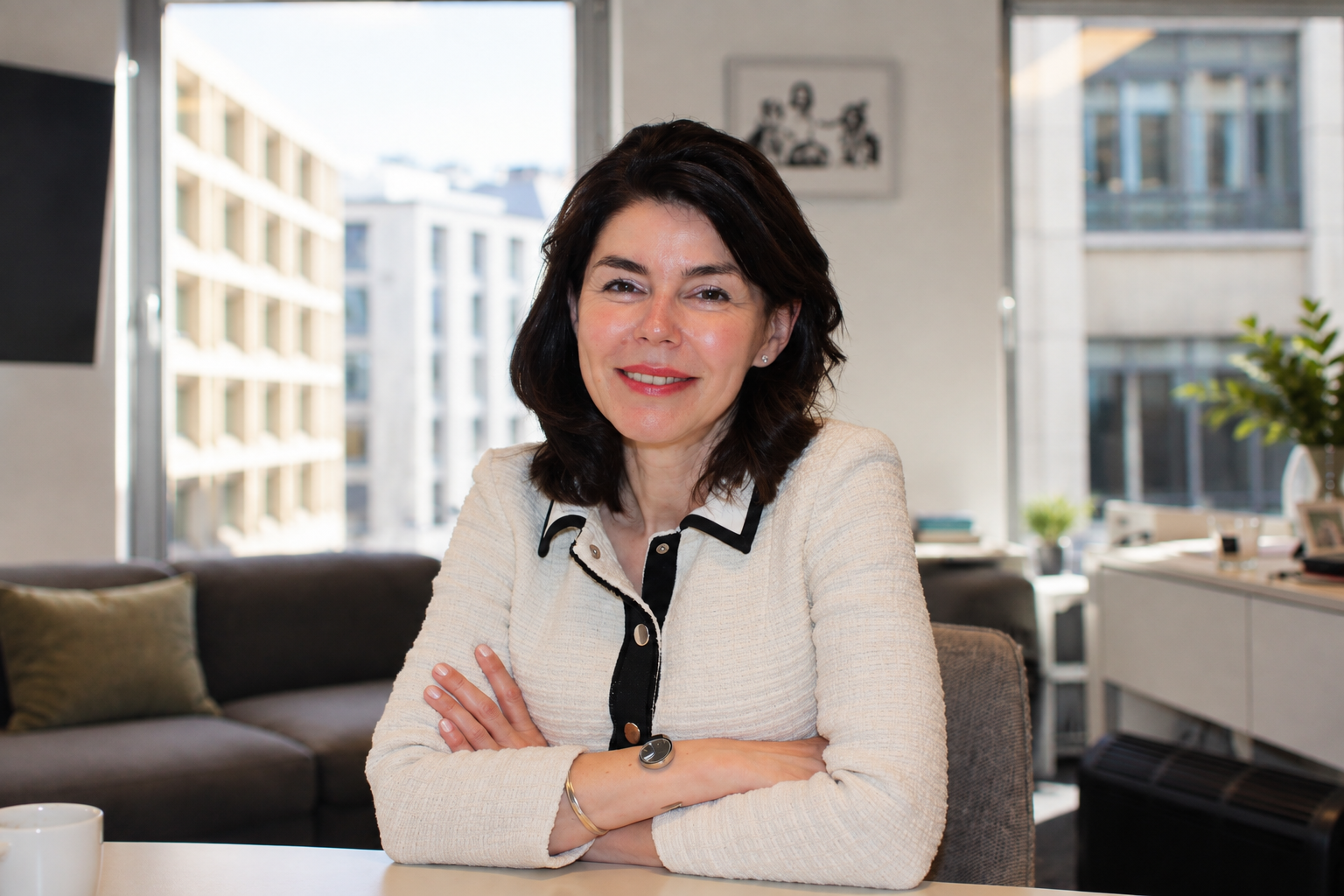
Valérie Glatigny is also a former Higher Education Minister. Credit: The Brussels Times/ Anas El Baye.
Glatigny also acknowledged the "particular reality" faced by pupils whose mother tongue is not French, pointing to two programmes designed to provide additional support.
The DASPA scheme, aimed at newly arrived and equivalent pupils, receives around €16.4 million a year for nursery and primary education and supported 3,952 pupils across the French Community in 2025-2026, according to figures provided by her cabinet.
A further 6,056 pupils with insufficient command of French received additional language support through the Français Langue d'Apprentissage (FLA) programme, which receives around €5.87 million annually.
"These are additional resources for schools that have to welcome children whose mother tongue is not French," Glatigny said, explaining that the funding allows schools to provide additional teaching periods.
For all the debate surrounding budgets, reforms and how they are being implemented, Glatigny ultimately pointed to pupils' results as the reason the system cannot remain as it is. She regrets the French-speaking education system has been losing ground for years, a trend reflected in successive PISA assessments.
"There are positive points, but overall we have been declining for the past 20 years," she said. What is needed is not some tinkering around the edges, she said. "We need to create an electroshock."
