
Pierre Wunsch sits at the heart of Belgium’s financial establishment, but the National Bank governor is no defender of received wisdom. He tells Tim King why Europe must adapt to a harsher world of power politics, why economic resilience masks a lack of dynamism – and why liberal democracy matters more than central bank independence.
Central bank governors have power, but only limited accountability. They belong to that special cadre of public servants who, once in office, are largely beyond the reach of the politicians who appointed them – rather like senior judges.
The result is that central bankers are not constantly in the public eye. They are expected to make occasional pronouncements about the economy or the outlook for interest rates, but they do not routinely have to submit themselves to the scrutiny of breakfast radio or television chat shows.
In the case of Pierre Wunsch, the Governor of the National Bank of Belgium (NBB in English and Dutch, BNB in French), this seems a shame. Over the course of a wide-ranging conversation this summer that goes well beyond the usual confines of macroeconomics and monetary policy, Wunsch shows himself ready not only to defend his economic thinking, but also to make the case for liberal democracy.
Wunsch, now 58, grew up in Louvain-la-Neuve, where his father, Guillaume, was a professor of demography at UCLouvain. “I admire entrepreneurs creating value, I admire people taking risks, but that is not my world,” he says. “I come from a world of intellectuals.”
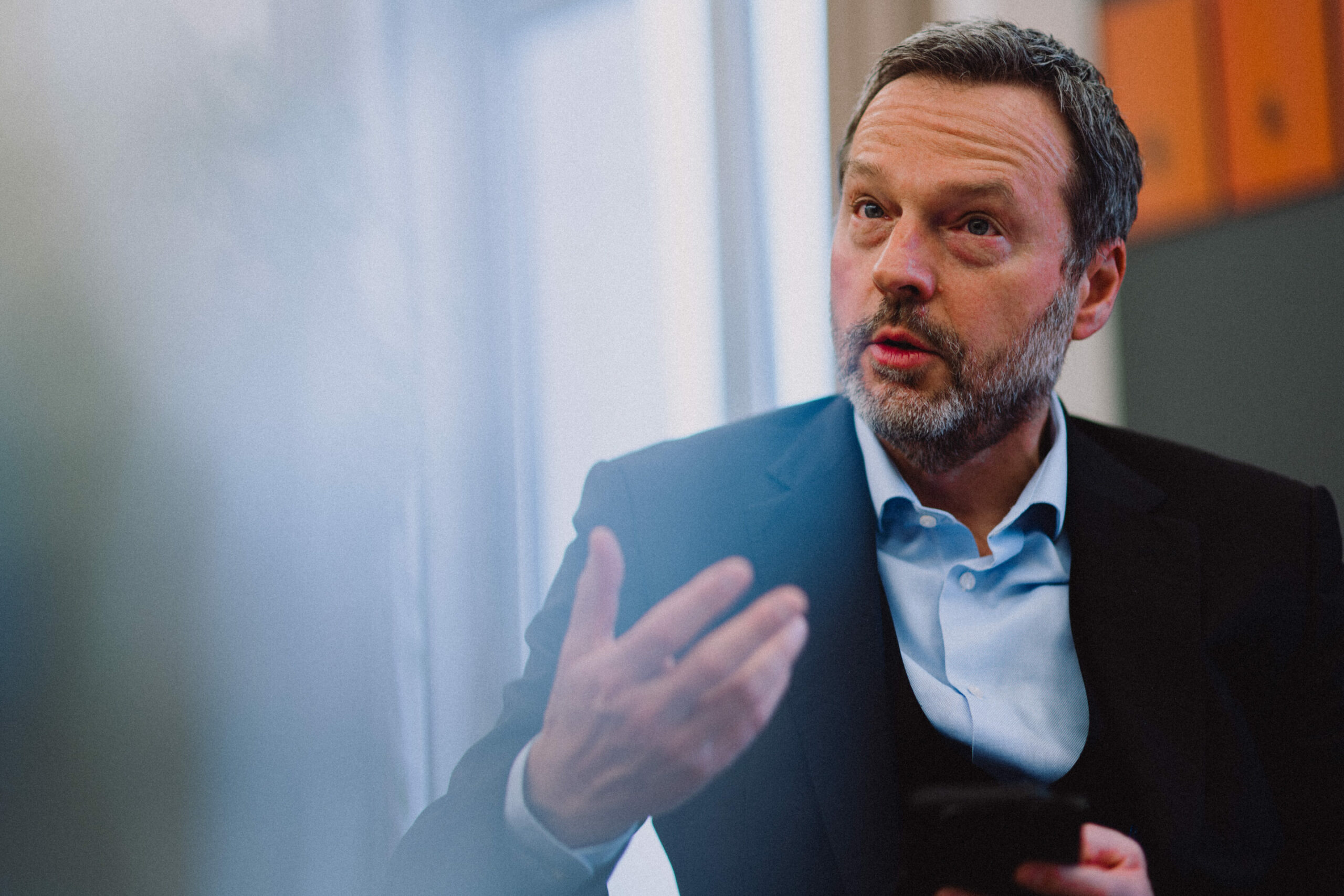
Pierre Wunsch. Credit: National Bank of Belgium
In keeping with family expectations, he completed a doctorate in public-sector economics and had just secured funding for postdoctoral research at Université Saint-Louis in Brussels, since merged with UCLouvain, when politics intervened.
Eric André, then Brussels minister for public works and himself an academic economist turned politician, was looking for talent to join his team of advisers. One of Wunsch’s professors recommended him.
“I had to choose: to be like my father, an academic, or try the exotic life of people working in politics,” he says.
He took the plunge and joined André’s office, where a colleague was Boris Dilliès, who went on to head the private office of François-Xavier de Donnea, Minister-President of Brussels, 2000-2003, before himself becoming Minister-President of Brussels earlier this year.
Although Wunsch was a member of the socialist students’ organisation, working for the liberal André meant he acquired a different political label. “I guess I was always in between those two worlds: naïve when doing politics, and maybe tainted when I was with other people, because they give you a political colour in Belgium and repeat it from time to time,” he says.
A liberal in an illiberal age
Wunsch resists party labels, although he readily describes himself these days as an economic liberal.
But even economic liberals, he says, must recognise how dramatically the world has changed with “Brexit, Trump and all that”.
“We are going back to something that looks more like the 19th century, with power and nationalism coming back as important drivers of our political systems and stories.”
That poses a challenge for Europeans of almost any political persuasion. “We are going back to something that looks more like the 19th century, with power and nationalism coming back as important drivers of our political systems and stories.”
In policy terms, Wunsch questions whether the EU can keep setting environmental and human-rights standards throughout global supply chains when other major economic powers are unwilling to follow its lead. If the United States, China and large energy exporters do not play by the same rules, he argues, European companies and consumers risk being saddled with greater regulatory burdens and higher costs than their competitors.
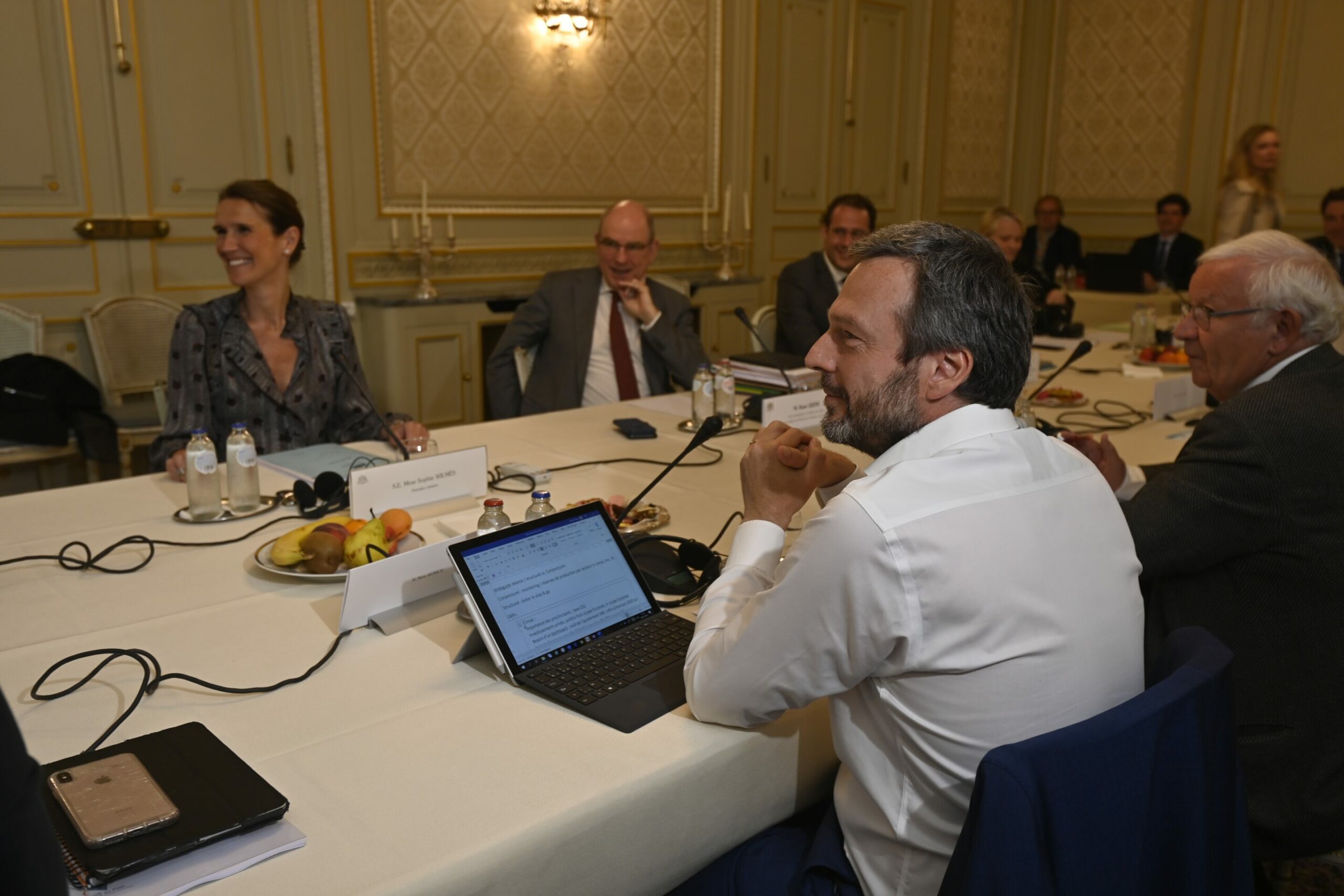
Former Belgian Prime Minister Sophie Wilmes, former Minister of Justice Koen Geens and National Bank (BNB-NBB) governor Pierre Wunsch pictured at the start of a meeting with Belgian Prime Minister in Brussels - part of consultation meetings launched by the Belgian PM with experts to prepare the relaunch plan after the Covid-19 pandemy on the social-economic level. Credit: Belga/Eric Lalmand
Earlier this year, Wunsch and NBB colleague Geert Langenus made the case in a paper warning the EU against producing yet another “grand plan” to tackle sluggish economic growth.
“If the EU wishes to remain a welfare-creating powerhouse,” they wrote, “it needs to become a more flexible and agile Union, with a market that swiftly adopts technological changes, rather than over-regulating them, and a governance structure that allows for more flexible co-operation and more rapid decision-making.”
Europe, they argued, must “navigate new geopolitical realities and form alliances, instead of insisting on a moral leadership role which is no longer accepted.”
Although these arguments would be encountered fairly frequently on the conference circuit in many parts of Europe, they are still eyebrow-raising in their context: voiced in Brussels by a pillar of the Belgian establishment. Over the years, the prescriptions of successive Belgians – Wilfried Martens, Alexandre Lamfalussy, Guy Verhofstadt – have been some variation on “more Europe”.
Wunsch is clearly aware how hard it is to get people and institutions to reconsider their orthodoxies. When describing the emergency operation to salvage Belgium’s Fortis and Dexia banks in 2008, he observes that the task was emotionally much easier for him as an outsider coming in: for many of those around him, what was collapsing was what they had spent their working lives building.
Resilient, but sluggish
“The Belgian economy and the European economy have been extremely and surprisingly resilient,” he says. Despite a succession of crises – the financial crisis, Brexit, Covid, wars in Ukraine and Iran – the unemployment rate is at its lowest for more than 30 years.
“So, it is a story of resilience and a story of a lack of dynamism.” On whether AI might change the labour market dynamics, Wunsch repeats an orthodoxy: “If you look at history, periods of strong technological progress have been associated with economic growth, job creation and wage growth, so far.”
Nor does he think technological change is going to bring a swift end to retail banks, for all that the financial infrastructure behind those banks may be re-shaped by tokenisation, unified ledgers and central bank digital currencies.
On digital currencies that are not issued by central banks, Wunsch is cautious, but even-handed. While Bitcoin and stablecoins are mostly used for illicit transactions, whether to move the proceeds of crime or for tax evasion, they may also be used by people in emerging countries with weak governance to send money to family and friends – “and that is something that we should promote”.
There are also privacy concerns about central bank digital currencies, he says, acknowledging that the ECB’s discussion of a digital euro awakened fears of “creating this money that would allow us basically to spy on people” even though there was no such intention.
It is this care to see all sides of the argument that marks Wunsch out. He describes a changing world in which liberal values are under attack. “When I say that I am a liberal, it is this feeling that what counts is a certain idea of inner progress where our societies would become more democratic, in a way fairer, that standards of living go up and we could relate peacefully to each other.”
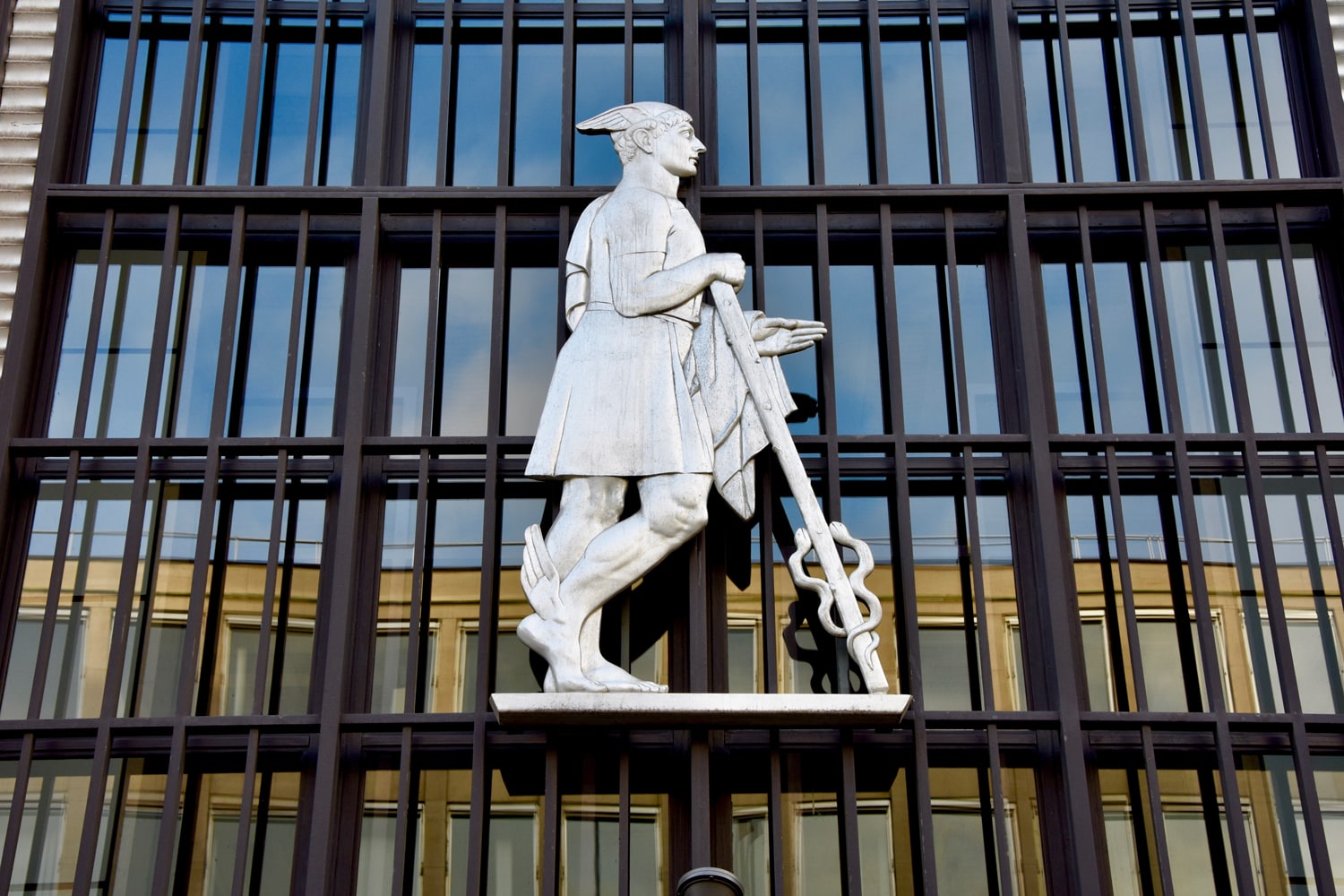
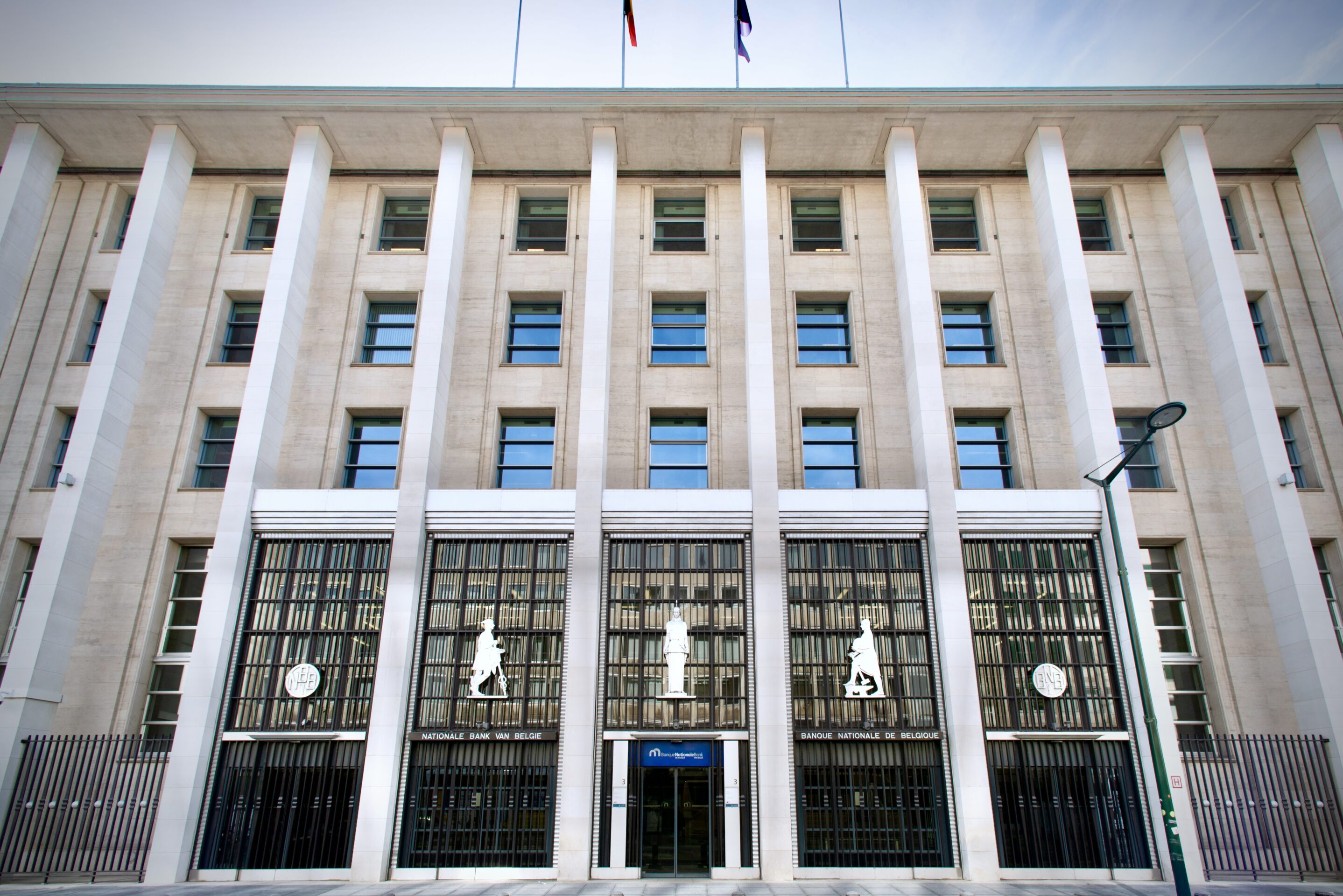
Facade of the NBB.
What troubles him about the current age is that insult and invective are squeezing out rational discussion. “It is now fair game to attack the person instead of attacking the ideas,” he says. “And you see that ever more broadly speaking in politics as a communication strategy. With more militant groups, they will attack you as a person, imply that you are morally problematic because that is the way to capture the attention of people.”
His coping mechanism is to try to understand: “And as much as possible understand different points of view,” he says. “Why some people would be angry about institutions. Why Trump? It is not a question of reaching out but trying to make the intellectual effort to not just ‘be against’ and go into a confrontation. If we want this problem to go away, we all need to understand how we got there, and I don’t think fighting one group against another is going to improve it. It’s just going to lead to more polarisation.”
Wunsch knows that, as a central banker, his world is under siege from populists who attack central bank independence, suggesting that he is part of an elite out of touch with the people. But his small patch is only a small part of a much wider problem. “I would include attacks against academia, against a search for objective knowledge compared to extreme subjectivity,” he says. And he retains a sense of perspective. “At the end of the day, respect for individual human beings is more important than respect for central bank independence.”
Baptism of fire
For the national banks of Belgium, the Netherlands and Luxembourg, the autumn of 2008 brought a genuine moment of crisis.
The preceding decades had seen European banking transformed by cross-border mergers and takeovers. Then, in the space of a few frantic days following the collapse of Lehman Brothers, the process went violently into reverse.
Fortis Bank, overstretched by its takeover of ABN Amro the previous year, teetered on the brink of collapse.
On Sunday 29 September, while the stock markets were closed, the Belgian, Dutch and Luxembourg governments held emergency talks in Brussels and agreed what amounted to the renationalisation and break-up of different parts of Fortis, backed by an injection of €11.2 billion.
A similar operation to rescue Dexia soon followed, involving France, Belgium and Luxembourg.
For Pierre Wunsch, the crisis provided an extraordinary introduction to the world he now inhabits as Belgium’s national bank governor: the intersection of politics and high finance.
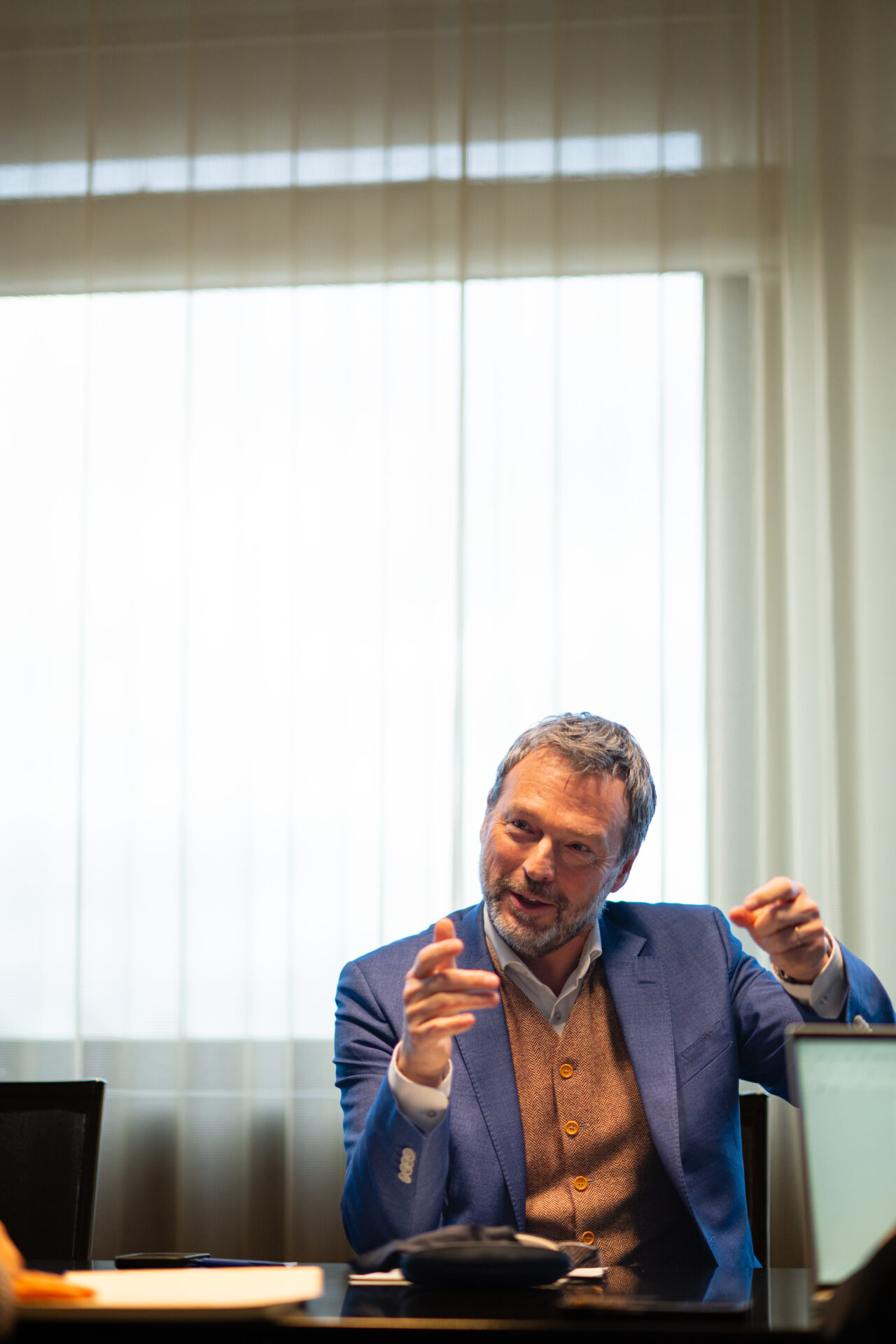
Pierre Wunsch.
When the crisis erupted, Wunsch was in the Ardennes for a reunion with old school friends. In a throwback to their 1980s youth, they spent the weekend playing role-playing games with dice and figurines.
After a weekend saving fictional worlds and slaying imaginary monsters, Wunsch reported for work on Monday morning for the first day of a new job at Belgium’s finance ministry.
He had been recruited by finance minister Didier Reynders to work on modernising the ministry. Instead, he found himself helping to save the Belgian banking system.
By his own admission, Wunsch knew little about banks, having come from seven years in the energy sector, where he was working for Tractebel and Electrabel. But because he was familiar with investment projects, he became the guardian, as the negotiations went back and forth, of an overview of who would be getting what assets and for how much.
He was assisting Luc Coene, the then deputy governor of the NBB, who was in charge of the talks. “I think the people who participated in those days, we all remember sticking together for one month, fighting for a noble cause, which was saving our economy.”
Three years later, he joined the national bank as director, becoming deputy governor when Coene became governor. In January 2019 he became governor for a five-year term that was renewed in 2024.
What does the National Bank of Belgium actually do?
The birth of the European single currency at the end of the 20th century significantly clipped the powers of the national bank of Belgium, which surrendered several of its monetary responsibilities to the newly created European Central Bank (ECB).
Nevertheless, the National Bank of Belgium remains an important player in the country’s economic and political landscape, exercising a mixture of hard and soft power.
Belgium’s membership of the euro means the NBB governor sits on the ECB’s Governing Council. Made up of the ECB’s Executive Board and the governors of the 21 euro-area national central banks, it sets monetary policy for the eurozone.
Former NBB governor Guy Quaden once argued that this actually gave Belgium more influence over monetary policy than it had enjoyed before the euro. The Belgian franc had effectively been tied to the Deutschmark, leaving the Bundesbank in the driving seat.
“Belgium was, in reality, already importing its monetary policy from Frankfurt,” Quaden said. “The difference is that, while our monetary policy is still decided in Frankfurt, the decisions are now taken around a table where at least one Belgian has a say.”
Another Belgian, Peter Praet, sat on the ECB Executive Board from 2011 to 2019 and served for part of that period as its chief economist.
Belgium does not, however, always have a vote on the Governing Council, which usually meets twice a month. Voting rights rotate each month among national bank governors according to the size of their economies and financial sectors. So, in some months of the year (four in 2026), Belgium is voteless at the ECB – though since most decisions are by consensus, this does not always matter.
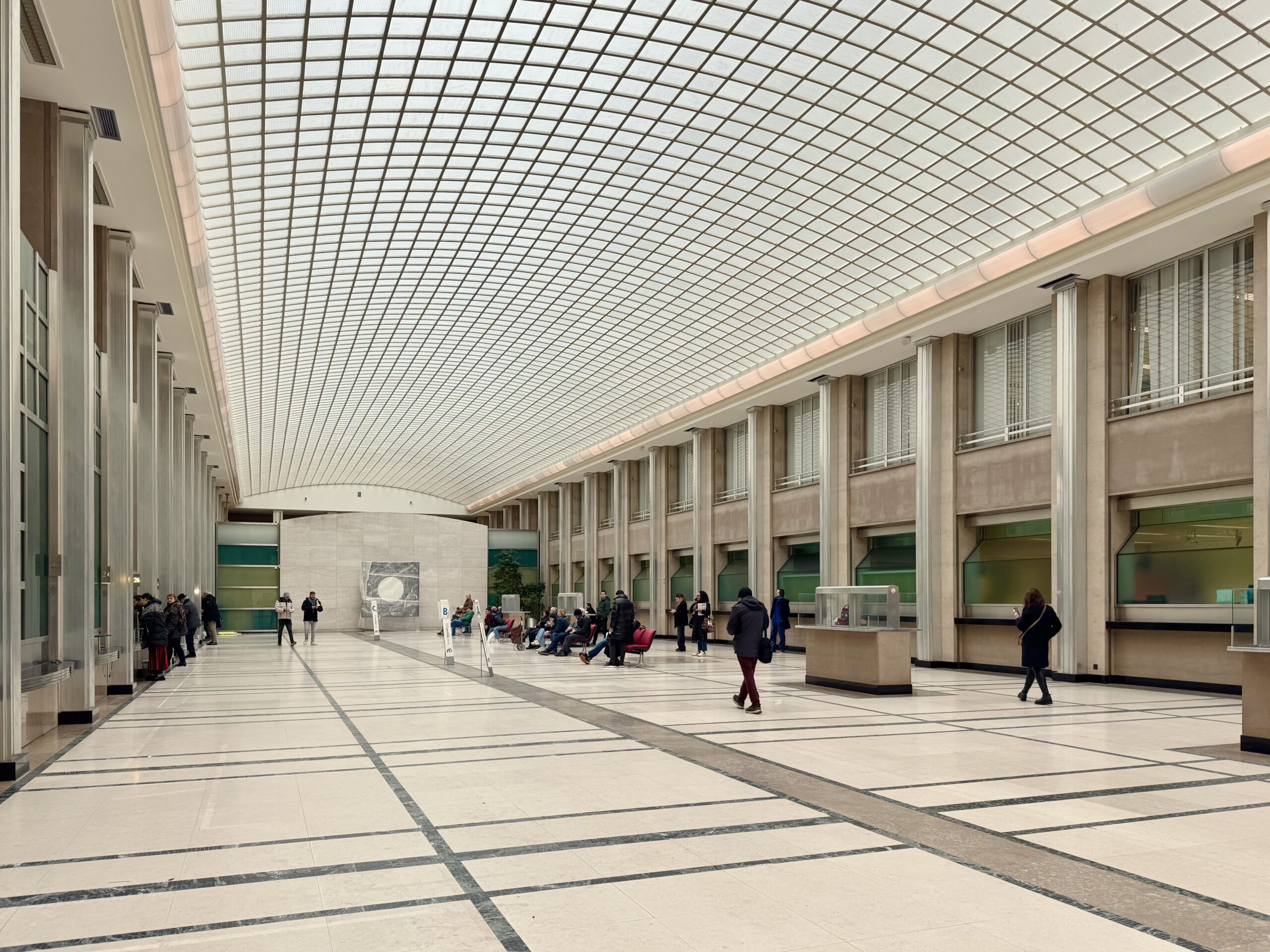
National Bank of Belgium.
For many Belgians, the start of 2002 was the point at which they lost sight of their national bank. That was when the Belgian franc was withdrawn from circulation and euro notes and coins came into circulation (Belgium prints some of the euro notes, but the Royal Dutch Mint in Utrecht makes the regular Belgian euro coins). Indeed, the one time that some Belgians visited the bank’s flagship headquarters in Brussels was to exchange notes or coins for their euro equivalent.
But there was always more to the national bank than the Belgian franc. It is the organisation to which Belgian companies file their annual accounts. It maintains a credit register on both individuals and companies. It regulates the risks taken by banks, insurance companies and stockbrokers. It combats money laundering and financial crime. It gathers all kinds of data to inform economic and monetary policy. It is a depository for traded securities and is a supervisor for such significant international financial institutions as SWIFT and Euroclear.
Putting those supervisory and regulatory tasks together, the overarching role of the national bank is to maintain trust and confidence in the Belgian and European economy. It is supposed to pre-empt catastrophes and to stop systemic failures.
Who owns Belgium’s national bank?
The National Bank of Belgium has never been wholly state-owned.
It was established by an act of parliament in May 1850, with further legislation that September creating a public limited company with a monopoly on issuing banknotes. The aim was to restore stability after the political and financial upheavals of 1848.
Previously, notes had been issued by private banks, most importantly Société Générale de Belgique and Banque de Belgique. In return for surrendering that privilege, the two became founding shareholders in the new national bank.
Private individuals could also subscribe, with shares made attractive by a guaranteed minimum dividend.
Among the early investors was none other than Victor Hugo.
The French poet, novelist, playwright and politician acquired 168 shares in 1851. At the end of that year, he fled Paris for Brussels, appalled by Louis-Napoléon Bonaparte’s coup d’état.
Within a month, Hugo and 65 fellow members of the French legislative assembly were banned from French territory. He remained in Brussels until the summer of 1852, when the publication of Napoléon le Petit, his ferocious attack on the future Napoleon III, prompted the Belgian authorities to encourage him to move on.
His stake in the national bank could not outweigh Belgium’s nervousness about antagonising the French ruler.
Hugo continued his exile in Jersey and Guernsey, although he returned to Brussels in subsequent years.
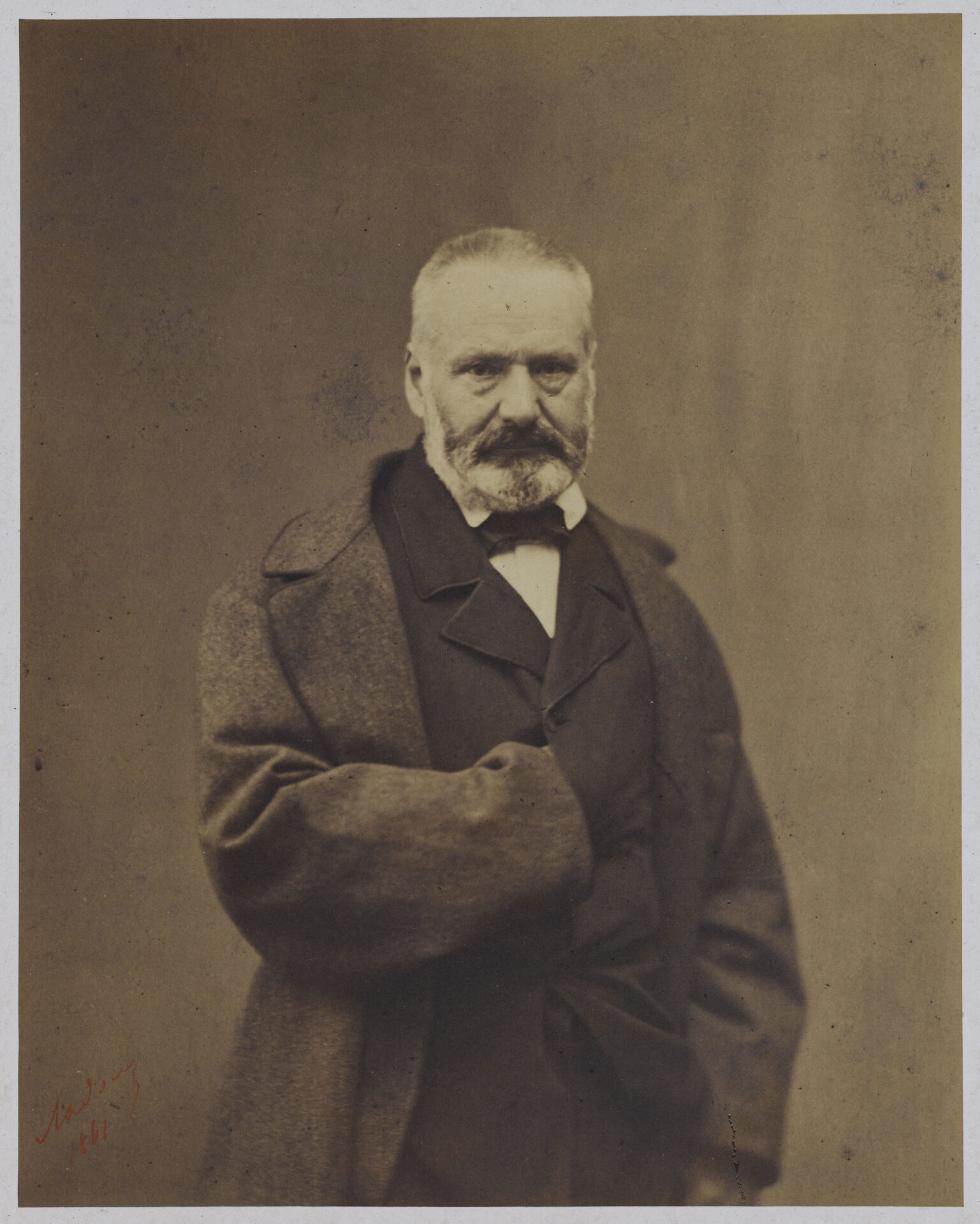
Victor Hugo. Photographie de Pierre Petit (agrandissement par Gilbert Louis Radoux, architecte et photographe).
His novels made him rich – not least Les Misérables, published in 1862 – and some of the proceeds found their way into further NBB shares. By 1872, Hugo owned 600 and was the bank’s second-largest shareholder.
Thus a writer, whose most famous novel depicted the misery and degradation of poverty, invested some of its proceeds in Belgium’s financial prosperity.
In the 20th century, the Belgian state asserted greater control. After the Second World War, the Bank of England and Banque de France both became fully state-owned. Belgium chose a compromise.
Under legislation passed in 1948, the state owns half of the NBB’s 400,000 shares, which cannot be transferred. The other half are publicly traded on the Brussels stock exchange, nowadays Euronext Brussels.
This is unusual in Europe: only Italy has no state ownership of its national bank and only Greece and Switzerland have mixed ownership roughly similar to Belgium’s.
Stock-market rules require the NBB to disclose large shareholdings, so one conclusion can safely be drawn: there is no latter-day poet or playwright among its investors to rival Victor Hugo.
