
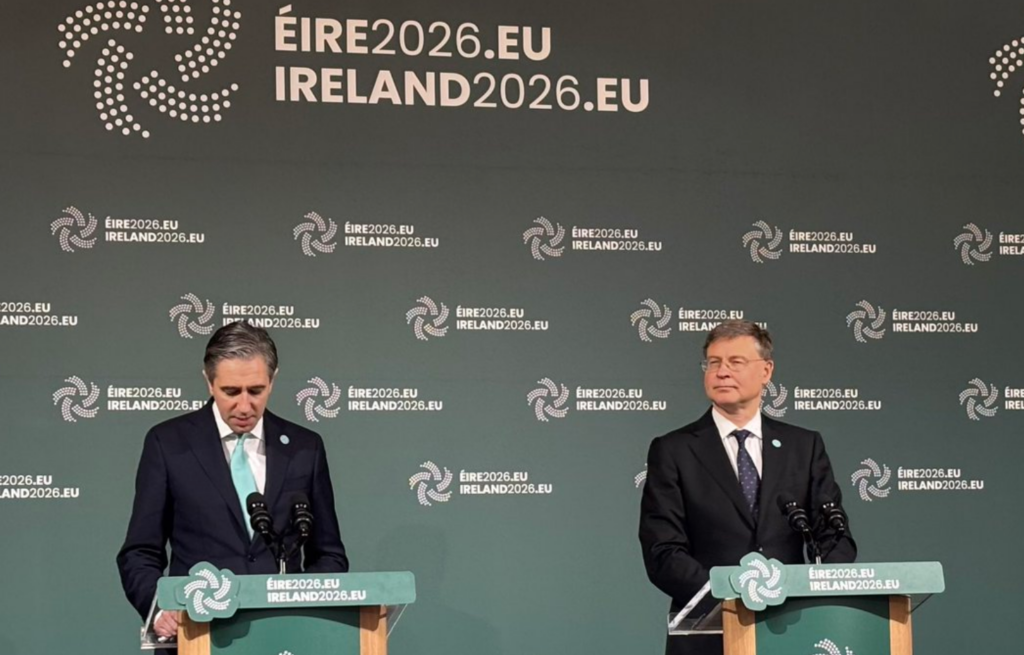
EU finance ministers meeting in Dublin discussed ways to make Europe’s banking sector more efficient and better integrated, alongside talks on financial innovation and artificial intelligence, European Commission executive vice-president Valdis Dombrovskis said.
The Commission presented a report to ministers setting out measures intended to improve the competitiveness of EU banks and reduce what it described as overlaps in supervision and reporting, Dombrovskis informed in remarks on Saturday.
Reporting costs for banks are estimated at €11.2 billion a year, he said.
Dombrovskis noted the EU’s prudential framework — the rules designed to keep banks safe and stable — has made banks more resilient since the global financial crisis, but that successive reforms have created complexity and duplication.
He said the Commission remains committed to implementing international standards for banking regulation and would not “lower the bar”, but wants standards applied in a way that reflects “Europe’s specific circumstances”.
Financial innovation and AI on the agenda
Ministers also exchanged views on innovation in the financial sector, including developments in payments, lending, capital markets and cross-border transactions, Dombrovskis said.
He cited the rapid development of technologies such as distributed ledger technology — a way of recording and sharing data across a network — as well as tokenisation and AI, and said there was agreement that innovation should be matched with safeguards and legal certainty.
AI was also discussed in a session informed by a presentation from International Monetary Fund managing director Kristalina Georgieva.
Dombrovskis said ministers discussed the need for a “concrete, workable and robust” regulatory framework for AI, as well as risks including supply chains and potential impacts on labour and energy markets.
He thanked Ireland for hosting the meeting and said discussions would continue in the months ahead.
