
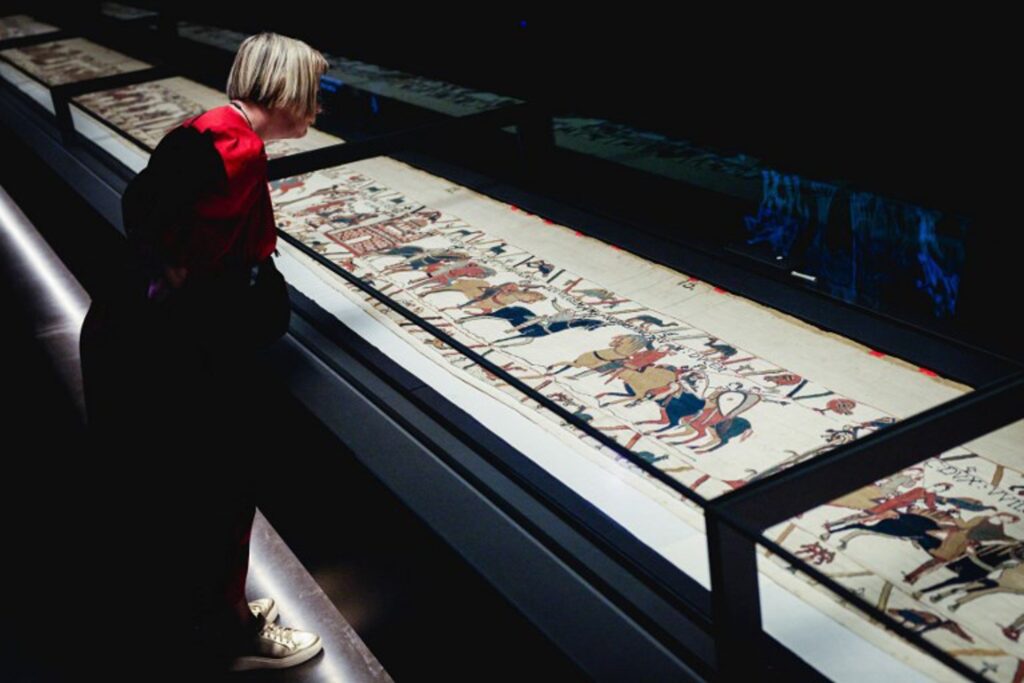
Visitors to the British Museum’s Bayeux Tapestry Exhibition are no longer allowed to take photographs of the historic artwork, in a move intended to ease the flow of crowds.
The museum announced the change on Monday, saying visitors who stopped to take pictures were slowing access for others.
The exhibition opened on 10 September, and visitors are given about 40 minutes to view the tapestry. Photography was initially permitted, but the museum has now reversed that decision.
Even before the exhibition opened, the museum said demand was “unprecedented.” When tickets went on sale in July, it recorded the highest single-day income in its history: more than £2.4 million in tickets were sold in the first 24 hours.
All tickets are sold out until 31 December, although a new batch will be released on 21 October.
The Bayeux Tapestry will remain at the British Museum for a year before returning to Bayeux in Normandy in 2027. Up to one million visitors are expected in total.
The tapestry, an embroidered cloth nearly 70 metres long and 50 centimetres high, is thought to have been made shortly after the Battle of Hastings in the 11th century. It is seen as a symbol of the ties between England and mainland Europe.
It depicts the events leading up to the Norman Conquest of England in 1066, led by William the Conqueror, challenging Harold II, King of England, and culminating in the Battle of Hastings.
The work has rarely been moved, even within France. It arrived in London in July following an unprecedented operation carried out under the strictest security measures.
