

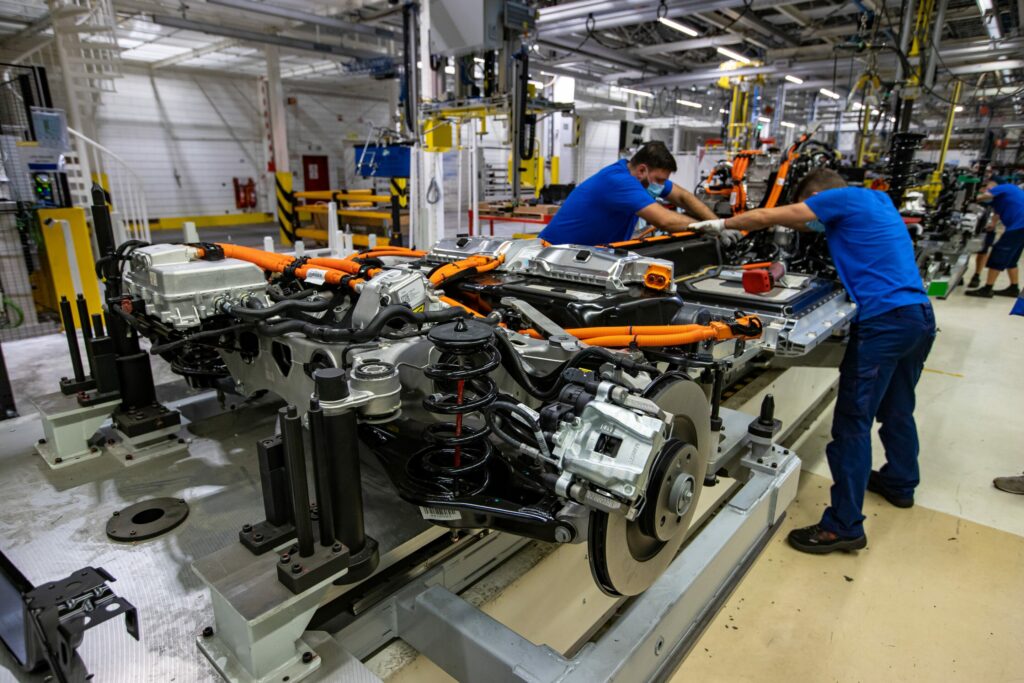
Across Europe, more and more consumers are choosing electric cars. The reason is simple: electric cars are becoming better, cheaper and more accessible, while high fossil fuel prices at the pump make the shift to electric even more attractive.
The lesson is clear. Europe’s future is electric, and our long-term competitiveness and resilience depend on accelerating that transition, not slowing it down.
Yet despite this reality, the conservative group in the European Parliament, the EPP, seems determined to reopen old debates and weaken the regulatory certainty that Europe’s electric mobility sector urgently needs. That certainty is essential if European manufacturers are to invest, scale up production, meet growing consumer demand and compete with China. It is also essential if Europe is finally to reduce its dependence on imported fossil fuels.
It is no secret that Renew did not ask for a revision of the CO₂ standards for cars and vans. We consider the current framework, with its 100% zero-emission target for 2035, a strong and necessary basis for Europe’s automotive transition. But now that the Commission proposal is on the table, we are engaging constructively with all relevant parties. That is what responsible, democratic, pro-European policymaking requires.
When EPP leader Manfred Weber recently invited Renew and the Socialists to work towards a common approach, we took that invitation seriously. A responsible compromise from the centre is exactly what Europe needs. But a common approach cannot mean dressing up delay as pragmatism. It cannot mean weakening the very market signal that Europe’s car industry needs in order to compete.
Europe needs certainty, not hesitation
In the middle of an oil crisis, slowing down the transition to electric vehicles is not pragmatism. By slowing down Europe will stay dependent, vulnerable and uncompetitive.
The market direction is already clear. Electric car sales are growing because consumers increasingly see electric vehicles as the better and more affordable choice. High fossil fuel prices only strengthen that case. The transition is already underway. What remains to be decided is whether Europe will lead it or allow other regions to capture the investments, value chains and industrial jobs that come with it.
China has already understood that the future of cars is electric. Other countries, such Vietnam, Turkey, and Ethiopia, are moving in the same direction. If Europe hesitates, we risk losing investment, competitiveness, and industrial jobs rather than protecting them.
While the EPP claims that we should weaken the targets to protect the European car industry, they are actually digging its grave. Weakening the targets may be the cheapest option for carmakers today, but it would kill innovation, delay investment, and leave Europe’s car industry unable to compete in ten years’ time.
Europe does not help its automotive sector by pretending the global market is standing still. We help it by giving manufacturers, suppliers, battery producers, charging operators and consumers a clear framework for where the European market is going.
A compromise cannot become a loophole strategy
The Commission proposal already represents a compromise. It includes a lower 2035 target and additional flexibilities for manufacturers. Renew can work with compromises. But we cannot support loopholes that fundamentally undermine the market signal for electrification and put Europe’s long-term prosperity at risk.
We often hear that weakening CO₂ targets is about “technology neutrality”. But technology neutrality should not mean ignoring reality. If one technology is more efficient, cheaper to operate, easier to scale and better for energy security, policymakers should not pretend all options are equal. The point is not to ban innovation. The point is to set a clear destination and let industry compete to get there.
For passenger cars, the most credible, scalable and energy-efficient route is electric.
The climate dimension cannot be ignored either. If EPP is serious about their commitment to reduce emissions by 90% by 2040, road transport must deliver. Transport accounts for around a quarter of Europe’s emissions, and cars are one of the clearest places to act. If we do not deliver a significant share of reductions from cars and vans, where exactly should those reductions come from instead?
Now is the time to listen
The EPP says it wants a stable, long-term agreement from the centre. We agree. But stability does not come from reopening the door to combustion engines through multiple flexibilities. Stability comes from telling manufacturers, investors and consumers clearly where the European market is going.
We call on the EPP to recognise the broader reality and look beyond narrow and short-sighted pressure from parts of the heavy Italian and German industry lobby. Europe’s car market is bigger than the interest of a few car and fuel producers - and consumers are already sending lawmakers legislators a clear message: they want cheaper electric cars and a credible, durable path forward.
Let’s come together and engage sincerely in building a responsible compromise from the centre. The pro-European political forces – EPP, S&D and Renew – all want to strengthen European industry and give citizens the best and most affordable choices. The way to do that is to provide the European market with the clear-cut framework it needs to compete with the Chinese EV industry.
That is the only credible path towards European energy security, a stronger and more competitive car industry, and more affordable clean cars for consumers.
Renew Europe stands ready to work for a responsible centre compromise. But the final deal must keep Europe on track towards the electric future our industry, citizens and climate need.
