
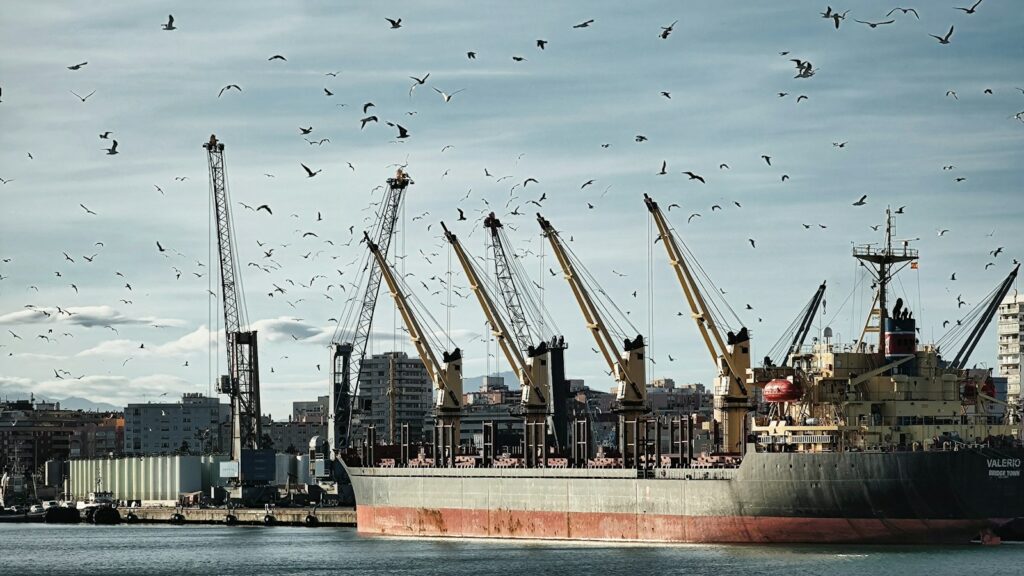
Exports of Ukrainian grain through the Black Sea have “effectively ground to a halt” since August because escalating attacks have made commercial shipping unviable, EU foreign policy chief Kaja Kallas warned at a UN side-event on global food security.
Ukraine is among the world’s largest agricultural exporters, supplying 15% of global maize exports, 10% of wheat, 15–20% of barley and 50% of global sunflower oil exports, Kallas said in remarks published on Tuesday by the European External Action Service (EEAS).
Around 90% of those goods typically move through the Black Sea corridor, which she described as the most important route for Ukrainian grain to reach international markets.
Kallas linked the disruption to wider pressure on food supply, saying conflict in the Gulf and the effects of climate change were stressing global food production and supply chains. Food “must never be used as a weapon of war.”
She said the European Union mobilised €2.1 billion in 2025 to strengthen food security globally, through short-term relief and support for longer-term resilience.
In Ukraine, she said the EU was working on grain storage options, supporting farmers and agrifood small and medium-sized enterprises unable to sell this year, and facilitating cargo at border crossings.
Calls for a Black Sea grain arrangement
The EU is calling for a Black Sea grain arrangement that would include a moratorium on attacks, Kallas said, adding that the international community should encourage diplomatic efforts to ensure the safe passage of civilian vessels, protect critical infrastructure and restore the trade route.
She referred to the UN-brokered Black Sea Grain Initiative, which operated between 2022 and 2023, saying it helped prevent a global food security crisis.
Kallas noted that officials from the UN Office for the Coordination of Humanitarian Affairs (OCHA), the UN Office for Project Services (UNOPS) and the World Food Programme were among those taking part in the discussion.
Since May 2022, the EU’s “Solidarity Lanes” — alternative routes designed to move Ukrainian goods by land and river when Black Sea shipping is disrupted — have facilitated trade worth around €304 billion.
Kallas also said Ukraine has called for a full and unconditional ceasefire since March 2025.
