
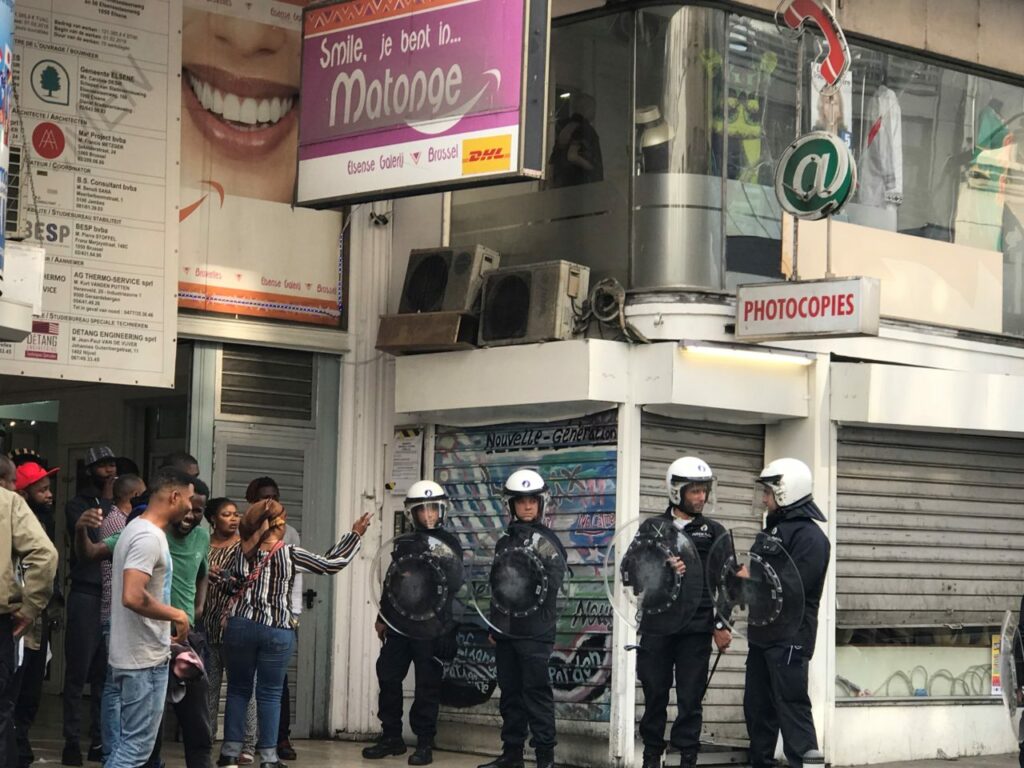
The so-called “Matonge” case is putting an entire neighbourhood on trial, a defence lawyer told the Brussels’ French-speaking Criminal Court on Wednesday.
Attorney Catherine Toussaint made the comment as proceedings continued over an alleged drug-dealing network operating in the Ixelles district of Matonge between 2022 and 2025.
Speaking at the Justitia court building, she said the case was unusual in that it was being named after an area rather than the alleged offences or suspects involved. “One can be Black, be in Matonge, and not sell drugs,” she said.
Police report under fire
Toussaint also noted that the Brussels Public Prosecutor had himself described the case as one “built to understand the problems of a neighbourhood.”
Another defence lawyer, Delphine Paci, echoed that argument in her closing submissions, saying that simply spending time in the area could not be treated as evidence of participation in any criminal activity.
Several defence lawyers challenged the reliability of the police observations underpinning the case.
Toussaint pointed to findings in a summary report stating that conventional investigative methods had not worked in the neighbourhood and that the layout of the area had made surveillance difficult.
It's not Pablo Escobar
Her client, she said, had been stopped in Ixelles with just over one gramme of cannabis. “We are not dealing with Pablo Escobar here,” she added, stressing the small quantity involved.
Other defence lawyers also criticised police reports for being too vague and not always reflecting officers’ hour-by-hour observations in the field. They argued further that some allegations were not supported by any significant seizures.
Nevertheless, Toussaint praised the prosecutor’s “transparency,” noting that he had taken over the case while the proceedings were already under way and had said he did not agree with all the submissions made by his predecessor.
Sentences requested range for 30 to 40 months
The prosecution has requested prison sentences of 30 months for the alleged members of the group and 40 months for its alleged leaders.
At the start of his submissions, the public prosecutor acknowledged that the case involved no intimidation, threats or corruption, despite claims that the drug dealing had been carried out as part of an organised group.
He therefore asked the court to acquit the defendants originally charged with membership of a criminal organisation. However, they are still being prosecuted as members of an association involved in drug trafficking.
Several defence lawyers told the court on Wednesday that any penalties must be assessed individually. Most sought the acquittal of their clients as their primary request.
