
The European Commission announced on Tuesday that the EU and the Philippines have reached substantial agreement in their negotiations for a Free Trade Agreement (FTA).
The trade talks were Initially launched in 2015 but suspended in 2017 due to severe human rights violations under former Philippine President Rodrigo Duterte’s "war on drugs". They were assumed in March 2024 amid remaining concerns raised by EU and Philippine civil society about labour rights, environmental protection and the persecution of human rights defenders and journalists.
According to the Commission, the FTA is envisaged to deepen economic ties between the EU and another strategic, fast-growing partner in Southeast Asia. The agreement is expected to unlock stronger trade and investment flows, by improving conditions for exporters, service suppliers and investors on both sides.
Bilateral trade between the EU and the Philippines has potential to grow well beyond current levels – totaling €17.6 billion in goods (2025) and €10.3 billion in services (2024). In 2025, the EU was the Philippines' fourth largest trading partner, accounting for 8.3% of the country's total trade in goods.
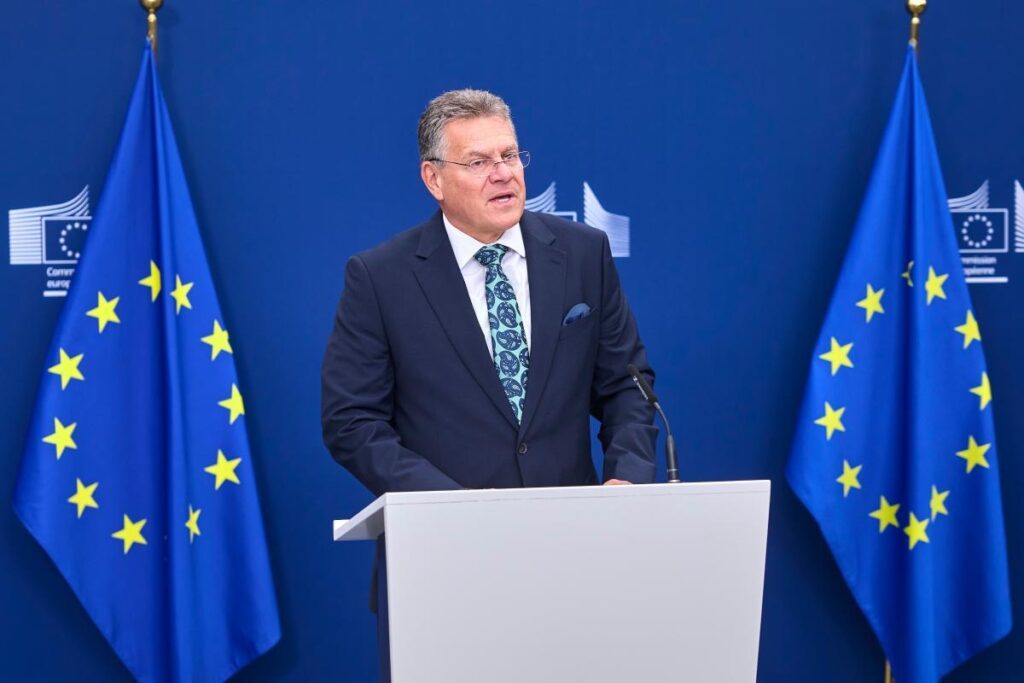
In a joint press statement, Maros Šefčovič, Commissioner for Trade and Economic Security, and Maria Cristina Aldeguer-Roque Philippine, Secretary of Trade and Industry, announced the “substantial conclusion” following their video call, “putting the deal on a clear path towards its final conclusion in the coming months”.
The Commission listed the mutual benefits, such as the elimination of tariffs and improved market access on both sides. With 113 million people, the Philippines represents a major market for EU exporters. The FTA will liberalise over 94% of tariff lines, covering more than 97% of bilateral trade.
Other trade benefits are said to be clear rules on government procurement, digital trade, sanitary and phytosanitary measures, better protection of intellectual property rights, and transparent and ambitious provisions on energy and raw materials.
“I am proud to say we have delivered a substantial agreement that reflects the ambition both sides brought to the table,” commented the Commissioner. “Our FTA does not just remove barriers to trade and investment – it builds a modern, forward-looking partnership between the EU and the Philippines.”
“I am now looking forward to its final conclusion so that we can reap its benefits as soon as possible,” he added, indirectly referring to the Trade and Sustainable Development chapter in the FTA.
Asked for a clarification, Commission deputy spokesperson Olof Gill told The Brussels Times that “the respect of human rights is of utmost importance for the EU, and it is essential our partners respect and promote these values”.
He confirmed that “the EU-Philippines FTA will have an ambitious Trade and Sustainable Development chapter according to the EU’s best practice, and will make human rights and the Paris Agreement an essential element of the FTA”.
In the meantime, Trade Justice Pilipinas, a multi-sectoral civil society network in the Philippines, commented today (24 September) that “concerns over lack of transparency and meaningful public participation have hounded these negotiations throughout”.
“What exactly did the government agree to—and why is the Filipino public being asked to trust a trade deal whose substantive provisions have not been disclosed? Are workers’ rights, trade-union rights, decent work and environmental protections in the much-hyped Trade and Sustainable Development chapter enforceable with the same seriousness as market-access commitments? “
The issue of human rights remains a sensitive issue, according to the civil society network. While it agrees that the EU should put pressure on the Philippine government to pass pending legislation to protect human rights defenders, it writes that it is important to question as well how the agreement itself could lead to violations and abuse of human rights.
