
Odoo's 2026 turnover is currently up 48% on the same period last year, according to the Belgian software group, which is preparing a partial price rise.
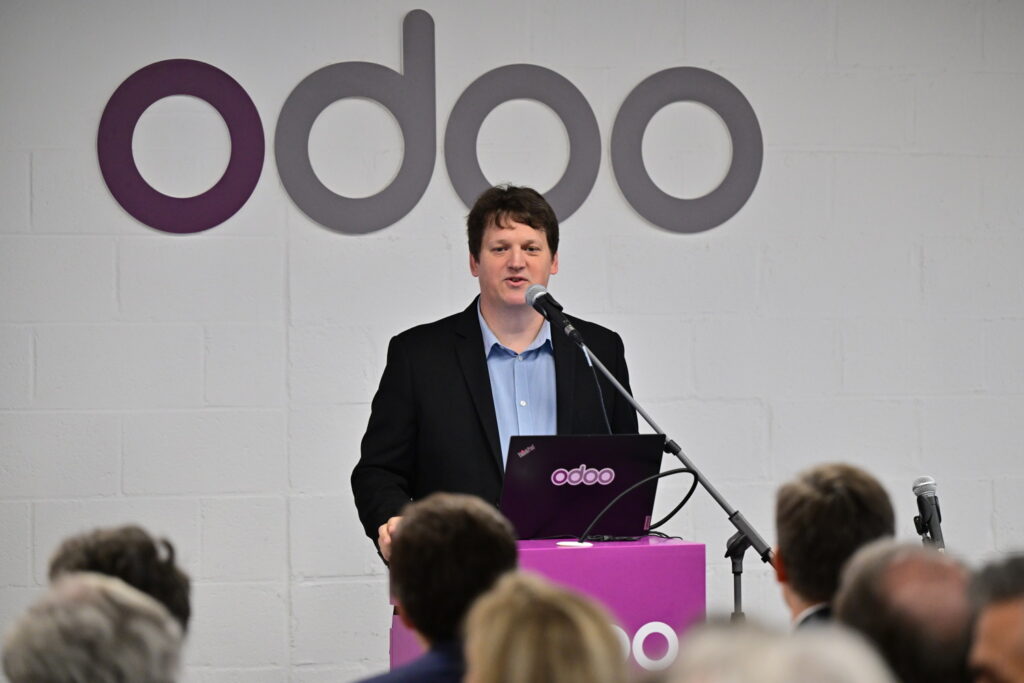
The company is now valued at €10 billion, founder and chief executive Fabien Pinckaers announced at Odoo Experience in Brussels, describing 2026 as a strong year for the company.
He said the business could grow further with the help of a limited increase in prices, while again insisting that he has no intention of selling it.
First price increase in four years
For the first time in four years, Odoo will introduce a partial price increase of about 20% to offset higher salary and hosting costs against a backdrop of persistently high inflation which, the company said, has totalled 26% over several years.
Even after the adjustment, Pinckaers said, Odoo will remain significantly cheaper than its competitors.
Under the new pricing structure, use of a single application will remain free and the basic plan will stay unchanged at €19.90 per user per month.
New 'light user' category
The enterprise plan for larger companies will rise from €29 to €35 per user per month. Odoo is also launching a new “light user” category priced at €7.90 a month, available when there is at least one full user.
Pinckaers said customers would probably stay even if prices were doubled or tripled, but added that he would never do that because the issue was not simply one of cost or profit, but of accessibility and fairness.
The company currently has 28 million users worldwide, around 80% of them on free plans and 20% paying. Those users will soon gain access to the 20th version of Odoo’s management software, which places a strong emphasis on integrated artificial intelligence capable of carrying out many time-consuming tasks for entrepreneurs.
Annual growth of about 50%
The additional income is expected to help offset the €36-million accounting loss registered in the 2025 financial year. According to the company, that shortfall has already been erased this year, with operating income topping €50 million in the first eight months.
Odoo said it prioritises financial balance over high profits, arguing that excessive profits would suggest underinvestment in the product. Pinckaers said cash flow remains positive and continues to grow.
The business software company expects billings to exceed €900 million, before passing €1 billion in the 2027 financial year. Its revenue stood at €620 million in 2025. Pinckaers said Odoo has delivered annual growth of about 50% for the past 20 years.
Revenue base spread over 180+ countries
Its revenue base is widely diversified internationally, with 12% coming from the United States, 9% from Belgium and 9% from France, while the remainder is spread across more than 180 countries through around 20 subsidiaries and partner networks.
Odoo, which competes directly with major groups including SAP, Oracle and Microsoft, employs about 7,500 people worldwide, including more than 1,700 in Belgium. It plans to reach 10,000 employees by 2027 by hiring around 3,500 people over the next 12 months, including 700 in Belgium, of whom 300 to 400 will be developers.
Pinckaers said nearly half of developer hires are international recruits coming to Belgium on work permits because the domestic market does not provide enough suitable profiles.
Some 45,000 visitors expected at Odoo Experience
Odoo Experience is expected to attract about 45,000 people over three days, with 450 talks and 500 exhibitors spread across five halls at Brussels Expo.
The company estimates that 80% of attendees will come from abroad, generating around 10,000 hotel nights.
The event is intended both to strengthen the Odoo community and expand it, including by attracting well-known figures such as Eden Hazard, Inoxtag, Nafissatou Thiam, Average Rob and GuiHome.
Target: World's biggest IT/business trade fair
Pinckaers said he wants to turn it into the world’s biggest trade fair dedicated to IT and business.
The event has a budget of €4.5 million. With expected income of €3.5 million despite free entry, Odoo Experience is set to cost the company about €1 million.
Asked about the company’s valuation, Pinckaers put it at €10 billion, saying that is what potential investors would be willing to pay to buy it. He repeated, however, that he is not a seller.
