
As Europe seeks to reduce aviation emissions while strengthening its energy security, sustainable aviation fuel (SAF) is becoming an increasingly important part of the debate.
SAF is an umbrella term covering both bio-SAF, produced from sustainable biomass and waste-derived feedstocks, and e-SAF, synthetic fuel produced from renewable electricity, green hydrogen and captured carbon dioxide. The technology remains more expensive than conventional fossil-based jet fuel, while investment in new production facilities requires significant capital and long-term certainty.
These issues will be at the centre of “Sustainable Aviation Fuel for a Safer Europe,” an event organised by Topsoe and Moeve in Brussels on Thursday 1 October. The conference will bring together industry representatives, airlines, technology providers and policymakers to discuss how Europe can scale up SAF production and build a more resilient aviation fuel supply.
Elena Scaltritti has been CEO of Danish technology company Topsoe since March 2026, after spending four years at the company as Chief Commercial Officer. Topsoe develops technologies for the production of fuels and chemicals, including sustainable fuels and hydrogen. According to the company, around one-third of the world’s operating SAF production capacity is based on Topsoe technology.
Ahead of the Brussels event, Scaltritti spoke about the challenges facing the SAF industry, the role of regulation and investment, and why she sees sustainable aviation fuel as an opportunity not only to decarbonise aviation but also to strengthen Europe’s energy independence.
When you look at the entire SAF value chain, from renewable energy and hydrogen and carbon feedstocks to fuel production and ultimately airlines, where do you see the biggest bottlenecks today?
Elena Scaltritti: The biggest bottleneck is investment uncertainty. The technologies needed to produce both bio-SAF and eSAF are available today. . The challenge is that these projects require significant capital investment and have long payback periods. To attract investors, the industry needs strong demand signals that will remain in place over the long term.
A strong policy framework is therefore essential for an emerging market. The EU needs to remain committed to its mandates and targets.
Another potential bottleneck is feedstock, particularly for bio-SAF. Most SAF produced in Europe today is bio-SAF, derived from waste oil, animal fats or other lipids, which are also in high demand in other industries. Addressing that constraint and developing additional pathways, including both bioSAF and e-SAF, will be important.
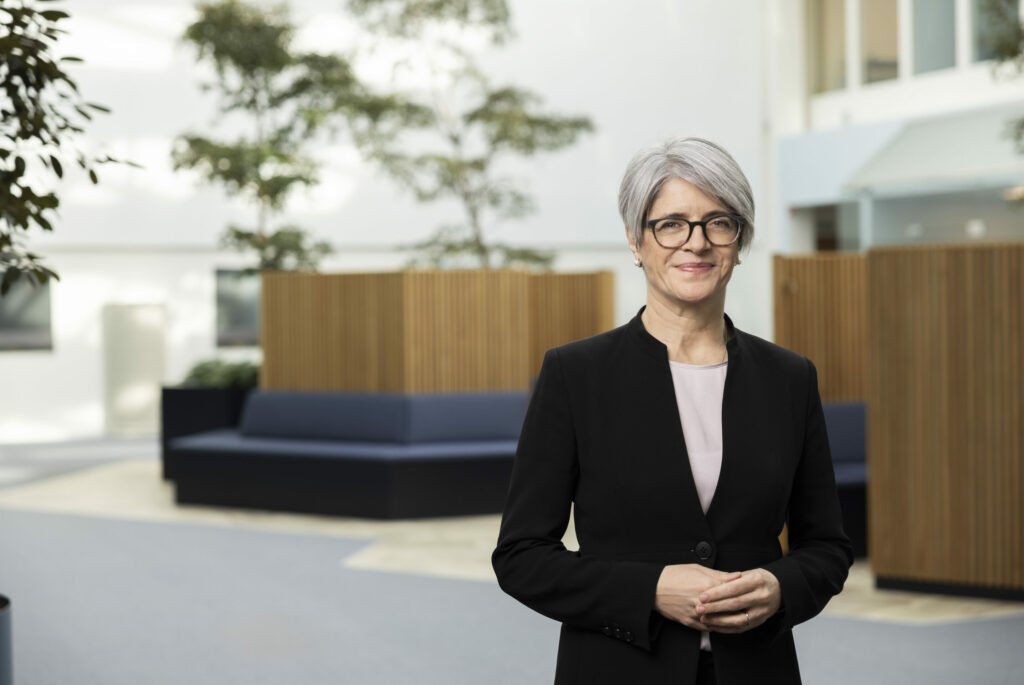
Elena Scaltritti CEO of Topsoe
Europe is facing growing tension between its climate ambitions and the commercial reality of European industry, particularly when SAF produced elsewhere may be cheaper. How is that changing the way Topsoe approaches the market
Elena Scaltritti: Europe faces a strategic choice. SAF initially developed primarily around the need to decarbonise aviation. Today, however, there is also a broader question of energy security. Europe relies heavily on imports of fuels and crude oil, and we need to ask whether that is the most resilient position to be in.
SAF can therefore be viewed not only as a decarbonisation tool but also as an opportunity to create a new strategic industry in Europe. That means new manufacturing capacity, deployment, innovation and greater energy resilience.
At Topsoe, we are a technology provider. Our role is to help customers unlock potential, whether through bioSAF, e-SAF or other pathways. There is no single technology that will solve the problem, so our job is to develop and enable as many viable solutions as possible.
We have been involved in fuel technologies that enable cleaner fuel production for decades. Looking ahead, our role is to help the industry not only decarbonise, but also find alternative energy sources and remain resilient and competitive. We develop technologies that are competitive, reliable and diversified, allowing the industry to produce different types of fuels from conventional fuels to low-carbon, renewable fuels and efuels.
How does domestic SAF and e-SAF production strengthen European competitiveness?
Elena Scaltritti: Today, Europe imports roughly 30 percent of its aviation fuel demand, and the dependency is even greater when considering the crude oil used to produce aviation fuel. Recent disruptions have demonstrated the vulnerability that comes with relying on external supplies, as well as the price volatility that follows.
Industry does not benefit from unstable supply or volatile prices. SAF currently comes at a premium compared with conventional jet fuel, but with the right policy support, Europe can develop an industry that increases energy independence, creates greater supply and price stability, and builds technological competitiveness.
Europe is unlikely to compete in the fossil fuel market on the same terms. But it can compete by developing the technologies needed for the growing SAF industry and become a frontrunner in the sector.
Can you explain the difference between bio-SAF and e-SAF?
Elena Scaltritti: SAF can be produced through different pathways. Today, the dominant pathway is bio-SAF, which usesrenewable feedstock. In Europe, this can include used cooking oil, animal fats or other residual feedstocks from industrial processes. These materials undergo refining and hydrotreatment to produce jet fuel with lower lifecycle CO₂ emissions.
With e-SAF, the process starts with renewable electricity. An electrolyser uses renewable electricity to produce green hydrogen. You then need a source of carbon, which can come from captured CO₂, including biogenic CO₂ from industrial processes. The hydrogen and CO₂ are combined and processed through a series of chemical reactions to create hydrocarbons that can ultimately be turned into jet fuel.
The “e” in e-SAF refers to the use of electricity as the starting point for producing these molecules.
Are we already flying commercially on e-SAF?
Elena Scaltritti: Commercial flights are already operating on bio-SAF blends today. However, eSAF remains at a very early stage of deployment and is not yet available at commercial scale The amount is still relatively small, but it is a starting point.
SAF blending obligations have already started in Europe . In addition, a specific mandate for e-SAF, begins in 2030. The industry therefore needs to develop production capacity well ahead of those requirements.
That means the industry needs to develop the necessary production capacity ahead of those requirements.
One project we are working on with the German Aerospace Center is aimed at demonstrating an integrated e-SAF production process. It combines Topsoe technology with technology from Sasol, starting with CO₂ and green hydrogen and producing jet fuel.
It is a research and development project rather than a commercial-scale facility, but it is important because it will demonstrate theintegrated technology industrially. One of the technologies involved is Topsoe’s eREACT, which combines hydrogen and CO₂ to begin forming the hydrocarbon chain needed for the fuel.
What is needed to accelerate SAF production and scale up across Europe?
Elena Scaltritti: Europe already has an ambitious policy framework, and it has triggered billions of euros in investment. What is particularly important now is maintaining the credibility of the mandates.
Europe needs to remain firm and committed to increasing the mandates over the longer term. This is necessary to unlock further private investment.
Other countries are also introducing different approaches, including mandates and incentives. SAF is gaining traction not only because of decarbonisation, but also because countries that depend heavily on oil imports are looking at it as a way to improve their energy resilience and independence.
How important are stable policy frameworks and long-term regulation for SAF investment decisions?
Elena Scaltritti: They are fundamental. This is an emerging industry that requires significant amounts of capital. The ambition is there, but investors also need certainty that this ambition will remain in place over the long term.
That is particularly important now, as investments need to happen in order to meet the requirements coming into force in 2030.
At the same time, the conversation around SAF is increasingly moving beyond decarbonisation towards the strategic importance of fuel within Europe’s energy system.
Collaboration is often described as essential to the energy transition. What does successful collaboration between industry, technology providers and regulators look like in practice?
Elena Scaltritti: Nobody can do this alone. Technology providers, airlines, fuel producers and infrastructure developers all need to work together across the value chain.
The technology is available, and there are already plants producing biofuels. But scaling the industry requires cooperation. Regulators need to create the right frameworks and generate demand. Industry needs to invest in and scale production. Airlines and other customers need to commit to buying sustainable fuel.
At Topsoe, we go beyond our role as a technology provider by helping bring the different actors in the value chain together. That is also what we are doing on 1 October in Brussels, where we are bringing together industry leaders, airlines, decision-makers and other stakeholders to discuss the importance of SAF from different perspectives and help enable the industry to scale.
What role does Topsoe play in the SAF value chain?
Elena Scaltritti: Around one-third of the world’s SAF production capacity is based on Topsoe technology. We develop technologies and catalysts that enable the chemical reactions required to produce sustainable fuels. This applies to SAF as well as other renewable fuels.
For bio-SAF, one of the most established approaches uses hydroprocessing technology. Waste fats and oils are treated with hydrogen to produce SAF. Bio-SAF is currently the most technologically mature and widely used pathway.
e-SAF is a newer pathway, based on renewable electricity, green hydrogen and CO₂. This is the area in which projects such as our collaboration with the German Aerospace Center are helping to demonstrate the technology needed for future production.
Looking ahead, what will determine whether Europe can become a global leader in SAF production?
Elena Scaltritti: The next 18 to 24 months will be crucial. The blending mandates will become progressively more ambitious in the coming years, including the introduction of specific requirements for eSAF in 2030.
Investment decisions need to happen now to ensure that the industry can meet those requirements.
If we get that right, SAF can contribute both to decarbonisation and to greater resilience across Europe. The 1 October conference in Brussels is part of our effort, together with our partners, to keep that momentum going, make commitments clearer and create alignment across the industry.
