
Kristina Chetcuti, a registered health coach (UKIHCA) specialising in behaviour change and lifestyle medicine (ELMO), answers your lifestyle dilemmas.
Q. “I drink several coffees a day and get a headache if I miss my usual coffee at the usual time. Is this a sign that I’m having too much coffee?”
A. It is very fitting that I answer your question today, as it happens to be International Coffee Day. The quick answer is: it depends on what coffee does to you.
I’ll use myself as an example. Back when I used to drink coffee, an espresso in the morning would leave me supremely hyper for the rest of the day. People who drank coffee as a nightcap used to tell me, "Ah, that’s because you’re not used to it. You should drink it more."
So I waited until I 'had to' go to Rome, and took the opportunity to put this theory to the test: cappuccino, espresso, corto, lungo, macchiato, ristretto, the joy! Reader, by the end of the week, my right eye was twitching like I was sending Morse code.
Regrettably, I had to end my relationship with coffee there and then.
The caffeine gene
Finally, science has come up with an explanation for my dramatic reaction to coffee: some people biologically process caffeine differently. And it’s genetic.
Enter CYP1A2, the gene doing much of the caffeine-processing work. We all have this gene, but we all have different variants of it, which is why, in some of us, it’s less efficient.
It’s easier if we think of this gene as a washing machine. Every single one of us has the same basic washing machine, but everyone has a very slight technical variation.
This difference is what makes one person’s machine run the cycle more efficiently and quickly than another’s, and why the caffeine is cleared up sooner. (It’s not just the gene, mind you; smoking, pregnancy, hormonal contraceptives and medications can also affect the caffeine clearance.)
However, this does not mean that if you have a caffeine-friendly washing machine, you can have coffee on a drip.
Alas, caffeine can affect your sleep even when you think it doesn't at all. I have several clients who tell me, "I can drink coffee at 22:00 and fall asleep right away." Yes, you fall asleep, but the quality of your sleep can still suffer.

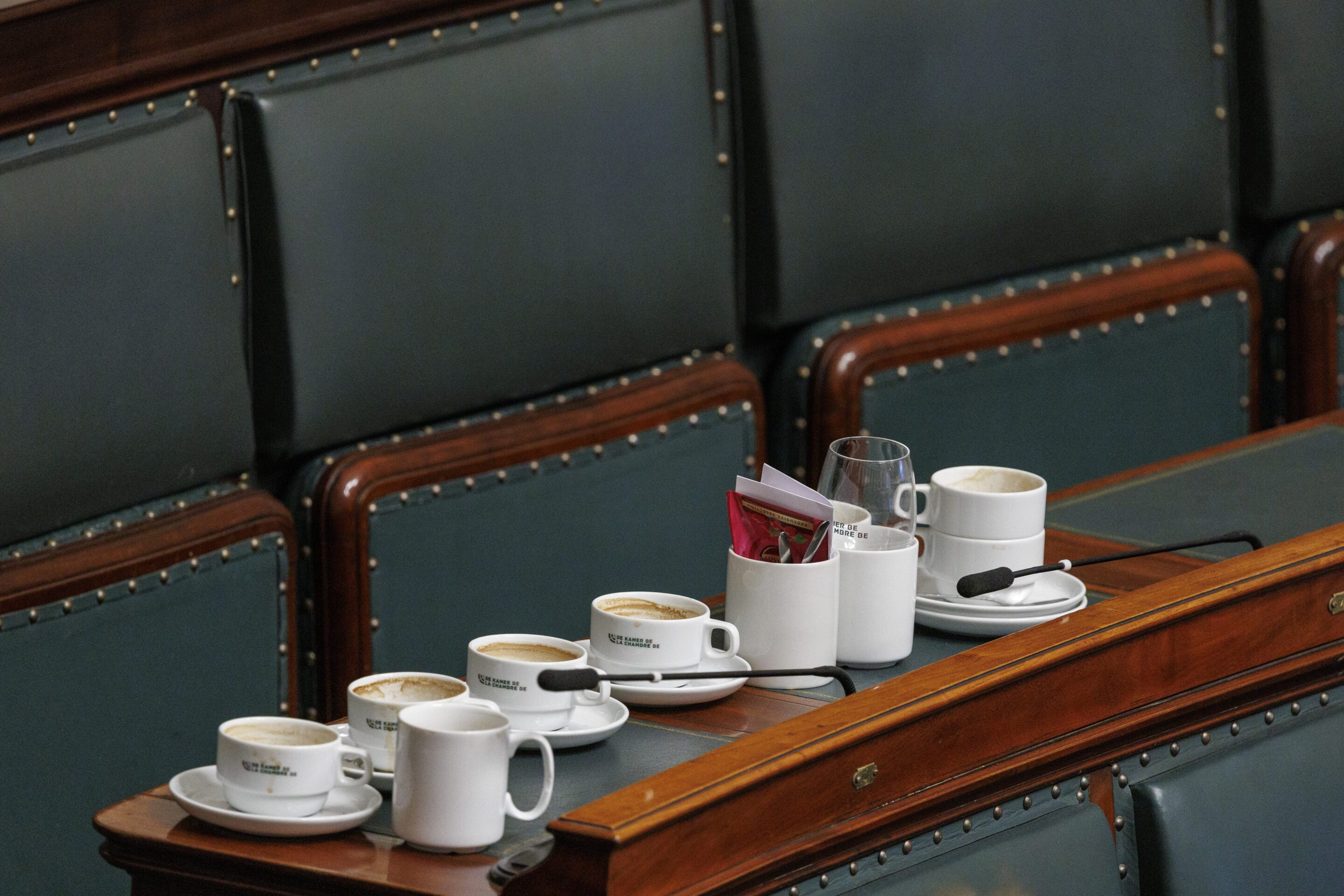
Belgian Prime Minister Bart De Wever (N-VA) drinking coffee during a plenary session at the Federal Parliament. Credit: Belga/Eric Lalmand
One particularly rigorous study gave participants 400 mg of caffeine (that’s like six espressos) at different times before going to bed. Even when the caffeine was taken six hours before bedtime, it significantly disrupted sleep and reduced their total sleep time.
The reason is that caffeine blocks adenosine receptors. Now, science can be rather complex, so we are going to have to imagine adenosine as my lovely Bpost post officer. She comes every evening delivering a letter to my brain which reads: "Kristina! You’ve been awake a long time. You’re getting tired. Time to sleep."
However, if I have been drinking coffee at night, caffeine gets in the way, like a snarling dog guarding the letter box, and the cautious post officer leaves the letter on the doorstep instead.
So the letter is there, but I am not reading it; the sleep pressure is still building, but caffeine is interfering with the signal. So, I stay awake when my body is actually piling up a growing need for sleep. And when I eventually go to bed, even if I manage to fall asleep, it can reduce the amount of deep sleep I get.
Something else to keep in mind is that caffeine has a half-life of about 4-6 hours. This means that after four hours, roughly half of the caffeine is still in your system. So, if you have 200 mg of caffeine (about three espressos) at 14:00, by 18:00 you still have at least around 100 mg in your system. At 22:00, there’s still 50 mg; at 02:00, 25 mg; and by 06:00, you still have 12.5 mg!
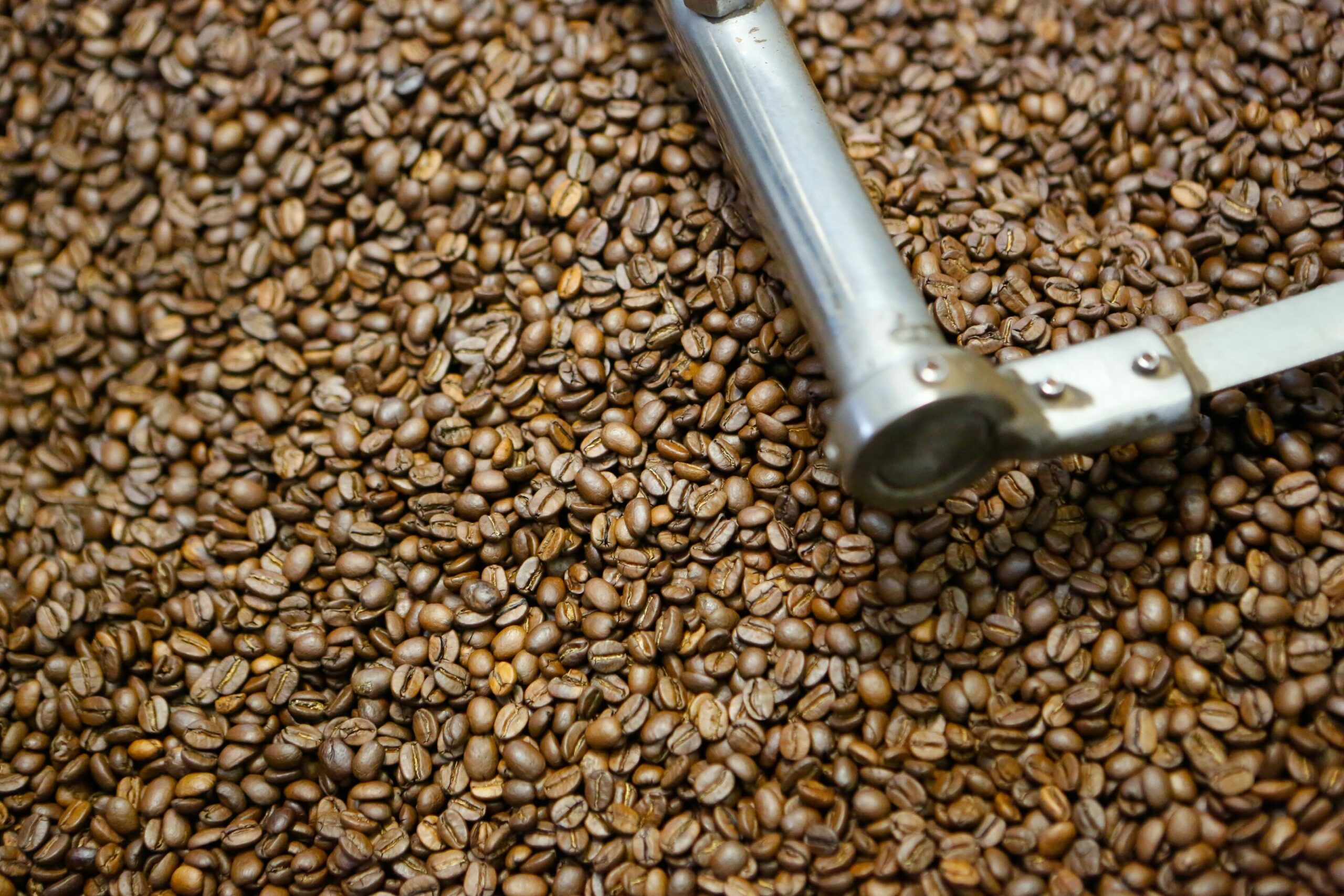
Coffee beans. Credit: Belga/Bruno Fahy
Incidentally, adenosine (the post officer) is also part of the reason you might get a headache when your usual coffee doesn't arrive at its usual time. Let’s say you drink coffee every day, so every morning the snarling dog, caffeine, blocks the Bpost post officers from delivering her letters.
After a while, your brain gets used to this arrangement. The post officer is still turning up, but the dog unfailingly stops her from getting to the letter box. Then one morning, you don’t have your coffee. The dog doesn’t turn up, hurrah!
Suddenly, the post officer can get to the letter box again, and her messages get through. Your brain has to adjust to this sudden change in adenosine signalling, which can leave you feeling sleepy, sluggish, headachy or even irritable. In short, that morning headache is your brain reacting to the sudden disappearance of caffeine that it has become accustomed to. It’s a classic withdrawal symptom.
I think we have gone through enough analogies to last us a year now. I just wanted to point out that coffee is actually quite new to our bodies. We sometimes talk about coffee as though it were an ancient European tradition, but it is not.
For most of European history, there was no coffee, there was just water, wine and beer – we have only been drinking coffee here for around 400 years. But, once coffee reached Venice from the Middle East, there was no going back.
Legend has it that even Pope Clement VIII, who was asked to condemn the Muslim drink as un-Christian, couldn’t resist it and instead gave it his blessing.
How much coffee does your country drink?
I don’t know your nationality, but just for fun, perhaps you’d like to see where your coffee-drinking fits in the European league table. These are the 2024 International Coffee Organization figures showing which European countries consume the most coffee per person.
Bzz! It’s the Finns!
- Finland: 12 kg per person per year
- Norway: 9.9 kg
- Iceland: 9 kg
- Denmark: 8.7 kg
- Netherlands: 8.4 kg
- Sweden: 8.2 kg
- Switzerland: 7.9 kg
- Belgium: 6.8 kg
And Belgium is in the top eight! And Italy doesn’t even make the list!
Ay, Italians are not necessarily big coffee drinkers, but my goodness, they are big coffee ritualists. They turned coffee drinking into an extraordinarily sophisticated art with very specific rules, including the sacred belief that cappuccino is somehow medically dangerous after lunch (it isn’t, but they’re too charming, so we go with their flow).
And while we are in Italy, if that week in Rome taught me anything, it’s that we all have a caffeine limit. The trick is working out where yours is, preferably without the twitching eye. Here are a few things to keep in mind:
Try to avoid coffee after 14:00. Especially if you are sensitive to caffeine or your sleep isn't great.
Drink coffee for pleasure. Not because you're exhausted and have another three hours of work to plough through.
Know how much caffeine you're actually drinking. The European Food Safety Authority (EFSA) considers up to 400 mg of caffeine a day "unlikely to raise safety concerns". But remember, your personal caffeine tolerance may be much lower.
Remember the half-life. Caffeine doesn't disappear when you finish your coffee. Roughly half of it can still be in your system four to six hours later.
If you must, switch to decaf after 14:00. Decaf is still coffee. It isn't some mysterious synthetic substitute. The beans are still coffee beans; decaffeination simply removes most of the caffeine. It does still contain a small amount of caffeine, though (there’s 2 mg of caffeine in a decaf espresso compared to 60 mg in a normal one)
And if you're getting headaches when you go past the time of your usual coffee, perhaps it's time to take the dog to the kennel a little more often and let the post officer get those letters through every now and then.
