
Plasma-derived medicines cannot be simply manufactured in a lab or scaled up on demand: they exist only because someone, somewhere, rolled up their sleeve to give life to others.
That act of generosity is behind the International Plasma Awareness Week (IPAW), which begins 5 October and it arrives at a pivotal moment for Europe. Plasma-derived medicines are a critical part of the healthcare sector but far different than traditional pharmaceuticals.
Two years ago, the EU passed the landmark SoHO regulation – the EU’s new rules on the quality and safety of substances of human origin, including plasma - to help increase the availability of plasma-derived medicines for over a million of European patients who depend on them.
But national implementation remains to be seen, as the currently underway Member-States implementation phase runs through August 2027, when the new rules take effect.
This means that countries have headroom to shape national policies that reflect their own circumstances. Flexibility matters, especially when it comes to sourcing plasma, from which life-saving plasma-derived therapeutics are made.
Adobe Stock
Rising demand requires more supply
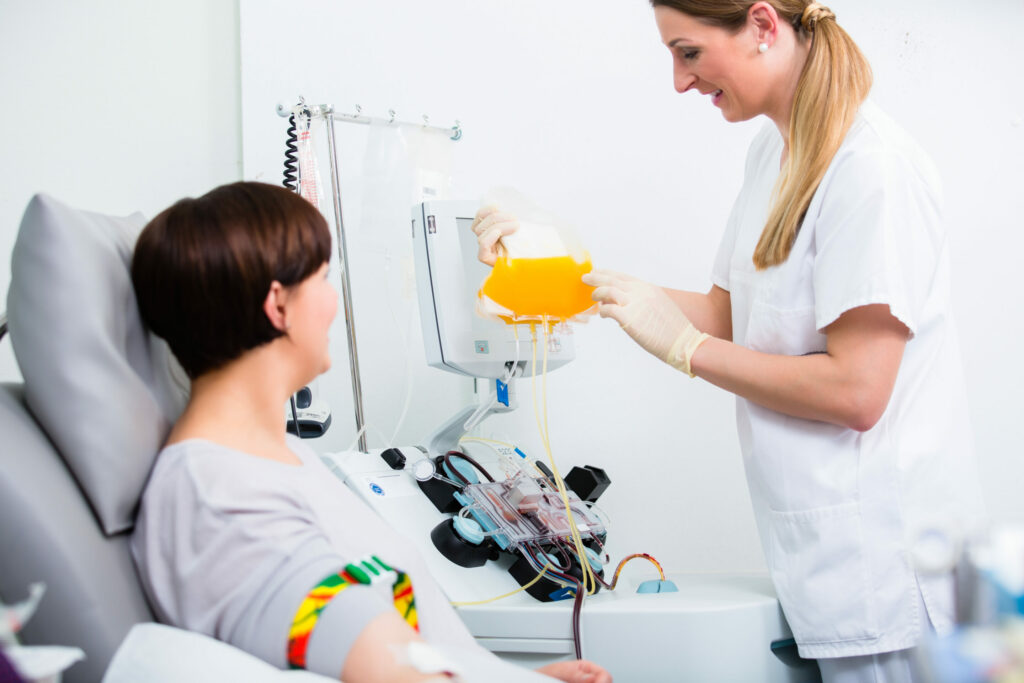
These unique medicines are nothing like synthetically manufactured pharmaceuticals such as pills that can be easily scaled up as needed. Healthy volunteer donors provide the starting gift of hope -- plasma -- for the medicines to exist, and patients often have no alternative. Without plasma, many would face intense suffering or in some cases, even death.
Clinical demand for these unique therapies is growing annually, owing to more and better diagnoses of diseases as well as new clinical applications. Yet about 40% of the plasma Europe needs for its patients is dependent on imports from the United States. It’s certainly not ideal to remain dependent on a single trading partner who at times can be confrontational, or when extenuating circumstances, like a global pandemic, could quickly and drastically disrupt complex global supply chains.
The SoHO Regulation explicitly calls for strategic autonomy and includes provisions to ensure continuity of supply for critical substances of human origin – plasma among them – giving Member States the freedom to build national collection systems on a solid EU-wide framework for safety, quality, and donor protection.
Strengthening plasma collection is also part of Europe’s broader ambition for self-reliance in critical medicines. A robust continental plasma base supports long-term security for both patients and the healthcare systems that serve them.
How best to reach self-sufficiency? Some countries rely chiefly on public donations and fall short of patient need – a gap that public-private coexistence has repeatedly helped close. Others, however, realize that no single actor can reach needed plasma volumes alone and enjoy systems in which public, private and non-profit collectors work alongside each other towards achieving the same goal.
This is how Austria, Czechia, Germany and Hungary operate, each of the three sectors contributing to a goal that’s positive for national patients and all of Europe. Part of their success comes from having invested smartly in dedicated plasmapheresis infrastructure enabling safe and efficient collections. Together, these countries collect more than half of Europe’s plasma.
Adobe Stock
Building infrastructure is only the start
Countries that want to follow Central Europe’s leadership will need to do more than just set up modern donation centers. Missing are the conditions in which people understand what plasma donation is (and how it differs from blood donation), why it matters, and how donations are the starting catalyst in creating life-changing medicines. A sensible place to begin includes supporting donor awareness, recruitment and retention, as well as recognizing the commitment involved in donation.
Compensation for plasma donors – in any form – has always been for Member States to decide and design within national law. The regulation sets out the conditions for any form of compensation to uphold the principle of voluntary, unpaid donation. Countries now building their own plasma programmes can draw on a growing body of experience from elsewhere in Europe to build awareness and steady donations – helping Europe shake its dependency and become a plasma power in its own right.
For patients, the stakes are high. Plasma shortage leads to limited availability of lifesaving plasma-derived treatments. That can mean delayed care, cancelled infusions or worsening symptoms. A resilient European plasma system isn’t a nice-to-have policy goal but an integral part of a robust European healthcare system that takes care of all its citizens.
This is the last IPAW before the books are closed on SoHO. Legislators in Member States have a chance to make choices that ensure every European who needs plasma-derived medicines can be sure to receive them.
Promoted by the Plasma Protein Therapeutics Association (PPTA)
