
Hi everyone, bonjour and goeiemiddag!
It’s Maïthé here, back again with the latest stories on our homepage.
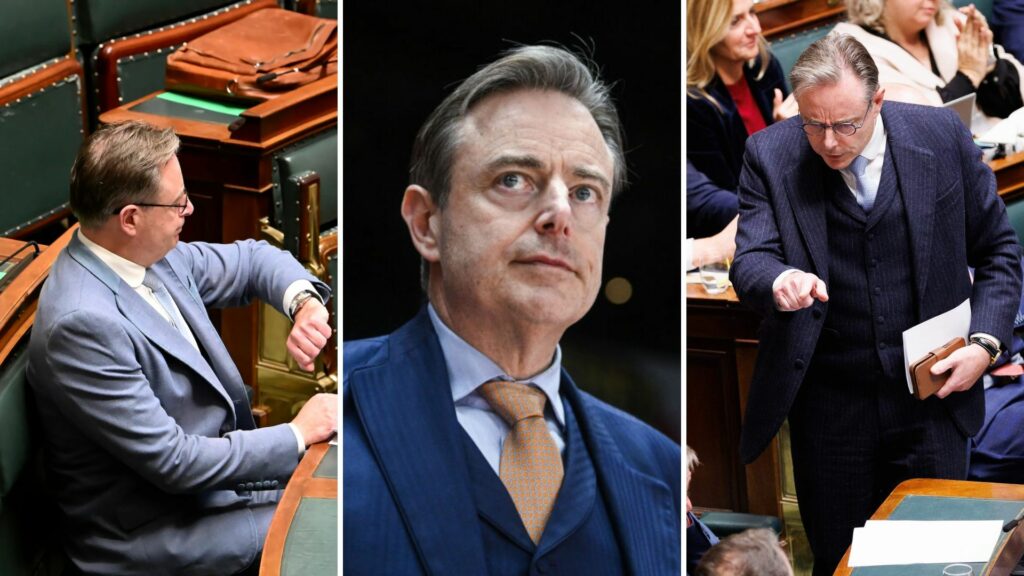
Over the weekend, Belgium’s Prime Minister Bart De Wever (N-VA) and his coalition partners continued their increasingly-frantic attempts at finding over €10 billion to balance the country’s budget.
To avoid being hit by a so-called “snowball of compounding interest” in 2030, the federal government needs to drastically save money and find new streams of revenue.
With the mid-October deadline approaching quickly, you might expect long and heated discussions between the different governing parties.
Though negotiations lasted nine hours on Sunday, the expected clash never materialised. Instead, the ministers diligently went through De Wever’s latest proposal line by line, with one source describing the talks as "civilised, but with very strong differences of opinion.”
Does that mean a balanced agreement is on the cards? Read more here.
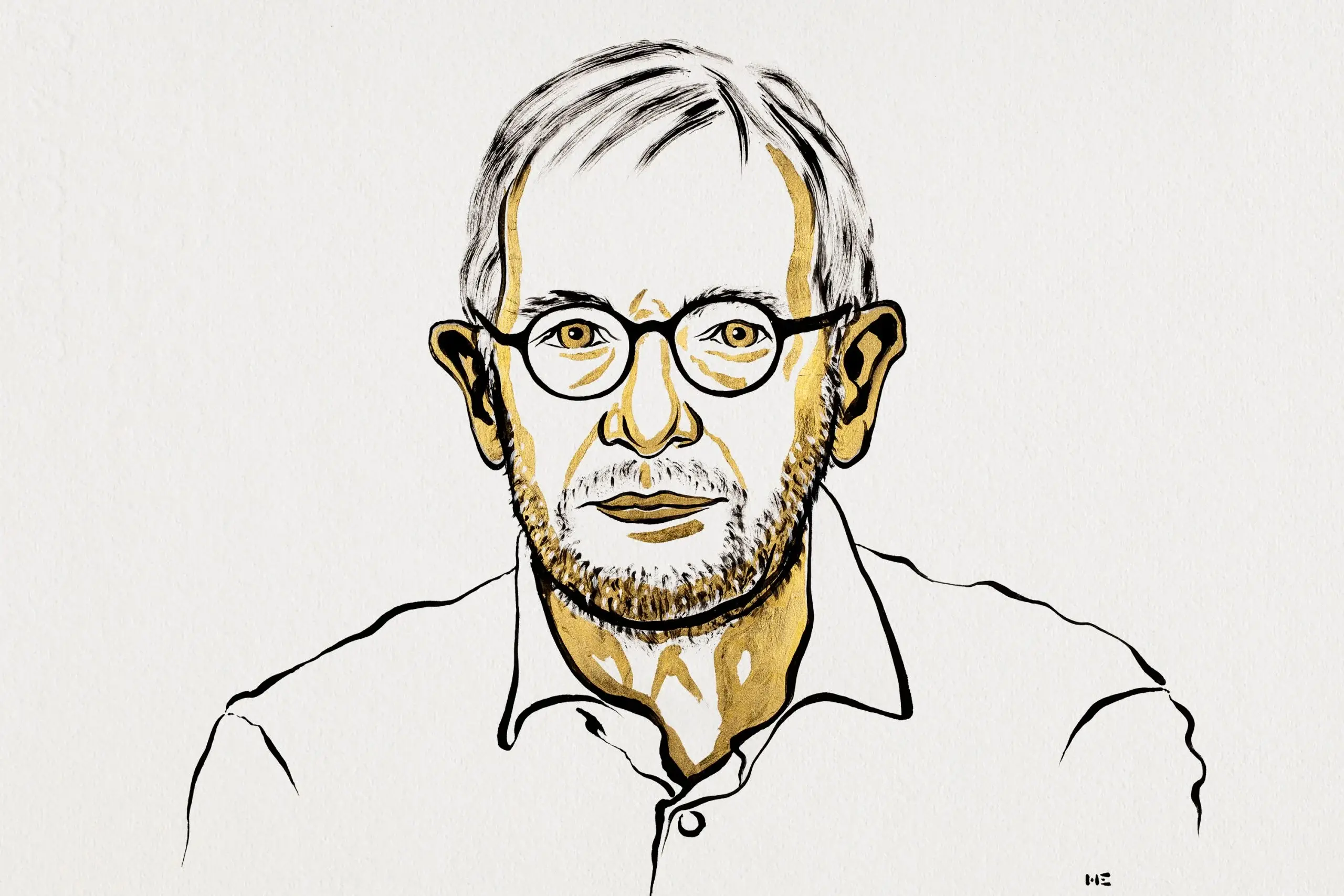
But Belgium is more than its budget deficit – as was made clear today by Belgian physicist Francis Halzen, who won the 2026 Nobel Prize in Physics for his groundbreaking research into neutrinos and his decisive contributions to the IceCube experiment.
Halzen played a key role in the development of IceCube, a vast neutrino observatory located at the South Pole that uses sensors embedded deep in the Antarctic ice to detect the particles. Find out more here.
And lastly, depending on where you live in Brussels, you might not have to put out your blue and yellow rubbish bags this weekend. With several national days of industrial action coming up, major disruptions to waste collection are expected.
The measure is intended to prevent uncollected rubbish from accumulating on streets and causing further disruption. Find out whether you’ll be affected here.
If you have any comments, tips or suggestions to improve our coverage, drop me an email at m.chini@brusselstimes.com.
Bye for now!
Belgium in Brief is a free daily roundup of the top stories to get you through your coffee break conversations. To receive it straight to your inbox every day, sign up below:
1. Belgiums €10 billion budget talk: What happened in the weekend?
After nine hours of talks, Belgiums federal government failed to reach a deal on the more than €10 billion it needs to cut. Here's where the coalition parties still disagree - and what happens next. Read more.
2. Belgian physicist Francis Halzen wins 2026 Nobel Prize
Belgian physicist Francis Halzen has won the 2026 Nobel Prize in Physics for his pioneering research into neutrinos and his contributions to the IceCube experiment. Read more.
3. Brussels urges some residents not to put out rubbish bags on 9 and 12 October
Brussels residents are being asked to keep blue and yellow rubbish bags at home during two national days of action, with waste collections and several other services expected to face major disruption. Read more.
4. ‘We have collectively failed’: Charles Michel leads European call for new strategy on Iran
"Europe needs to move beyond approaches that have failed to deliver lasting results and consider new options towards Iran." Read more.
5. Brussels among European cities most dependent on fossil fuels for heating
Brussels ranks among the European capitals most dependent on fossil fuels to heat buildings, prompting Greenpeace to call for a clear deadline to phase out gas. Read more.
6. Belgium to introduce a near-zero alcohol tolerance for new drivers in 2027
Belgium will lower the alcohol limit to 0.2% for drivers who have held their licence for less than three years, as road deaths rose by 6% in the first half of 2026. Read more.
7. Belgium to hit 24°C on Tuesday before temperatures plunge
Temperatures could reach 24°C in Belgium on Wednesday before a sharp change brings rain, strong gusts and highs of just 11°C to 15°C on Thursday. Read more.
