
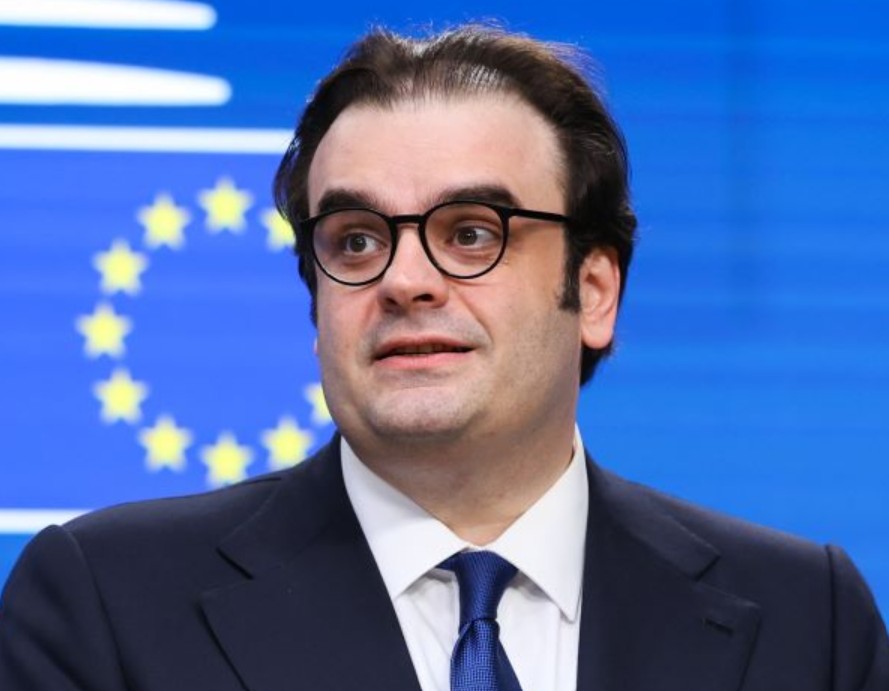
Europe must channel more of its private savings into investment and remove barriers that keep bank finance divided along national lines, Eurogroup President Kyriakos Pierrakakis said in a speech in Brussels.
Europe remains “one of the richest and most successful economic areas in the world” but “is not growing fast enough”, he told a forum hosted by the European Banking Federation and BusinessEurope, the Eurogroup informed on Wednesday.
Stronger growth translates into “better jobs, higher wages and rising living standards”, he said.
Pierrakakis stated that Europe needs to invest more in defence, energy security, artificial intelligence and strategic infrastructure, adding that “economic strength is increasingly becoming geopolitical strength”.
He cited an estimate by former European Central Bank president Mario Draghi that Europe needs around €800 billion in additional investment each year.
Public finances and EU resources matter, he said, but “public budgets cannot finance Europe’s transformation alone”.
Europe “does not lack money” because it has large private savings, but has not yet built a financial system capable of putting enough of those savings to work in the European economy, he noted.
Banks, barriers and cross-border lending
Banks still provide around 70% of financing to the European economy, making them central to efforts to boost investment, especially for small and medium-sized enterprises (SMEs), which are smaller firms that typically rely on bank loans rather than capital markets, Pierrakakis said.
He emphasised that the EU’s proposed Savings and Investments Union — an initiative to connect household savings with investment opportunities across the bloc — cannot succeed without completing the Banking Union, the framework created after the financial crisis to strengthen bank supervision and crisis management.
European banks are “resilient, profitable and well capitalised” and helped absorb shocks during the pandemic and the energy crisis, he said.
Despite the single currency and common supervision, the euro area banking market remains largely national, with only around 16% of corporate lending taking place across borders.
He also pointed to barriers to moving capital and liquidity within banking groups, and said cross-border consolidation remains difficult.
Pierrakakis set out three priorities: removing unnecessary barriers to cross-border banking activity and consolidation; building confidence in common safeguards including crisis management, access to liquidity in resolution, and progress on deposit insurance; and reducing “unnecessary complexity” while keeping the banking system resilient, arguing for “better regulation, not less regulation”.
He said the European Commission’s work on banking competitiveness had moved the debate forward, and added that the more difficult task now is the political process of reaching agreement among member states with different banking systems and national concerns.
