
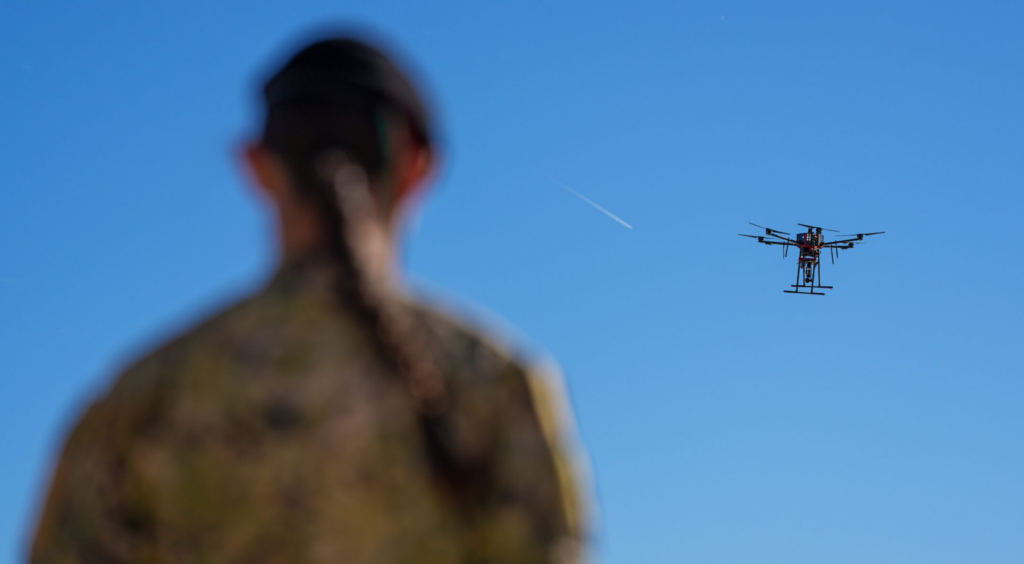
European defence specialists have tested how teams should respond after a hostile drone is brought down over a military site or critical civilian infrastructure.
Neutralising a drone does not always remove the danger because explosive devices may still be active and hazardous chemical or radioactive substances could spill from the aircraft, the European Defence Agency warned in a statement on Wednesday.
The European Vigilant Shield tabletop exercise at the Santa Margarida military camp focused on coordinating the steps taken after a drone incident, including making devices safe and dealing with hazardous materials, according to the agency.
Participants worked through scenarios that became more complex over time, covering threat assessment, explosive ordnance disposal and the recovery of components for analysis.
The exercise also examined how to preserve evidence that could help identify who was responsible for an incident.
Next steps planned through 2028
The European Defence Agency said the findings will feed into a review of operational techniques, procedures and military doctrine, covering both the immediate response to a drone threat and actions required after it has been neutralised.
Specialists involved included experts in counter-drone operations, command and control, chemical, biological, radiological and nuclear defence, and military legal affairs.
National experts took part alongside representatives from the United Nations Mine Action Service and several NATO bodies, including its Counter-Improvised Explosive Devices Centre of Excellence and groups focused on chemical, biological, radiological and nuclear defence.
A virtual wargaming phase is planned for 2027 to test decisions across several teams using more complex scenarios, with live experimentation scheduled for 2028 to trial the full response in field conditions.
