

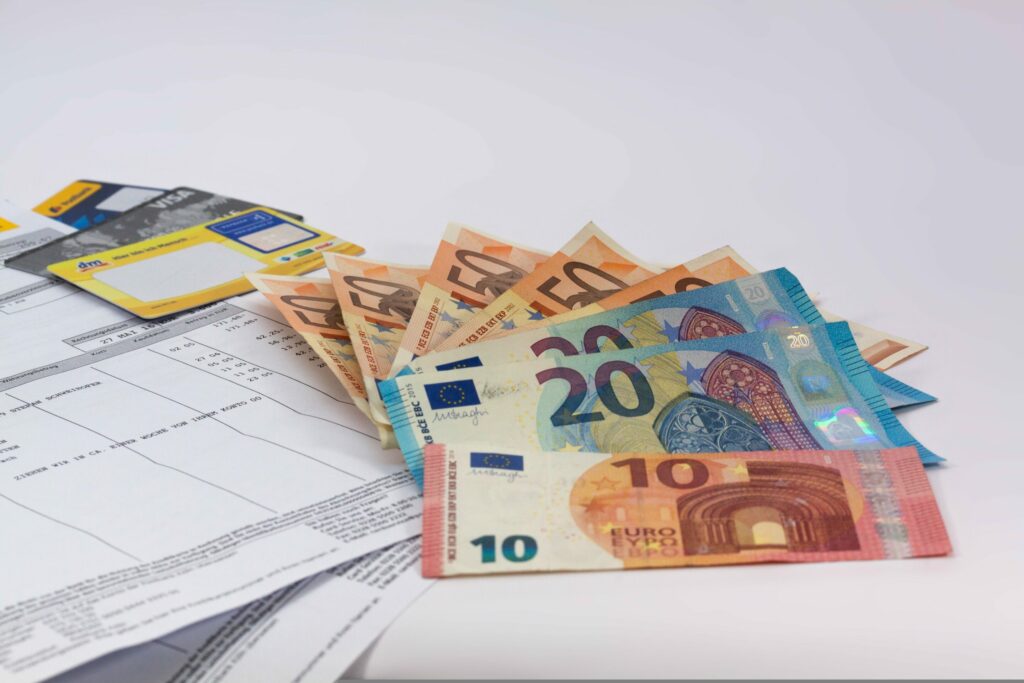
A short visit to Europe begins long before an airport.
It begins with a folder: a bank statement, proof of accommodation, an invitation, insurance and evidence that the visitor intends to return home. There is also a payment. If the application fails, the journey disappears, but the fee generally does not come back.
Europe should reconsider that last part. A visa refusal may be justified. Keeping the entire application fee after every ordinary refusal is a separate policy choice, and it deserves a separate argument.
The European Commission lists the standard Schengen visa fee for adults as €90, with reductions and exemptions for certain applicants. A visa service centre may charge an additional fee. The Commission's explanation of refusals is clear: the application fee is not refunded because it covers the examination of the application. The applicant pays for a decision, not a guaranteed permission to travel.
That explanation makes administrative sense. Officials have to assess an unsuccessful application too. Documents need checking, staff need paying, and consulates cannot operate on the assumption that every application will succeed. A refusal is not proof that no work was done. Any serious proposal has to recognise that cost.
But explaining what a fee pays for does not settle how much of that cost should fall on the applicant, especially when the applicant receives no opportunity to travel. Public administration is full of choices about which costs individuals bear and which governments share. Visa processing should not be treated as though its present arrangement is the only possible one.
The cost beyond the fee
From Kathmandu, this looks different from the way it might look inside the Schengen area. A European reader may understand a visa fee as a modest administrative expense. For someone earning in a weaker currency, it can be a substantial part of a carefully planned visit. The same euro amount does not represent the same sacrifice everywhere.
There are other possible expenses: travelling to an appointment, obtaining documents, taking time away from work and arranging insurance. Their size varies. Some can be recovered, some cannot. It would be wrong to invent a single total for all applicants. What matters is that the published application fee is only one part of the financial risk of asking to visit.
This concerns ordinary short visits, not an automatic right to settle in Europe. A person may want to attend a family occasion, a cultural event or a professional meeting. Europe benefits when these exchanges happen. Its account of openness should include what it costs a person outside Europe to reach the point where an exchange becomes possible.
A partial refund deserves a practical trial. The EU could review the standard fee and identify a defensible processing charge, with the remainder returned after a refusal. Fraudulent applications could be treated differently. The amounts should follow published cost evidence, rather than a convenient figure chosen by advocates or officials. Applicants should know the arrangement before paying.
Another possibility is a credit against a fresh application after a documented administrative error or a successful appeal. The details would need safeguards, including a clear distinction between an authority's error and missing information supplied by an applicant. This is a proposal for reform, not a claim that refused applicants currently possess a general refund entitlement.
The objections to refunds
Would refunds encourage speculative applications? They might reduce one deterrent, and that possibility should be tested. A person would still have to assemble the required documents and satisfy the same entry conditions. A retained processing charge could also discourage careless applications. The choice is not limited to keeping every euro or making applications costless.
There is an equally important objection: refunding some fees could transfer costs to taxpayers or successful applicants. That trade-off should be visible. If the case for retaining the whole fee is strong, governments should be able to explain the cost calculation. Public confidence is better served by that explanation than by repeating that the money is non-refundable.
The Commission says a rejected applicant must be told why the application was rejected and how to appeal. That is an important safeguard. Still, a reason for saying no and an account of the price of saying no answer different questions. A transparent decision does not, by itself, make its financial burden proportionate.
Any pilot should measure processing costs, repeat applications, refund administration and whether lower-income visitors gain meaningful access. It should also avoid promising that a refund will remove every obstacle. Money cannot repair a missed wedding or recreate a meeting date. The aim is narrower: to stop treating the applicant's entire payment as an unquestionable loss.
Europe has every reason to maintain careful borders. It also has a reason to examine the small administrative choices through which outsiders encounter those borders. A visa fee is one of those choices. It tells a visitor something about the relationship before the visitor has seen a single European street.
A refusal can remain a refusal. The question is whether it must always carry the same financial ending. Europe should be willing to ask that question as carefully as it asks applicants to prove that they will go home.
