
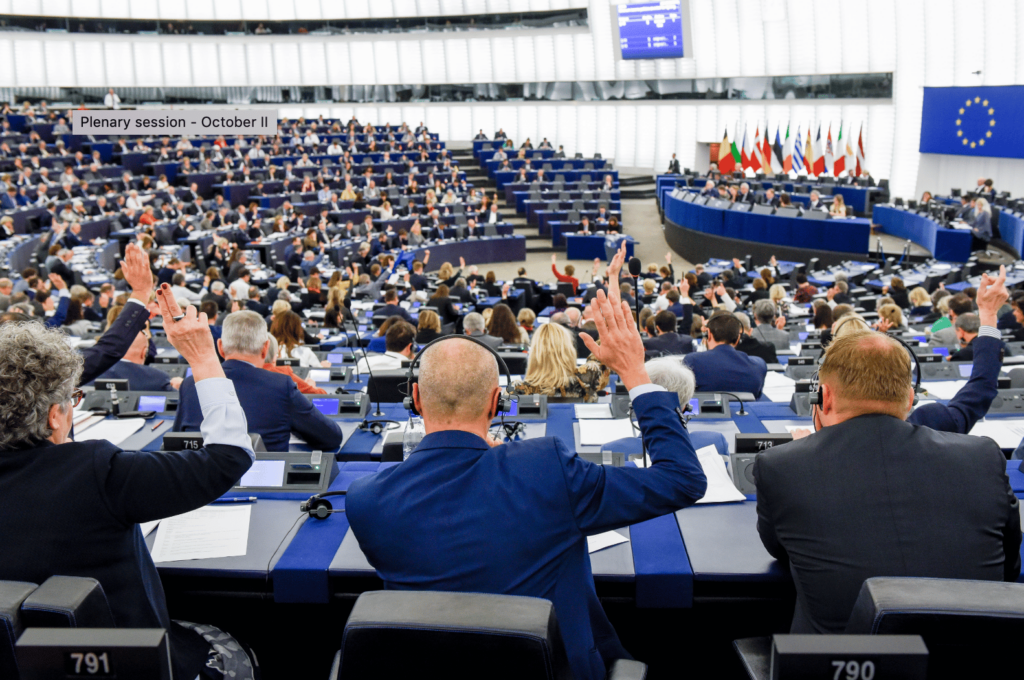
MEPs have set out what they want included in the European Commission’s first EU-wide anti-corruption strategy, calling for tougher rules on conflicts of interest and political financing, stronger cross-border enforcement and more protection for watchdogs.
The European Parliament adopted its position in a resolution approved by a show of hands, ahead of what it described as an imminent Commission strategy following the EU anti-corruption directive entering into force in May 2026, the parliamentary press service informed on Thursday.
MEPs said the strategy should address changing corruption risks linked to organised crime and new technologies, including crypto-assets, opaque ownership structures and digital tools.
They called for tighter, more harmonised standards on conflicts of interest, gifts, sponsored travel, asset declarations and “revolving doors” — the movement of people between public office and private-sector jobs — as well as clearer lobbying rules.
Parliament also urged common rules on political financing and more transparency around political foundations and intermediaries.
Cooperation, enforcement and watchdogs
MEPs backed closer cooperation and data-sharing between national authorities and EU bodies including Europol, Eurojust, the European Public Prosecutor’s Office and the EU’s anti-fraud office OLAF.
They said national anti-corruption bodies should be independent and properly resourced, and called for the European Public Prosecutor’s Office to receive more resources to deal with serious cross-border corruption, adding that EU countries not yet participating should join.
The Parliament linked corruption with money laundering and asset concealment, and called for stronger action to trace, freeze, confiscate and recover criminal proceeds.
MEPs reiterated their call to phase out investor residence schemes, often known as “golden visas.”
They also called for civil society groups and anti-corruption organisations to be involved throughout the strategy, and for stronger protection for whistleblowers and investigative journalists.
The Parliament backed full EU membership of the Council of Europe’s Group of States against Corruption (GRECO), so EU institutions face the same scrutiny as national authorities, it said.
A 2025 Special Eurobarometer survey found that 69% of Europeans believe corruption is widespread in their country, while almost 60% of criminal networks engage in corruption in one way or another.
