
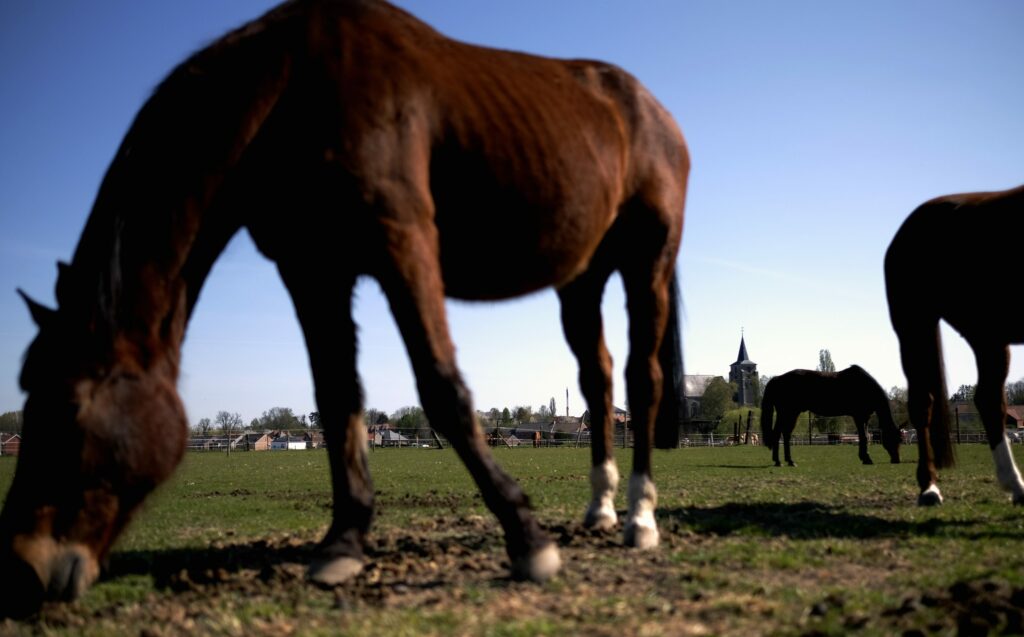
While a recent report from GAIA revealed that almost one in three snacks in Belgian friteries contains horse meat, Belgium does not breed horses for slaughter. Where does the meat that ends up on our plates actually come from?
In 2023, the consumption of horse meat amounted to approximately 700 grammes per Belgian per year. Belgium itself does not breed horses specifically for meat production.
However, the country does slaughter horses and other horse-alike animals in its authorised abattoirs. This includes horses, ponies and mules. Despite a decrease in consumption, 1,662 equines were slaughtered last year, according to the report.
Belgium plays an important role in international trade. In 2025, the country imported 12,268 tonnes of horse meat and re-exported 8,560 tonnes – the equivalent of approximately 26,800 equines.
A large part of this imported meat comes from South America, more specifically Argentina. Often, after a lifetime as working animals on farms, the horses are slaughtered and the meat is transported to Europe.
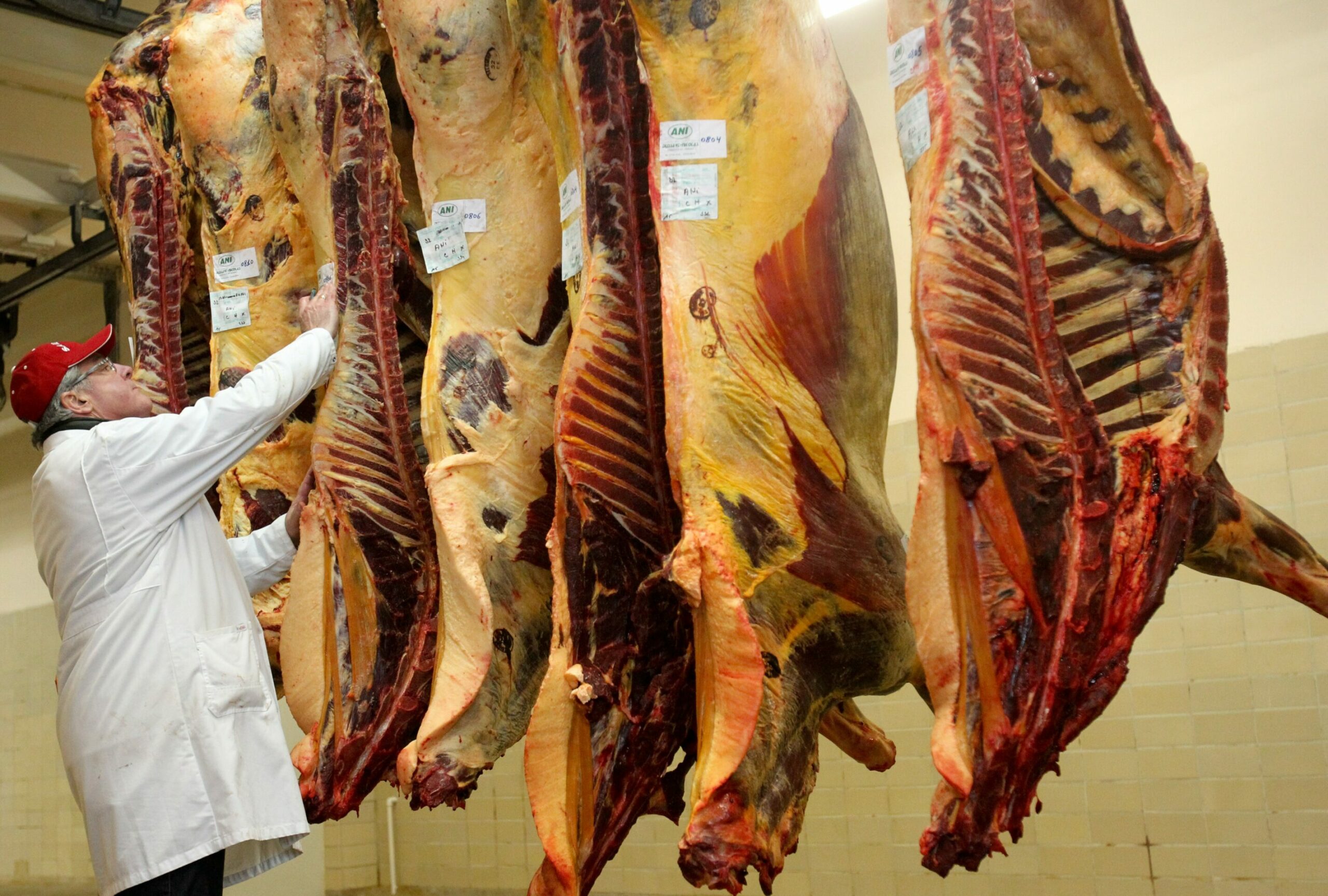
Illustration shows a worker looking at labels of the traceability on horsemeat at Charleroi slaughterhouse, Friday 22 February 2013. Credit: Belga/Virginie Lefour
In 2024, Belgium was the global market leader in terms of the net export volume of products with HS-code (Harmonized System) 0205, the internationally standardised customs code for fresh, chilled or frozen meat from horses, donkeys and mules.
According to GAIA, a number of problems have already been reported regarding the traceability of horses and the conditions in which they are kept in some countries of origin, such as Argentina.
Additionally, the traceability of horses in Belgium is not that straightforward. Last month three suspects were arrested in an international research project regarding fraud with horse passports. Researchers say that sport and riding horses were in fact reported as slaughter horses.
Fraud with horse passports in Belgium often occurs for economic reasons, Hélène Bonte, spokesperson from the Federal Agency for Food Chain Safety, told The Brussels Times. “Horses that end up in the food chain towards the end of their lives are more profitable than those that are excluded from it.”
Dual status
What makes it even more complicated is that horses have a dual status. This means that horses or horse-alike animals can legally be considered as companion, hobby or sport animals, but also as farm animals and thus for human consumption.
Until 2022, horse owners could choose to exempt their horse from slaughter for ideological reasons. This was then noted on the animal’s passport and could not be changed.
Now, it is no longer possible to exempt a horse from the food chain for emotional reasons, but that does not mean that a horse will automatically be sent to slaughter. The owner can still opt for euthanasia.
When a horse is not meant for consumption and its meat therefore illegally enters the food chain, this can have several consequences. There may be a risk to food safety as a result of treatments, with hormones for example, or medicines that the horse has been given. “Which is often the case with riding horses,” said Bonte.
“If the passport, which details the animal’s history and traceability, is manipulated, we no longer have any guarantees as to which medicines were administered and when.”
Another issue is that food fraud complicates a fast intervention when a problem in the food chain occurs.
Strict control
Bonte highlighted that there is no need for consumers to worry, as the Federal Agency for Food Chain Safety performs daily controls on identification, registration and traceability of animals, such as by checking samples from the products in the food chain.
"The analyses we carry out on medicines are reassuring, of the more than 15,800 samples in 2025, 99.6% were compliant," she said.
Besides inspections in agricultural businesses, breeders and abattoirs, the agency also has a specialised anti-fraud unit that specifically researches the cases concerning horses.
For its part, the Argentine regulatory body SENASA ensures that European rules are complied with.
The debate goes beyond the issue of traceability alone. GAIA and other animal welfare organisations are also raising concerns about the conditions in which the horses are transported.
The animals often have to endure long journeys and are herded into inadequate collecting centres, which causes them stress and suffering, according to the animal rights organizations.
In contrast, reports from Respectful Life, an initiative from FEBEV (Federation of the Belgian Meat Industry) focus on horse welfare in Argentinian, Brazilian and Uruguayan slaughterhouses. They highlight “the continuous improvements in which infrastructure, working methods and monitoring are adapted.”
Still, it’s difficult to determine where exactly the horse meat on Belgian plates comes from.
The special status of horses, previous cases of fraud and international trade make it very difficult for the relevant supervisory authorities in Europe and South America to trace the meat fully.
