
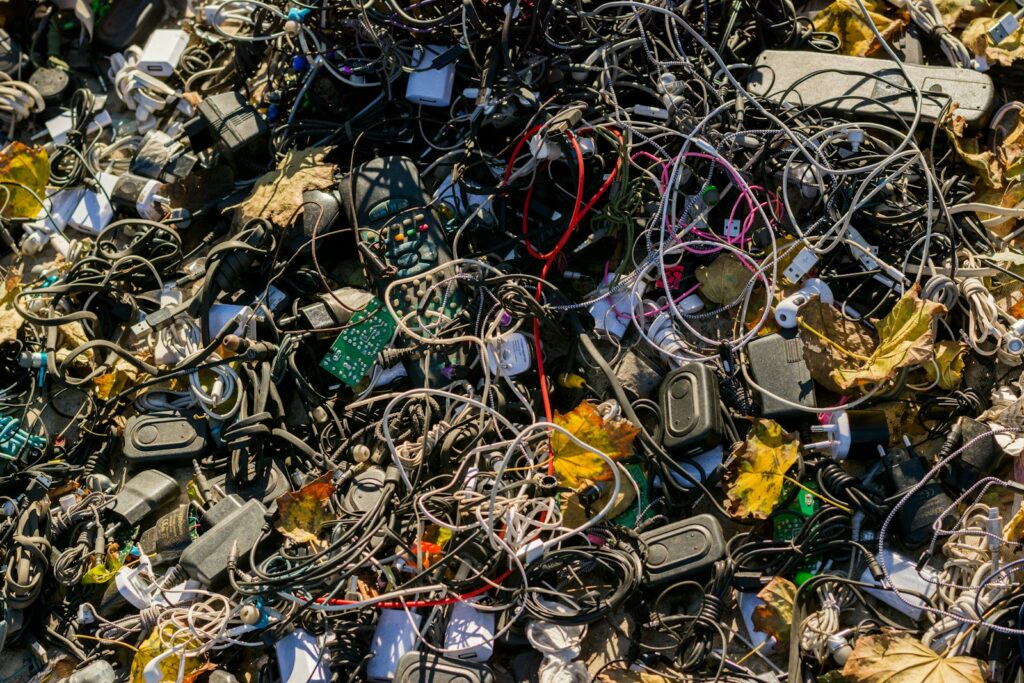
A total of 12.3 kg of electronic waste per person was collected across the EU in 2024.
This compared with 32.4 kg per person of new electrical and electronic equipment put on the EU market in the same year, covering products such as household appliances, smartphones and computers, Eurostat reported on Wednesday.
New electrical and electronic equipment placed on the market rose by 79% between 2015 and 2024, increasing from 18.1 kg per person to 32.4 kg.
Large items — including washing machines, dishwashers and photovoltaic panels — were the main driver of the rise.
E-waste collection increased more slowly over the same period, rising from 7.3 kg per person in 2015 to 12.3 kg in 2024. The 2024 figure was up by 0.7 kg per person compared with 2023.
Which countries collected the most?
Bulgaria collected the most e-waste in 2024 at 18.9 kg per person, followed by Czechia at 17.8 kg and France at 17.7 kg, Eurostat said.
The lowest amounts were recorded in Cyprus at 4.7 kg per person, Portugal at 6.0 kg and Malta at 6.4 kg.
Austria placed the most electrical and electronic equipment on the market in 2024 at 38.2 kg per person, followed by Germany at 38.0 kg and Denmark at 37.0 kg.
Cyprus recorded the lowest amount put on the market at 15.4 kg per person, while Slovakia and Greece also posted relatively low levels at 17.5 kg and 18.0 kg respectively.
Among countries with data available, the weight of electronic products put on the market in 2024 exceeded the weight of e-waste collected in every case.
Slovakia recorded the smallest gap at 6.4 kg per person, while Spain and Germany recorded differences of 36.0 kg versus 9.3 kg, and 38.0 kg versus 11.0 kg respectively.
