
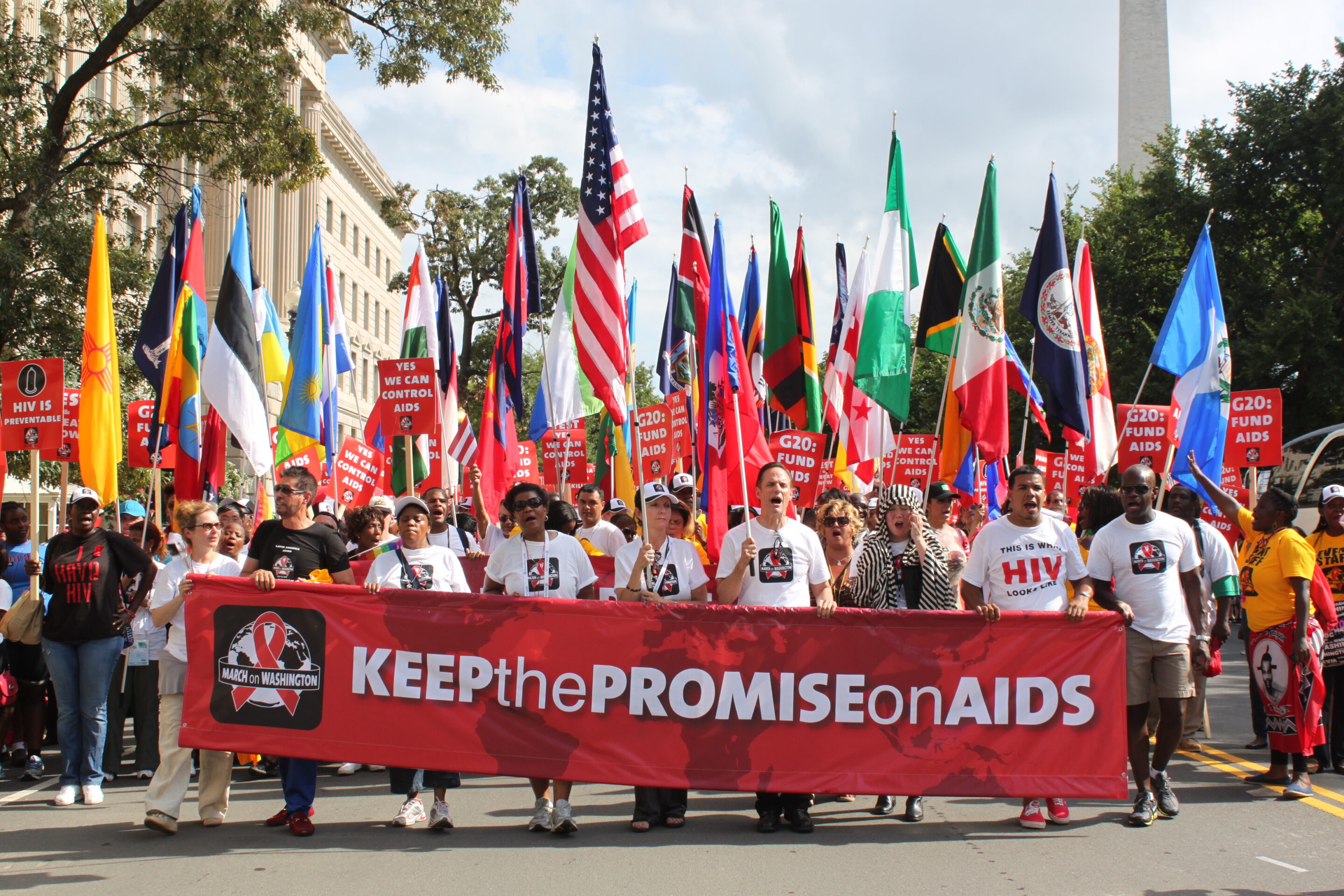
For over four decades, the world has confronted one of the greatest public health challenges in history. Today, more than 32 million people have access to lifesaving HIV treatment, made possible by political commitment, scientific progress, community leadership, strategic partnerships, and donor support.
Yet, despite this progress, the global HIV response now stands at a critical crossroads. Rising new infections, persistent gaps in treatment and viral suppression, difficulties retaining people in care, and dwindling funds risk undoing years of hard-won achievements. Retention in care is a critical link between diagnosis, treatment, and sustained viral suppression, yet it does not receive the attention it deserves. When people fall out of care, the progress gained from testing and treatment can be quickly lost.
The human cost of inaction remains unacceptably high. In 2025, an estimated 1.2 million people acquired HIV and 570,000 people died from AIDS-related illnesses worldwide. Even as the world possesses the tools to achieve AIDS control, complacency and waning commitment are hindering progress and leaving millions vulnerable to preventable illness and death. These trends should concern every head of state, head of government, policymaker, and citizen, as they demonstrate that the fight against HIV/AIDS is far from over.
As of 2025, only a small number of countries have achieved the levels of HIV testing, treatment coverage, and viral suppression needed to bring the HIV epidemic under control, including Cambodia, Eswatini, Botswana, and Rwanda.
Their successes show what is possible when HIV/AIDS is elevated as a national priority backed by ongoing investment, community involvement, and accountability. The issue before us is not only a matter of health but also one that carries significant consequences for national productivity and development.
We therefore urge governments, partners, civil society organizations, and communities to act with the urgency that this moment demands.
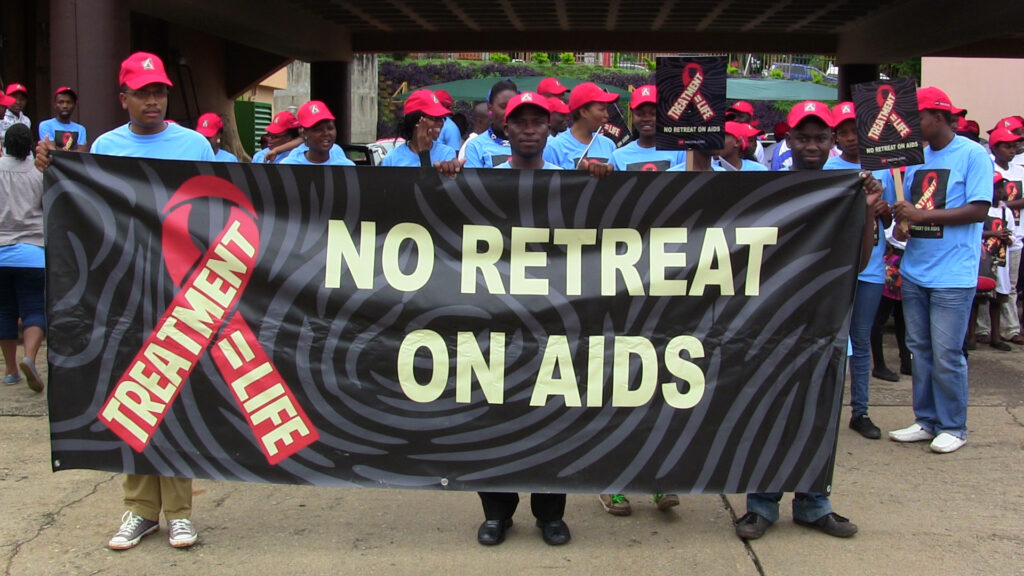
World AIDS Day march in Manzini, Eswatini, Dec. 2013
Specifically, we call upon national governments to:
- Reaffirm HIV/AIDS as a national development and public health priority, with clear accountability mechanisms and investments to accelerate progress toward achieving AIDS control.
- Expand access to HIV prevention, testing, and treatment services, particularly in high-burden communities and among populations disproportionately affected by HIV. This includes strengthening Treatment as Prevention (TasP), which remains the most successful tool in the quest for epidemic control.
- Make retention in care a priority by strengthening patient-centred approaches that reduce loss to follow-up, support treatment adherence, and ensure that every person living with HIV can achieve and maintain viral suppression.
History has shown that epidemics are shaped not only by medical interventions but also by political will backed by action. The fight against HIV/AIDS will ultimately be won or lost based on our ability to control new infections and close treatment gaps.
We owe it to those we have lost to HIV/AIDS to act decisively while the opportunity to bring this epidemic under control is within our grasp. The time to act is now.
Joint statement signed by:
Kim Campbell – Prime Minister of Canada (1993)
Laura Chinchilla – President of Costa Rica (2010-2014)
Alfred Gusenbauer – Chancellor of Austria (2007-2008)
Tarja Halonen – President of Finland (2000-2012)
Han Seung-soo – Prime Minister of the Republic of Korea (2008-2009)
Stefan Löfven – Prime Minister of Sweden (2014-2021)
James Michel – President of Seychelles (2004 – 2016)
Jigmi Yoser Thinley – Prime Minister of Bhutan (2008-2013)
Danilo Türk – President of Slovenia (2007-2012)
Leo Varadkar – Prime Minister of Ireland (2017-2020, 2022-2024)
María Elena Agüero – Secretary General, Club de Madrid (2016-present)
Michael Weinstein – President, AIDS Healthcare Foundation (AHF)
Dr. Penninah Iutung – Executive Vice President, AHF
Dr. Jorge Saavedra – Executive Director, AHF Global Public Health Institute
Promoted by AIDS Healthcare Foundation (AHF)
