
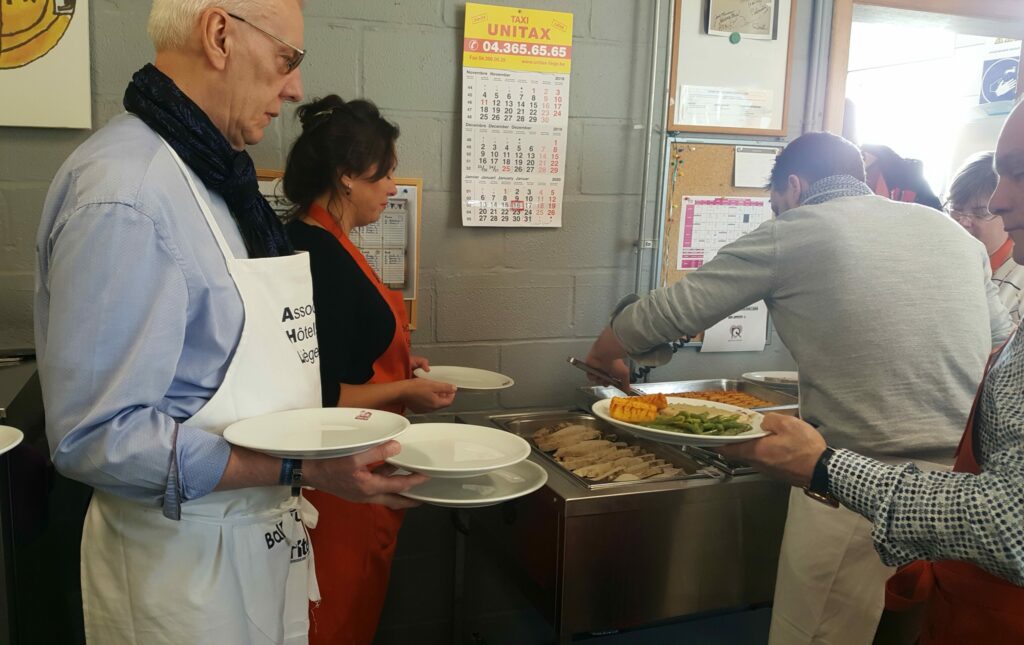
Belgium’s food aid federation Restos du Cœur has warned of a sharp rise in food aid demand across the country, as soaring needs and shrinking public funding put increasing pressure on its services.
In Quiévrain, in Hainaut province, the number of meals and food parcels distributed rose by 48.4% between January and August 2026 compared with the same period in 2025.
Related News
- The most and least expensive areas to buy an apartment in Brussels
- Crack overtakes cocaine and heroin as Belgium's third most addictive drug
- Brussels community centres launch month-long campaign against poverty
The increase reached 26.3% in Aarschot (Flemish Brabant), 17.3% in Mons (Hainaut), and 10.5% in Tienen (Flemish Brabant).
At the same time, the federation has had to double its budget for protein-rich food products, from €67,000 in 2025 to €134,000 in 2026.
The financial strain has been worsened by a cut in the federal budget for food aid, which fell from €27 million to €15 million, a drop of more than 44%.
“If we no longer have the means to operate, who will help all these people?” said Frank Duval, the federation’s president.
The difficulties facing Restos du Cœur are not isolated. A survey by the Federation of Social Services found that rising demand is affecting most food aid organisations in Wallonia and Brussels.
It said nearly half of those organisations have been forced either to reduce distributions or to draw on their financial reserves.
Poverty is also increasing across Belgium. In 2025, 1.9 million people were at risk of poverty and social exclusion, according to Statbel.
Nearly 561,000 people in Belgium rely on food aid at least once a year, according to the Federation of Social Services.
With World Day for Overcoming Extreme Poverty approaching, Restos du Cœur has called for urgent support for the sector.
