
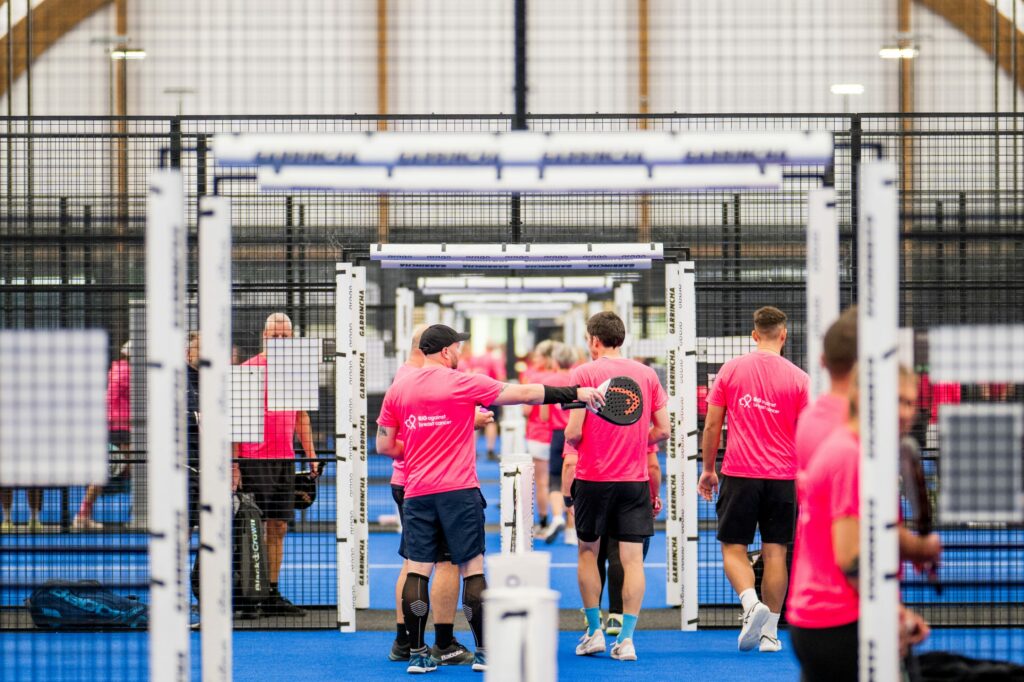
Could it all have been a coincidence? In the middle of the Covid-19 pandemic and its so-called "contact bubbles" for outdoor activities, one specific sport – conveniently with two teams of two players – exploded in Belgium.
Halfway between tennis and squash, padel was invented in 1969 by the Mexican entrepreneur Enrique Corcuera. In the 70s, it developed in Spain and Argentina, where it became iconic. The global expansion of the sport started off in the lately 2010s, through a gradually growing popularity that suddenly exploded after the Covid-19 pandemic.
"Padel made it into the top 10 practiced sports in Flanders in barely a decade. I’ve never seen anything like it," Jeroen Scheerder, sports sociologist and professor at the Department of Movement Sciences of the KU Leuven, told The Brussels Times. His research team has been studying trends in sports participation since the late 1960s.
Based on their own time-trend survey data and data collected by the Flemish Tennis and Padel Sports Federation, they have closely followed padel's impressive rise. From just over 3,000 players registered in 2017, padel multiplied by 32 to reach more than 100,000 padel players nowadays.
In the French-speaking part of the country, the picture is similar: around 150,000 players are part of the Wallonia-Brussels padel federation.
The number of padel clubs multiplied tenfold during the 2017-2025 period: from 35 to 340. The number of courts rose even more: from 86 to 1,006.
The so-called "Covid-19 effect" has been crucial to the explosive growth, but Scheerder identified several unique selling propositions (USPs) that enabled the sport’s continued success even after the pandemic.
An easy high
At the core of padel's popularity is its accessibility, with an easy-to-learn technique. Unlike with tennis, which often takes prolonged efforts to master just the basics, padel gives players a sense of "immediate satisfaction," said Scheerder.
Particularly thanks to its 4-players based gameplay – one duo against another – padel offers more possibilities for casual play.
"It is clear that padel is played by people from all ages," said Scheerder. The absence of a clear separation between age categories thereby facilitates organising matches, in which booking apps play an important part.
Raphaël, a student in his twenties, who plays padel in Tour and Taxis, one of the most popular club in the capital, agreed. "I can easily book my matches thanks to the flexibility regarding scheduling or even the choice of players to play with."
Padel also benefits from the fitness trend. Through its close-quarters and high-intensity gameplay, the sport gives a kind of gym experience to players, widely sought after by sports enthusiasts nowadays.
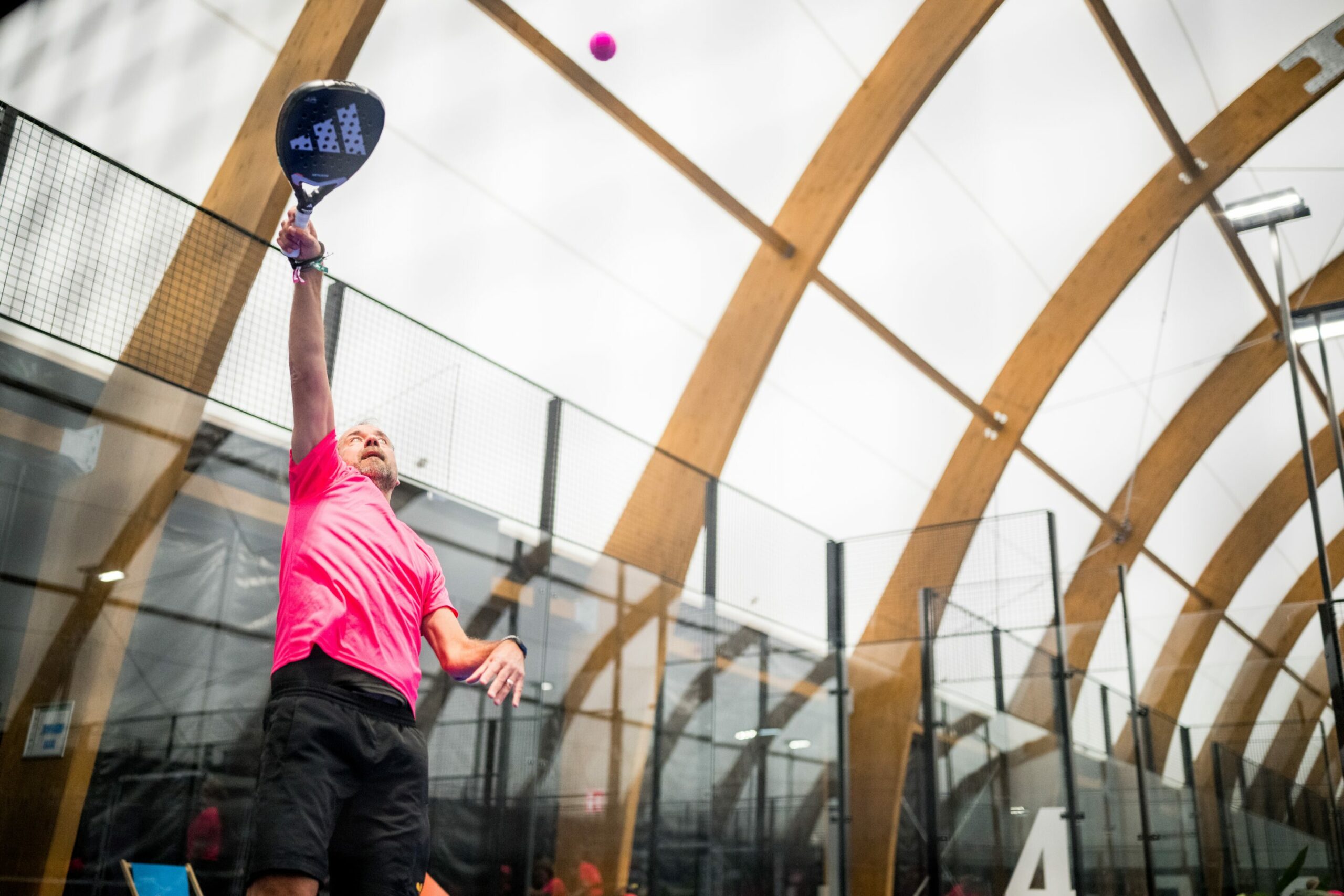
Credit: Belga/Jasper Jacobs
But most importantly, the social element of the sport is a key factor for players. The sentiment is unanimous, players seemingly all agree that their sport is "very warm and welcoming."
In summary: padel can be played by anyone. "Everyone can play with everyone else," summarised Christophe Dister, the director of the French-speaking federation Padel Wallonie-Bruxelles.
But is it really 'everyone'?
Like other sports, such as golf or tennis, padel also has the reputation of being an elitist sports, reserved for higher social classes, well-off individuals and businesspeople who use it as a networking space.
In practice, however, this reputation does not hold up, according to Scheerder. "Padel is played by all social groups to the same extent," he said, calling it a "democratised" sport. Players come from all kinds of different backgrounds.
"Through sports, people breach to other social realities, and people from different social backgrounds meet," he said. Yet, there are no academic studies proving a social mix in padel. "It is possible that different classes are separated and play among each other."
Importantly, the sport is widely popular among both men and women – albeit not to the same extent. The latest data indicates 62% of men and 38% women among padel players.
The growing popularity of the sport has led to the multiplication of player communities, many of them informal, usually arranged in Whatsapp groups used to organise games among players that meet through other matches.
An attractive and profitable market
From a financial point of view, the sport offers a profitable model that is one of the keys to its expansion. In terms of space, padel’s infrastructure requirements are more practical than tennis, for example.
A padel court is 10 metres wide and 20 metres long – much smaller than the space needed for a complete tennis court, which needs 16x36 m dimension to properly play. On top of that, padel courts always host four players at a time, compared to (usually) two in tennis.
As every player has to pay a fee, the profitability of padel becoming clear.
"It is the market that created most of the infrastructures and pushed for them," said Dister. "It would appear that the model works well and that the investments are profitable," he said, as investors jumped on the padel phenomenon, especially in Brussels and in Wallonia.
At the moment, demand exceeds supply. In Flanders, padel’s development has even been accompanied by public funding and support.
In terms of organisation, padel has benefited from an operating model mainly based on demand rather than club membership, allowing people to easily step in and drop out.
This freedom, to move in and out of the system without any obligation is called a "light membership," said Scheerder. A flexibility, largely permitted by the booking apps, that stands in contrast to the "greedy membership" of team sports and clubs.
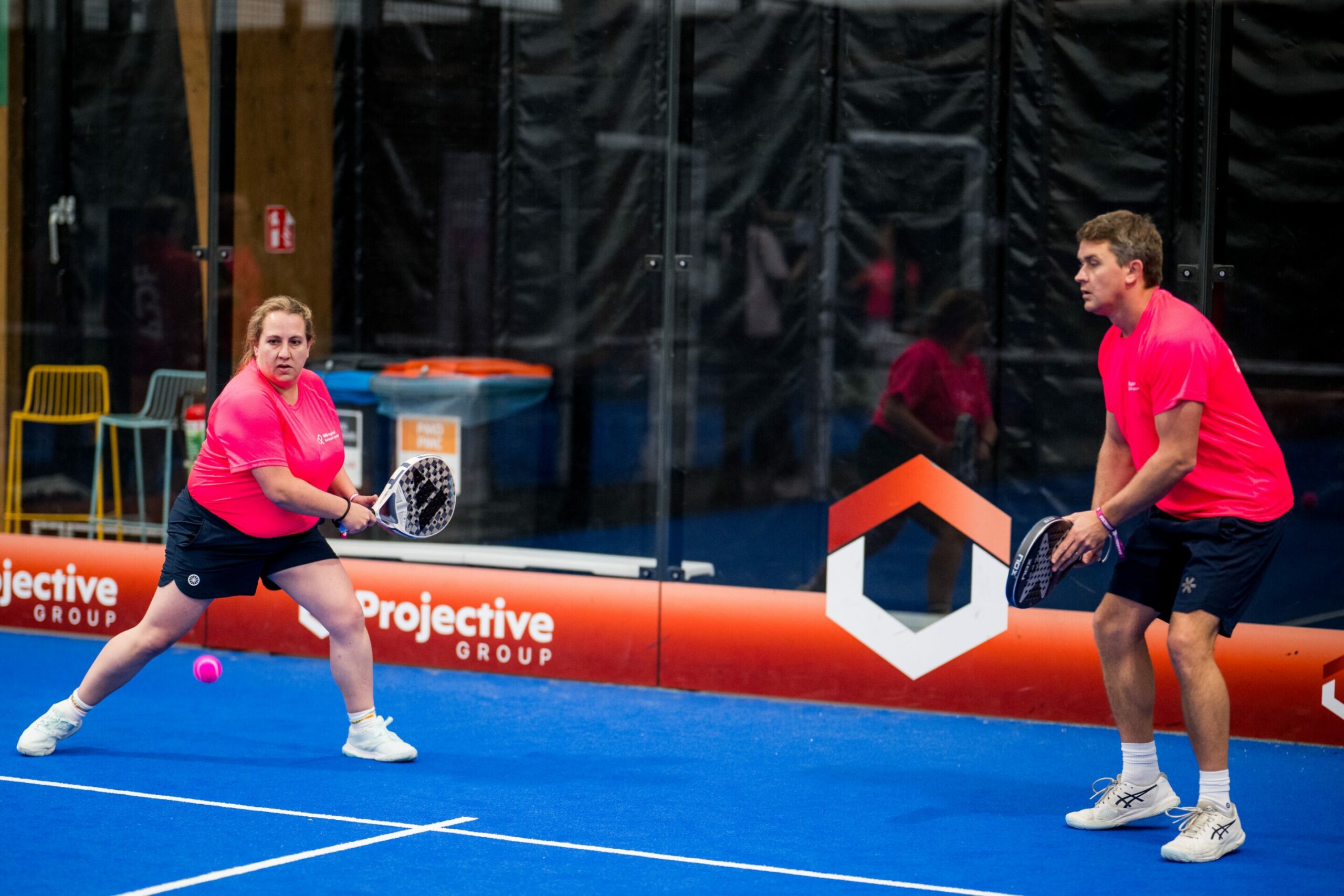
Credit: Belga/Jasper Jacobs
"It is a different and new way of practising sport to what we were used to handling," said Dister, whose federation also manages tennis and pickleball.
Despite its success, padel now faces two main limitations that it must overcome to endure.
The first is the need for space to set up courts, which is part of the broader debate on the lack of space for infrastructures, especially in urban areas. To do so, it will have to align with public urban planning
The second limit is that padel is a "noisy" sport that can cause disturbances for neighbors. Plenty of complaints have been reported, some even being discussed as far up as in the Walloon parliament.
"Even when people love the sport, they still do not want to have courts close to their home or their neighbourhood, because of the noise," said Scheerder.
In its near future, padel’s major challenge will be to establish itself for the long term, and prove that its success was neither hazardous or circumstantial.
"It is important to ensure the longstanding viability of this sport," said Dister. "We don't want it to be just a fad or a trend."
