
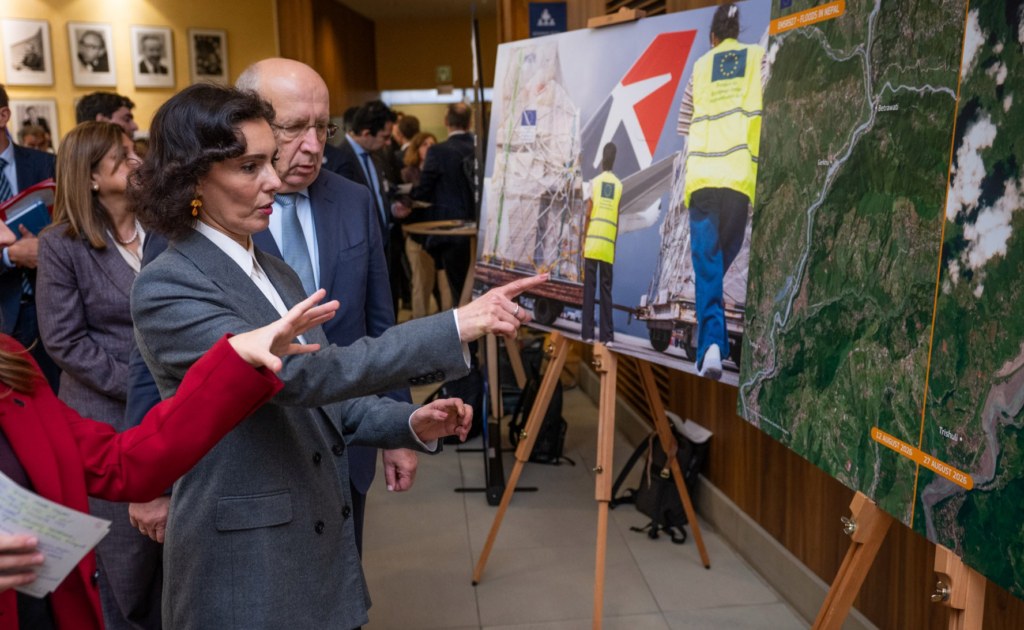
The European Commission has launched what it called its first cross-regional dialogue on using space technologies to help countries anticipate, prepare for and respond to natural disasters.
The event, titled "From Space to Grassroots: Strengthening Community Resilience to Natural Hazards through Space Technologies," was held on the International Day for Disaster Risk Management, the Commission announced in a release on Thursday.
Participants discussed closer cooperation with partners worldwide, including improving early warning systems, sharing satellite data and expertise, and strengthening national and local response capacities.
The Commission said space services can support the full “disaster management cycle” — including forecasts and early warnings before hazards, mapping to support emergency response, and assessments to support recovery after disasters.
The talks led to a document called the "Compass on Space and Disaster Risk Management," which it described as focusing on translating data into “actionable information.”
Satellite systems and early warning tools
European space services referenced by the Commission include Copernicus — the EU’s Earth observation system — and Galileo, the EU’s satellite navigation system.
It also cited GOVSATCOM and the upcoming IRIS² system for secure satellite communications.
The Commission said it also uses early warning and information tools including the European Forest Fire Information System, the European Flood Awareness System and the Global Disaster Alert and Coordination System.
The dialogue included Commissioner for Preparedness and Crisis Management Hadja Lahbib and Commissioner for Defence and Space Andrius Kubilius, as well as Kamal Kishore, the UN Special Representative for Disaster Risk Reduction, and Thomas Byrne, Ireland’s Minister of State for European Affairs and Defence.
“Through Copernicus, Europe’s eyes on Earth, we provide critical and timely information to help authorities anticipate disasters, assess their impact and respond when every minute counts,” Kubilius stated.
“When a river is about to flood, families don’t need a hazard map. They need a clear warning, from someone they trust, in time to get to safety,” Lahbib said.
