
Belgium’s Hautes Fagnes region made headlines this summer with the tragic news that wildfires destroyed over 3,000 hectares of precious moorland. Even after surface fires were put out, the blaze continued underground for several weeks.
Little known to most non-Belgians, the small town of Eupen (population 20,154) is 15 km from the Hautes Fagnes and the same distance from the German border. It’s the capital of Belgium’s German-speaking region, which became part of Belgium in 1919.
Since 2004, Eupen has been the rather unlikely home to one of Belgium’s quirkiest music festivals: Meakusma.
Each year in September, the festival hosts some of the most exciting musical artists around from the experimental or underground scenes and stages them in a cultural centre that used to be a slaughterhouse. An ironic history, especially, as the crowd, most of whom are twenty-something hipster, skews more flexitarian or vegan than carnivore, I suspect.
The lineup at Meakusma is similar to that of other festivals of experimental music, such as Rewire in The Hague, Berlin’s Atonal or Hidden Notes in the United Kingdom. While Meakusma takes place in a smaller area than Rewire, it boasts 140 artists over four days. Rewire had around 100 musicians but a lot of other projects including talks and films.
Avid church-goers
I was drawn to attend Meakusma for the first time because several artists I recently discovered were playing there. The main draw was a Portuguese musician, Teresa Castro, who performs as Calcutá.
Her vocals are almost incantational, and her voice and delivery evoke legendary Velvet Underground singer, Nico. Like the German, Teresa also plays a harmonium, a traditional organ with bellows like an accordion that the player uses to generate the sound. As well as the harmonium, Teresa plays guitar, adding celestial-sounding arpeggios.
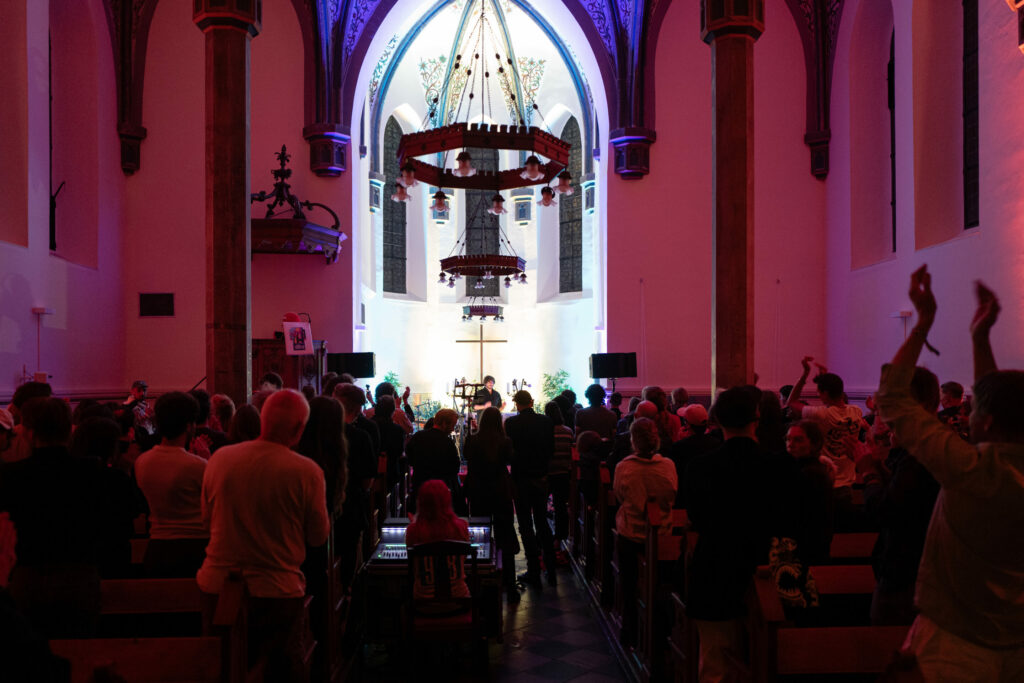
At Meakusma, she played in the Werthkapelle, an incredibly ornate church that serves both Catholic and Orthodox congregations. The setting was perfect for Calcutá’s music, which alternates between eerily strange and comforting.
The church was packed, with listeners squeezed into every available space with two rows of people sat in the aisle. There were even some raised voices outside the church before the performance, as people jostled to make sure they got in to see Teresa and her bewitching music.
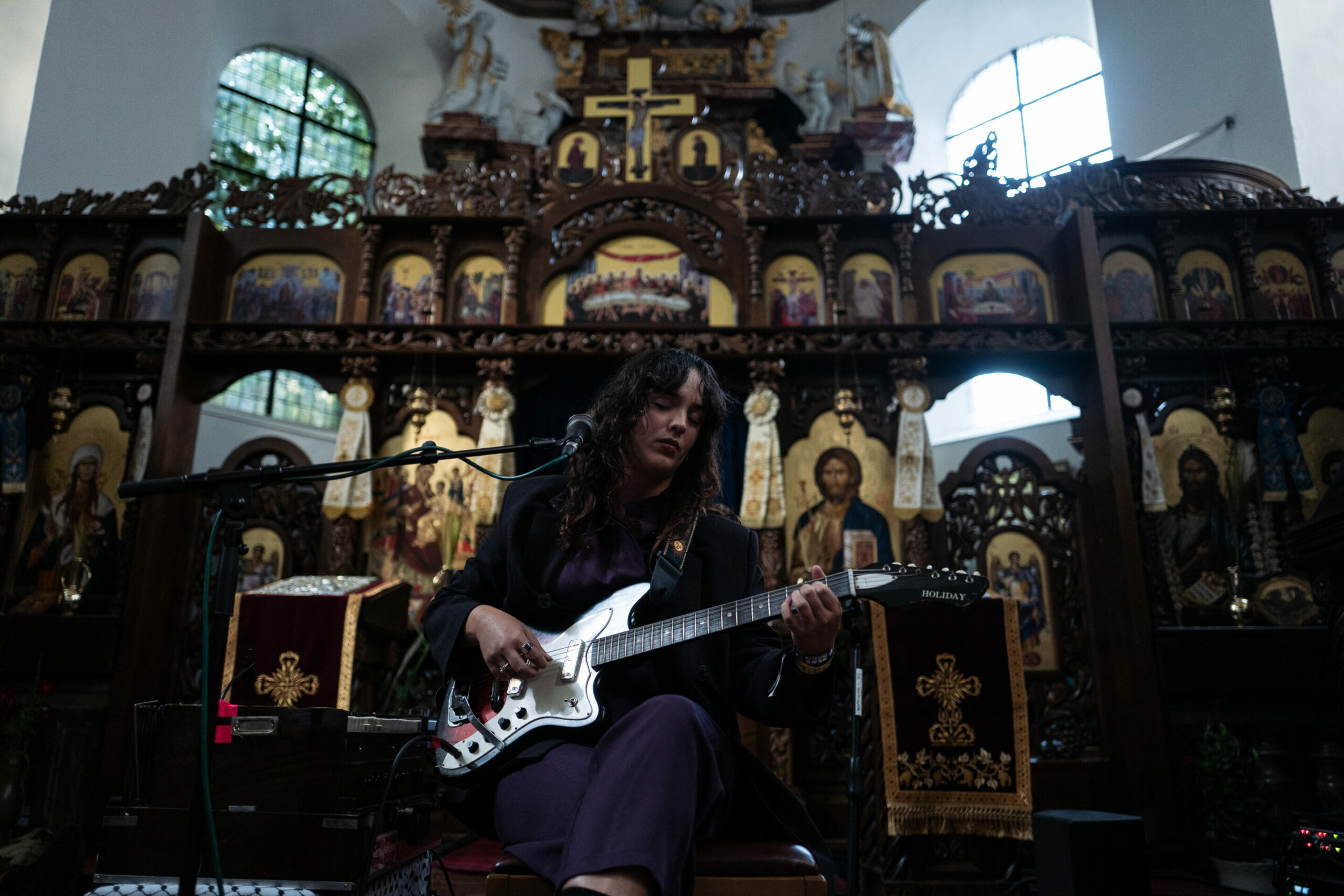
Calcutà. Credit: aThomz/Meakusma
The second artist that drew me to this unfamiliar part of Belgium was the wonderful Ex-Easter Island Head. The Liverpool-based four piece take what you could call an “electro-mechanical” approach to their instruments.
In practice, this means that they play electric guitars on the sides (like a lap steel player) and strike the strings with hammers or use motors from electric drills to vibrate them. Ben Duvall from the group tells me that they don’t use electronic effects, although I am sure there are some delays on stage.
If using drill motors to make music leads you to assume that EEIH’s work is hard listening, you’d be right; but only up to a point.
Playing in the beautiful but more austere Friedenskirche, the quartet open their set with a challenging number in which they use several motors on the guitar strings, changing the speed to alter the pitch to make harmonies.
Dissonance and harmonies
Listening to the piece, you yearn for the resolution that is coming but takes longer to arrive than you might wish. When they do pass through the dissonance to reach the harmonies, the sense of aural relief is a thing of joy.
The rest of their set is new material that will feature on their next album, to be released next year. The other pieces are more in the vein of the entrancing and highly rhythmic numbers that made “Norther”, their 2024 album that was album of the year for cult music website, The Quietus.
The group’s music is influenced by minimalist composers such as Steve Reich and his “Music for 18 Musicians” while their stage appearances owe a lot to US arthouse outfit, the Replacements.
Don’t be put off by the description of the opening number from their set. Their music and live performances are playful and done with an obvious enjoyment that is contagious. Check them out, especially tracks such as the title track from “Norther”.
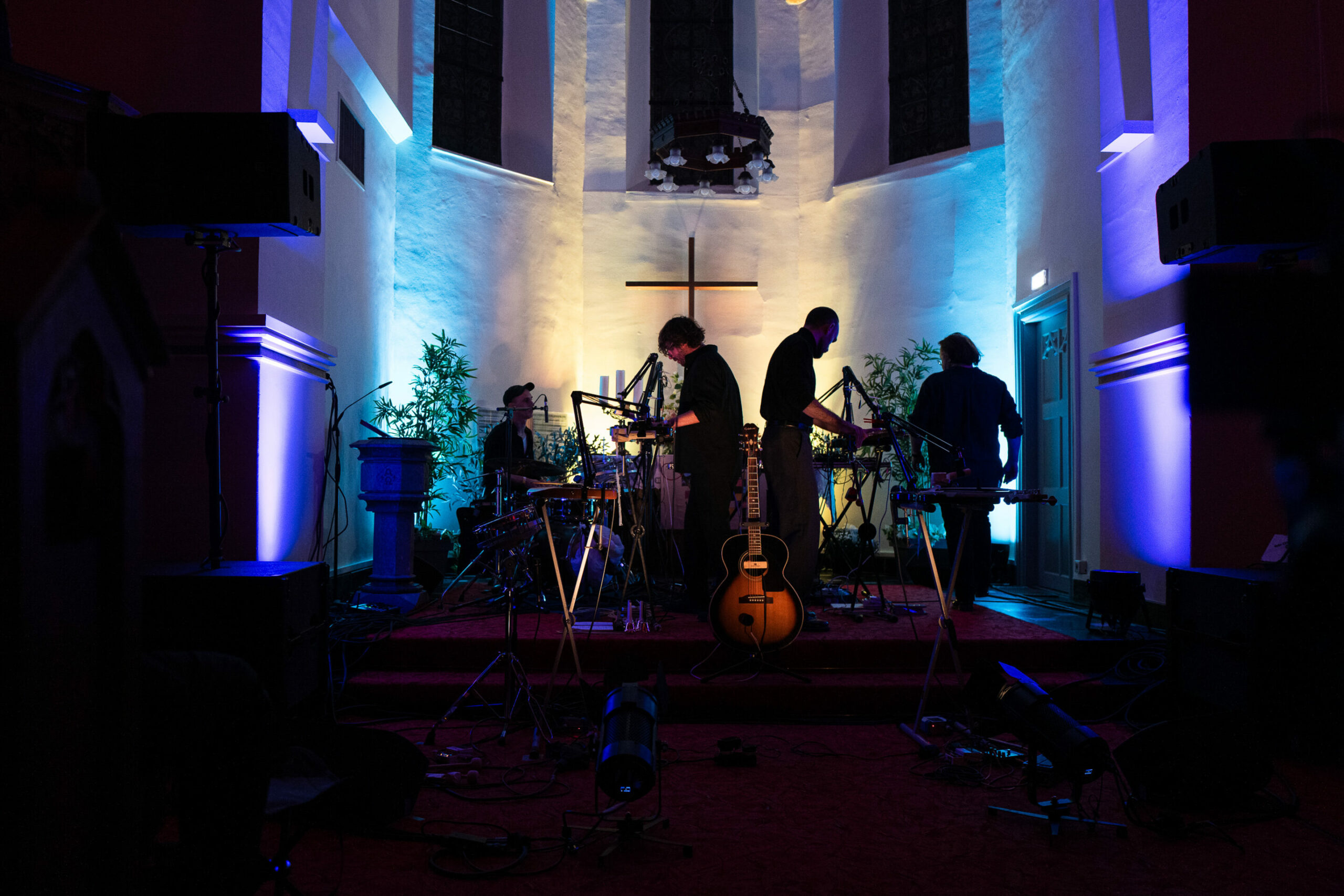
Ex-Easter Island Head. Credit: aThomz/Meakusma
Another artist I was keen to see was Argentinian cellist Violeta Garcia. I am a big fan of artists playing classical instruments such as the cello, violin and the harp, especially when combining them with electronic sounds and effects.
Garcia’s set in the “Cool Room” started pleasantly enough, although it was hard to focus on her performance as the door to the room was constantly being opened by people coming and going, flooding the rear half of the room with bright light that spoiled the subdued lighting effect.
About 15 minutes into the set, Garcia started using her cello to generate squalls of feedback from the large amplifier on the stage. While the novelty was interesting at first, after five minutes of noise, it was too much even for the fans of experimental music you get at this festival, and people – myself included – headed out through the door.
Late trains, early mornings
Another act that drew me to the festival was the Tara Clerkin Trio, a group from Bristol who combine jazz, rock, trip hop and ambient music with sampled sounds. The band have shot to the top of the playlists of many fans of underground music.
I was really looking forward to seeing how they recreate their carefully crafted music live. Except I couldn’t. The trio were playing at 22:00 on Sunday night, the last day of the festival. The last train back to Brussels was at 22:05.
For a festival where most people are travelling from somewhere else to get to Eupen, this was terrible programming. I spoke to many people who were leaving the festival on Sunday afternoon or evening and were disappointed to be missing what was arguably the biggest draw of the festival lineup.
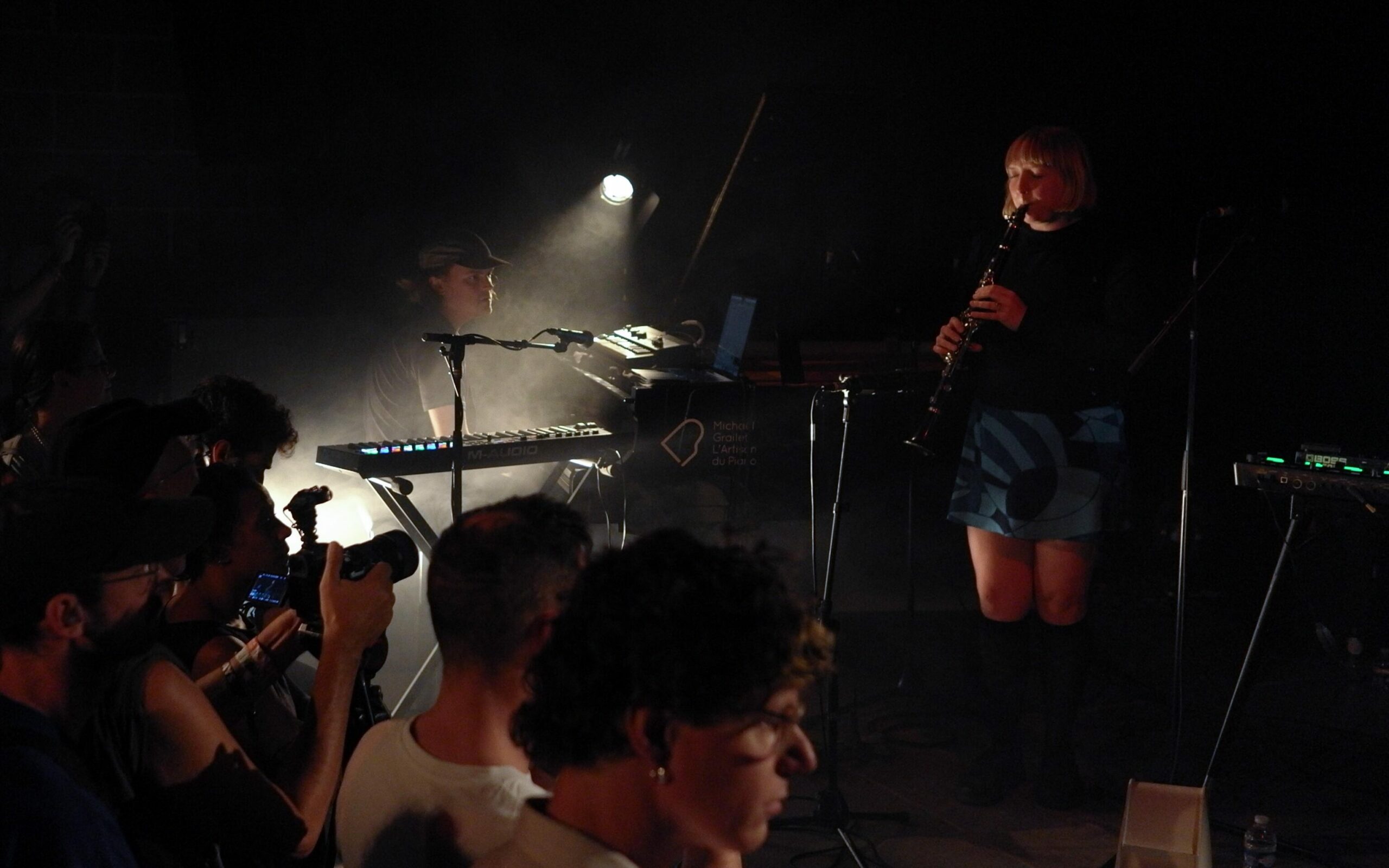
Tara Clerkin Trio. Credit: Geert Coppens/Meakusma
I can only speculate that the organisers didn’t have much choice when to schedule Tara Clerkin, but it made me wonder whether this festival is really aimed at people like me, middle-aged with a full-time job that means I had to be back in front of my laptop on Monday morning.
There is a campsite at the event and it looked well-occupied. There is also a shortage of hotel rooms and Airbnbs in and around Eupen. My partner and I stayed in one that was a 20-minute taxi ride away, although we did book it late.
In short, Meakusma is a smaller version of The Hague's Rewire with many of the same acts, held in a tiny provincial town with poor transport links and limited accommodation for visitors.
So, will I be back next year? Yes, of course.
