
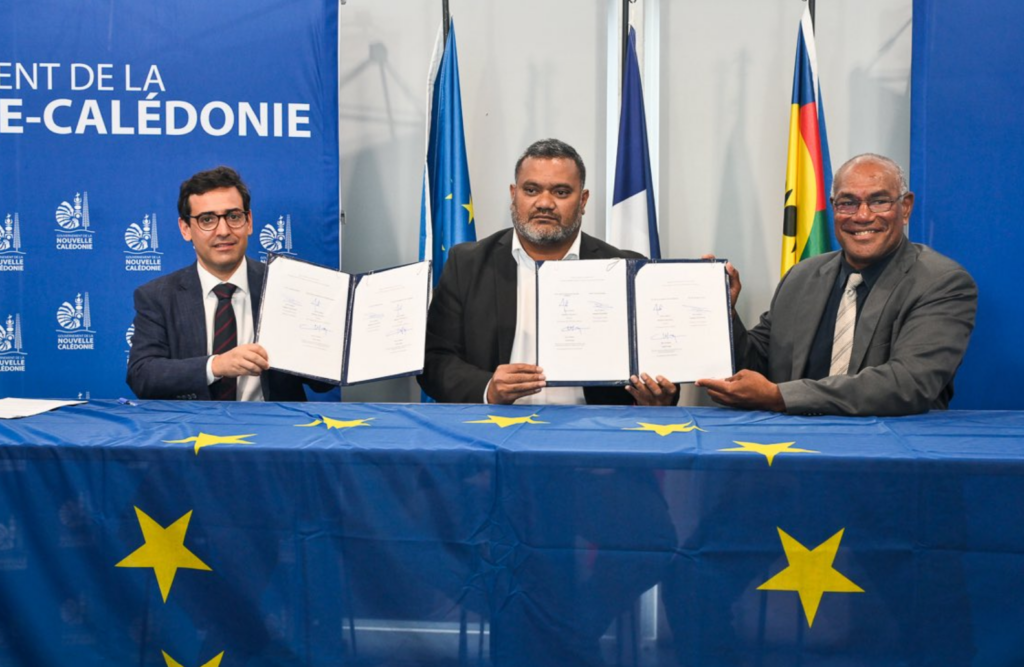
The European Commission and the government of New Caledonia have signed an agreement to cooperate on sustainable raw materials, including nickel.
The Memorandum of Understanding was signed in Nouméa by the Commission’s Executive Vice-President for Prosperity and Industrial Strategy, Stéphane Séjourné, alongside New Caledonia’s government president Milakulo Tukumuli and minister Alcide Ponga, the Commission informed on Tuesday.
New Caledonia was one of the world’s leading nickel producers in 2024, accounting for 3.1% of global production. Nickel is used in products including stainless steel and some types of electric vehicle batteries.
The agreement sets out a political framework for work across the raw materials “value chain” — covering steps from extraction and processing through to recycling and reuse.
What the partnership covers
The Commission said the cooperation will include developing projects of common interest and facilitating access to finance to attract investment, including through the EU’s Global Gateway strategy.
The two sides also agreed to cooperate on environmental, social and governance standards in New Caledonia’s minerals sector, including the closure and rehabilitation of mining sites.
Other areas include support for infrastructure linked to raw materials value chains, skills development through collaboration between education, training, research and industry bodies, and joint work on research and innovation for activities such as exploration, processing and recycling technologies.
A joint roadmap will now be developed in consultation with EU member states, the European Investment Bank and industry, with “concrete actions” to put the partnership into practice.
The agreement is the EU’s 17th strategic partnership on raw materials since 2021.
