
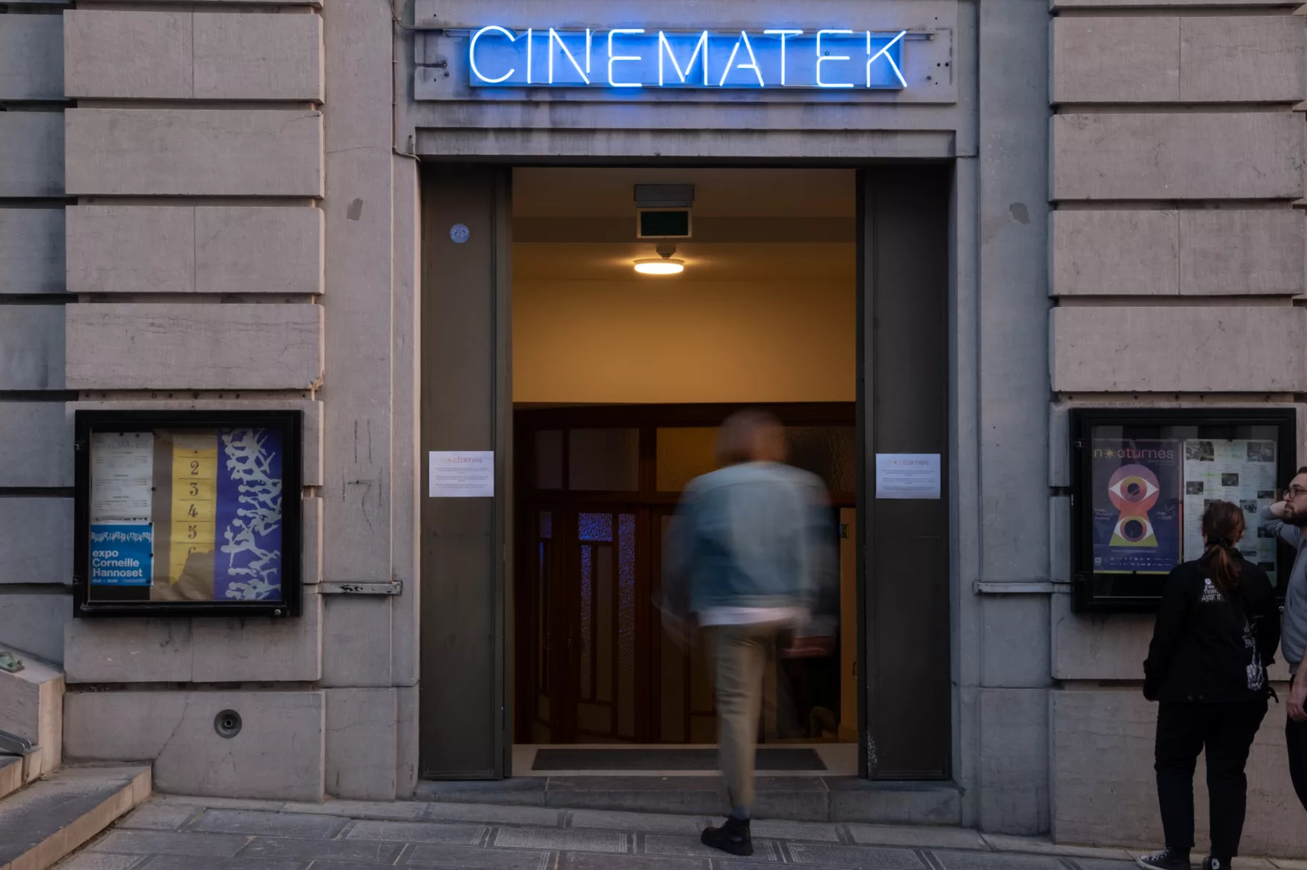
When the Royal Film Archive of Belgium was facing budget cuts in 2001, Martin Scorsese called into a press conference from a movie set in Italy. "This is one of the finest collections on the planet," he said, "and it deserves to be protected, and treated with the same care and deference as any museum or fine arts institution."
At the start of October, Flanders saw budget cuts of €47 million in the culture sector, with some museums seeing drastic losses of funding. At the federal level, discussions are still ongoing on how to find an extra €10 billion to cut from Belgium’s national budget. Though their own cuts are expected to be manageable, CINEMATEK is again facing a loss of federal funding.
"We’re one of the oldest cinematheques in the world with one of the biggest film collections in the world," Tomas Leyers, the conservator at the film archive, told the Brussels Times. "The only existing inter-negative in the world of Citizen Kane is at the Brussels CINEMATEK. So even on an international level, we are seen as very important."
Leyers, a trained bioengineer, film producer, and the fifth conservator leading CINEMATEK, talked to the Brussels Times about budget cuts, the film archive, and its role in cinema in Brussels.
'Difficult times for everything cultural, heritage, collection, and archive'
Earlier in October, it was announced that the Brussels' centre for fine arts BOZAR was set to lose its Flemish funding of €762,000. Screen Flanders, an initiative by the Flemish government that helps filmmakers finance productions, lost all of their funding of €3.5 million per year in subsidies.
"I was surprised by the level of budget cuts, because the impact is of such a level that it completely overthrows your organisation," Leyers said.
Last year, CINEMATEK's budget was cut by the federal government, and though the exact amount has yet to be finalised, their budget is expected to be cut further in the coming years.
"I must say the way we were treated in those budget cuts was more reasonable," Leyers added.
Receiving gradual cuts over several years has given CINEMATEK time to plan accordingly. "Having time to organise and reorganise yourself is as valuable as the budget itself."
Already running on a shoestring budget
Leyers understands the situation the Belgian and Flemish governments find themselves in. "They had to find budget cuts, and we understand it, so we manage."
Being able to do a lot with a little is a Belgian quality, he said, and it’s something typical for the social and cultural sectors. However, the organisation is already running on a shoestring budget.
"If you compare the collection of CINEMATEK, for instance, with the French collection or the Dutch collection, ours is roughly four times bigger," Leyers said. "If you then look at the budget on which we operate, it's about three to four times smaller, so we already managed to do a lot with a little."
The film archive in Belgium holds roughly 1.2 million film reels and three million documents, and screens 1,200 films a year.
By contrast, the Cinémathèque française in Paris has a budget of roughly €27 million with a collection of approximately 400,000 reels, and the EYE Filmmuseum in the Netherlands, whose conservation work is funded from the budget of the wider film institute that receives €21 million, has a collection of 260,000 film reels.
"You feel it," he said about the cuts. "There is no fat to cut away."
Belgian film preservation: Flanders falling behind
In 2026, the Flemish Digital Transformation programme commissioned a preliminary study with CINEMATEK, the Flemish Institute for Archives, and the Flanders Audiovisual Fund that identified 50 feature films of heritage value that needed digital restoration.
According to Leyers, the budget cuts in Flanders at the beginning of October came as a surprise. "We hoped for the Flemish government to liberate some money for digital film restoration" Leyers said, "because there's a gap on the Flemish side."
The film archive was hoping to receive some funding to make progress on filling this gap. "But as I see now the cuts on heritage," he said, "I understand that this isn’t the time."
However, while the funding for Flemish restoration has been limited, CINEMATEK has received millions of euros of support in the past for the restoration of Francophone films.
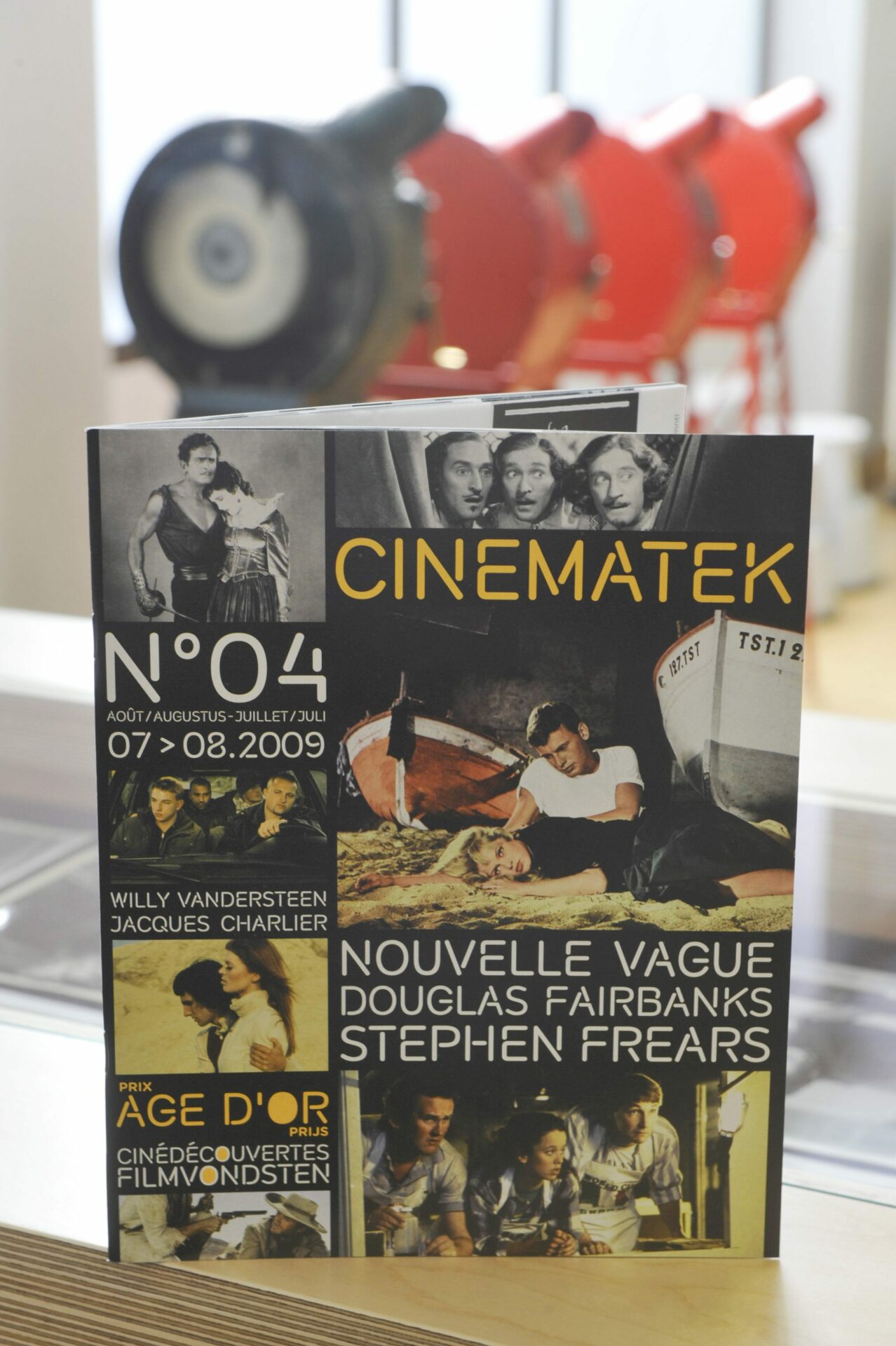
Credit: Belga / Benoit Doppagne
Most famously, these restorations have included films by Chantal Akerman, but also now recently the films by Belgian film director Gérard Corbiau, including Maître de Musique (1987) and Farinelli (1994). "So that made a large collection of francophone films restored, digitally restored and thus accessible to the public again," Leyers said.
However, this isn’t to say that CINEMATEK is giving up in its role on preserving Flemish heritage. Even if the films won’t be digitally restored yet, they are still appropriately conserved in the archives. Through their own means, CINEMATEK restores at least one Flemish film per year. "CINEMATEK is in the service of both communities," he said.
To help raise funds, CINEMATEK is taking part in the Erfgoed Tombola de Patrimoine, a raffle co-organised by the National Lottery to finance cultural heritage initiatives in Belgium. Their project, 10 Decades of Belgian Cinema, hopes to secure €150,000 to restore 12 films in Belgian cinema history that "retrace the unique story of Belgian cinema, from the 1910s to the 2010s," according to their website.
The Three Pillars of CINEMATEK: archive, research, and outreach
While it varies from film to film, it roughly costs €300 to digitally restore a minute of film, according to Leyers, and it costs around €30,000 to restore a feature film.
"If we would like to digitise our complete film collection at the rate we're going today, it would take a century," he said, though they are of course prioritising Belgian films.
This is only one of the main pillars of the film archive, the archival function. However, CINEMATEK also has a research function and a public-facing function: the showing of films.
While the film archive could raise its prices to address the budget cuts, this goes against their price setting philosophy in service to this third pillar. CINEMATEK keeps their prices democratic, specifically to offer people the opportunity to watch a lot of films.
Standard tickets cost €7, with a €3.5 reduced price for students, children, and members who pay a yearly subscription of €30. With a Cineville Pass, tickets are free.
Conservation for the next generation
As a young man, Tomas Leyers studied bioengineering at the Catholic University of Leuven in Belgium, specialising in forestry. Following graduation, he worked for a year as a forest engineer before becoming involved in cinema.
These experiences have deeply informed the way he views his role as the head curator of a major film archive.
"It puts you in a mindset where you think in longer term, in terms of 50 and 75 and 100 years. That's very helpful when you manage a film archive."
He compared working in the archives to managing a forest: the trees you plant today will be harvested in 100 years. The result of your management is for the next generation, and the trees you harvest now are the work of previous managers.
For Leyers, this is in stark contrast to politics and society more broadly, which are focused on very short-term thinking. "We are thinking not about how to serve this generation, but how do we serve the next generation as well?"
To see the importance of CINEMATEK, he argued that you only need to see how much they do with what little budget they have, to see how they serve the next generation. "We preserve the seventh art," he said.
As the head of CINEMATEK, he sees this as his role. "Officially, I'm called the conservator," said Leyers, the fifth head in the archives' nearly 90-year history. "It's in the title. I'm here to conserve."
