
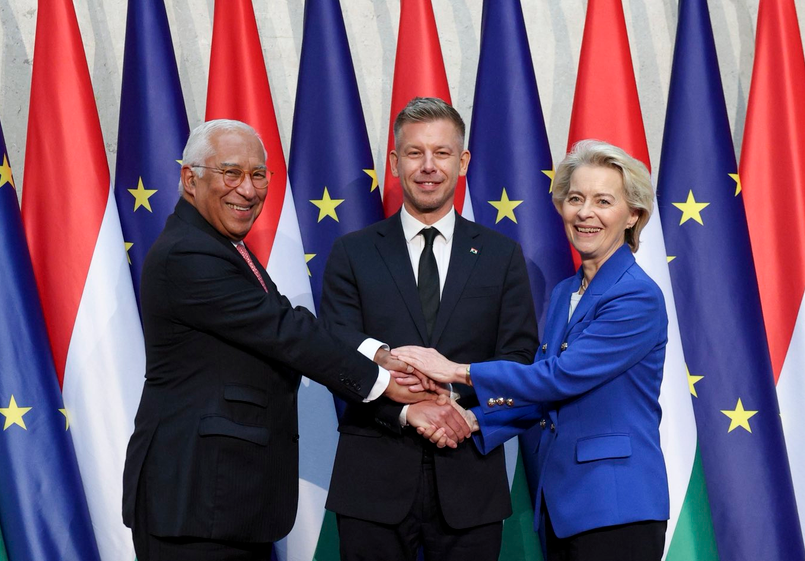
European Council President António Costa told Hungary’s National Assembly that the 1956 Hungarian Revolution remained a reminder that “democracies must not be complacent in the face of tyranny and imperialism”, in a speech marking the uprising’s 70th anniversary.
Costa said thousands of Hungarians were killed and many more forced into exile after the Soviet Union responded to the 1956 revolt with “brutal repression”, according to his speech released by the European Council on Friday.
He linked the 1956 uprising to later moments in the country’s history, including 1989, when Hungarians were “pioneers in removing the Iron Curtain.”
Costa also said Hungary’s accession to the European Union in 2004 was “a crucial step in reuniting Europe”, describing the bloc as “free nations joining together to build peace, security and prosperity through cooperation.”
Trade and public trust in the EU
Hungary’s economy has nearly tripled in size over the past 22 years and average salaries have increased fivefold, Costa told MPs in Budapest.
The EU now accounts for almost 80% of Hungary’s exports and nearly 70% of its imports, showing the extent of Hungary’s participation in the European single market — the EU system that allows goods, services, capital and people to move more freely between member states — he said.
Costa also cited “official figures” stating that 80% of Hungarians trust the EU as a source of stability and consider membership highly beneficial.
