
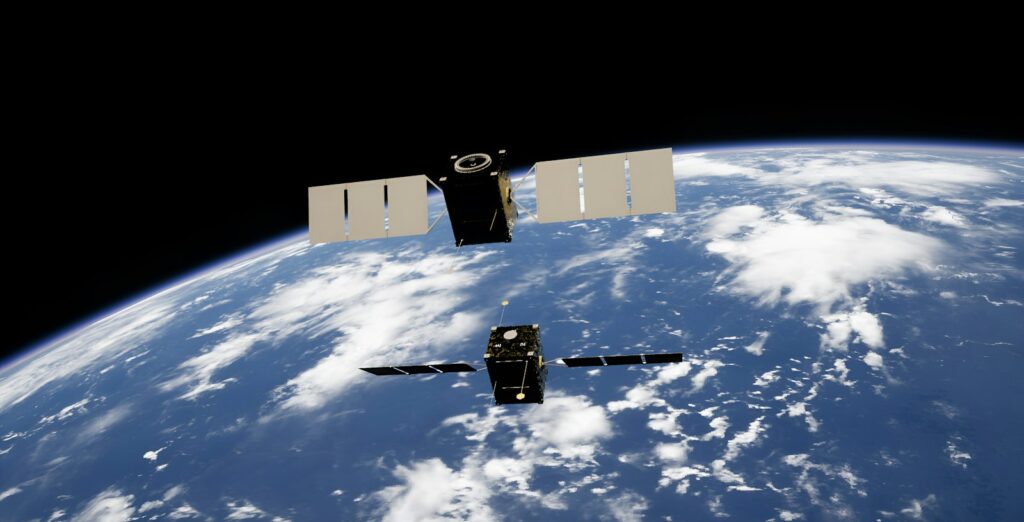
EU Space Surveillance and Tracking — an EU service that helps satellite operators avoid collisions in orbit — has marked 10 years of operations.
Operations began on 1 July 2016, when five EU countries linked their national sensors and data-processing systems to provide warnings to spacecraft operators about potential collisions in space, the European Commission said in a release on Thursday.
The partnership has since expanded to 19 EU member states, from five at the start.
EU SST now helps protect more than 700 satellites, while more than 400 organisations in and outside the EU use its services.
Around 70 operational sensors — including national and commercial systems — contribute data from across the world.
What EU SST does
The system provides three round-the-clock services: collision avoidance alerts, re-entry analysis (tracking objects as they fall back through the atmosphere), and fragmentation analysis (assessing debris created when objects break up in orbit), the Commission said.
EU SST sits within the Space Situational Awareness part of the EU Space Programme, which tracks objects in orbit to help manage risks from collisions, break-ups in space and uncontrolled re-entries.
It supports EU Space Programme satellites including Galileo, the EU’s navigation system, and Copernicus, the EU’s Earth observation programme, and is expected to support IRIS² in future.
An anniversary event held in Brussels on Wednesday, 21 October 2026 brought together EU bodies, member states, users, industry representatives and international partners.
