
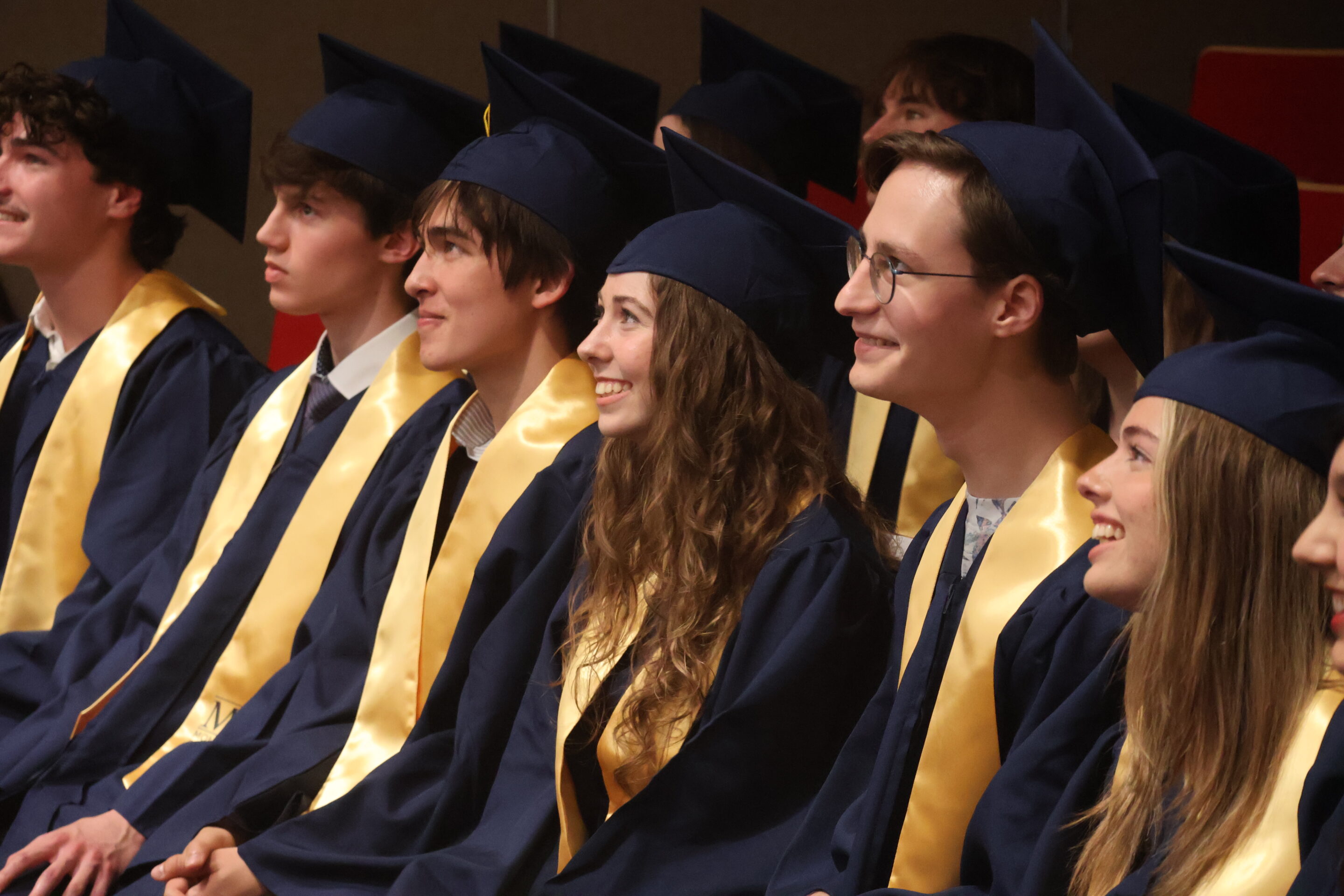
For parents, choosing a school is one of the most important decisions they make for their children. Academic results, wellbeing and future opportunities all play a part. But in an international city such as Brussels, another question deserves particular attention: how can education prepare children to live, study and work in more than one language? Bilingual education offers a compelling answer, giving children the opportunity to develop two languages as part of their education.
At Montgomery International School (MIS), a fully accredited International Baccalaureate (IB) Continuum School, this question is central to our English French bilingual pathway. So, what does bilingual education really involve, why is starting early valuable, and what kind of learning environment helps children thrive in two languages?
Why start early?
Children's early years provide valuable opportunities to develop language skills. Through conversations, stories, play and everyday interactions, they gradually learn to recognise sounds, understand meaning and express themselves. Research on early language learning highlights the importance of meaningful exposure and regular opportunities to use a language. Children do not need to master one language completely before beginning another. With appropriate support and sufficient exposure, they can develop two languages alongside one another.
Parents sometimes worry that learning two languages might confuse a young child or delay their development. However, bilingualism itself does not cause language confusion or language disorders. A bilingual child's vocabulary may be distributed across their languages, meaning that their knowledge can look different from that of a child who speaks only one language. Looking at their development across both languages provides a more complete picture.
What happens in a multilingual child’s brain?
Learning and using two or more languages gives children regular opportunities to process language, interpret meaning and adapt to different communication contexts. Research into bilingualism has explored how these experiences relate to cognitive development, including cognitive flexibility and the ability to manage competing information.
One particularly important benefit is metalinguistic awareness: an understanding of how language works. Children who encounter two languages can discover that the same idea may be expressed differently, that words have different meanings depending on context and that communication requires more than simply translating one word into another.
These discoveries can help children become more attentive to language and more thoughtful communicators. Combined with the social and cultural opportunities bilingualism creates, they make learning two languages a valuable part of a child's wider development.
Opening doors in an international world
In Brussels, the advantages of bilingualism are especially tangible. French is one of the two central languages to Belgium's linguistic landscape, while English plays an important role in international business, higher education and European affairs. For children growing up in this environment, developing strong English and French skills can help them participate in different communities and navigate a range of educational and professional settings.
The benefits are not limited to future employment. Being able to speak another person's language can make everyday interactions more meaningful, from forming friendships to participating in community life. It can also help children feel more comfortable when travelling, studying abroad or joining a new international environment.
Language is closely connected to culture, and learning another language offers children opportunities to discover different ways of thinking and living. They can begin to understand that the world is not experienced in the same way by everyone, and that different perspectives can enrich their own understanding.
Why the learning environment matters
Knowing that bilingualism is valuable is one thing; creating the right conditions for children to develop both languages is another. Meaningful bilingual education goes beyond scheduled language lessons. It gives students opportunities to use both languages in an academic setting, while receiving the guidance and support they need to progress. Children need regular exposure and support appropriate to their age and level of proficiency to both languages to be able to use them effectively.
A bilingual educational environment gives students opportunities to use their languages for more than vocabulary exercises. They can read, discuss ideas, explore subjects and collaborate with classmates while developing their linguistic skills. This is the principle behind Montgomery International School's bilingual pathway. MIS is one of the few international schools in Brussels to offer a fully bilingual education in English and French, allowing students to develop both languages within an international academic framework.
For those wishing to pursue bilingualism at an advanced level, MIS also offers students the opportunity to pursue the Advanced Bilingual Diploma. This provides a distinctive option for families who want their children to combine international education with substantial development in both languages.
Supporting every child's journey
Every child approach language learning differently. Some arrive at school already speaking two or more languages, while others are beginning their journey in a second language. Progress also varies according to the opportunities children must practice, their individual needs and the support available to them.
At MIS, this understanding shapes how we support students along the bilingual pathway. Our teachers build close relationships with their students, adapt learning to different levels of language proficiency and provide additional support where needed. Recognizing that every child’s language journey is different and helping them progress at their own pace is essential.
A successful bilingual education recognises these differences. Children need time to develop their skills, encouragement to participate and an environment where making mistakes is understood as a natural part of learning. Within MIS’s international academic environment, students are encouraged to use English and French as living languages, beyond the four walls of a classroom. Parents can play an important role, too. Families do not necessarily need to be fluent in both languages to support their child's progress; curiosity, encouragement and meaningful opportunities to communicate can all help.
An investment that lasts a lifetime
A bilingual education requires commitment, time and the right learning environment, but its value can extend well beyond school. Strong language skills can broaden educational choices, facilitate international mobility and help young people build relationships across cultures. For families in Brussels, where linguistic and cultural diversity is part of everyday life, bilingual education is a particularly relevant consideration. It offers children the opportunity to develop skills that reflect the society in which they are growing up while preparing them for life beyond it.
At Montgomery International School, we combine English-French bilingual learning with an international IB education and an approach that recognizes each child's individual needs.
Families interested in discovering more about our bilingual pathway and the opportunities it offers are invited to explore www.mischool.be or arrange a meeting with the MIS Admissions team!
Promoted by Montgomery International School
