
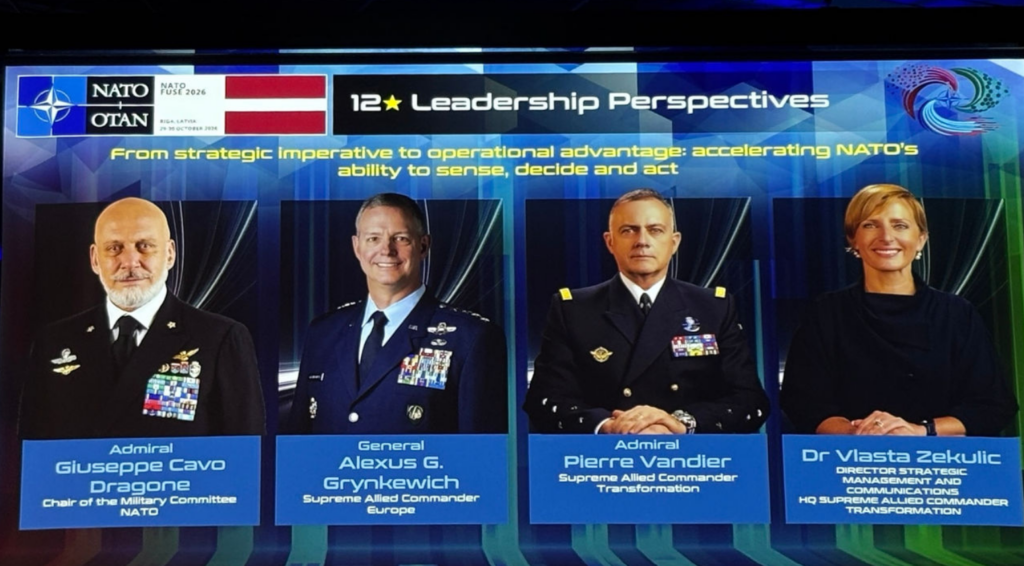
The chair of NATO’s Military Committee, Admiral Giuseppe Cavo Dragone, visited a NATO Federated Unified Sensing and Effects (FUSE) experimentation event in Riga on Thursday.
The visit took place during a “distinguished visitor day” attended by senior NATO and Allied leaders, as well as representatives from industry and capability developers, the alliance announced on Friday.
Admiral Cavo Dragone said Ukraine had shown that “adaptation cycles are now measured in weeks, not years.”
He stated that he expected “next year” to see “a sensor-to-shooter chain against swarm of drones” that works across several nations’ systems and is fielded with units on NATO’s eastern flank.
FUSE refers to work on linking sensors and military effects across Allied forces, including how data from detection systems can be used to support action in the field.
Two-week testing in Latvia
The event ran for nearly two weeks and involved NATO Allies, military operators and industry testing how emerging technologies and capabilities from different nations can work together against rapidly changing battlefield threats.
The experimentation was led by NATO Allied Command Transformation (ACT) and included work on digital connectivity, counter-drone defence and next-generation targeting.
NATO said the next phase would assess the findings, identify remaining challenges and determine next steps with Allied nations, operators and industry.
