
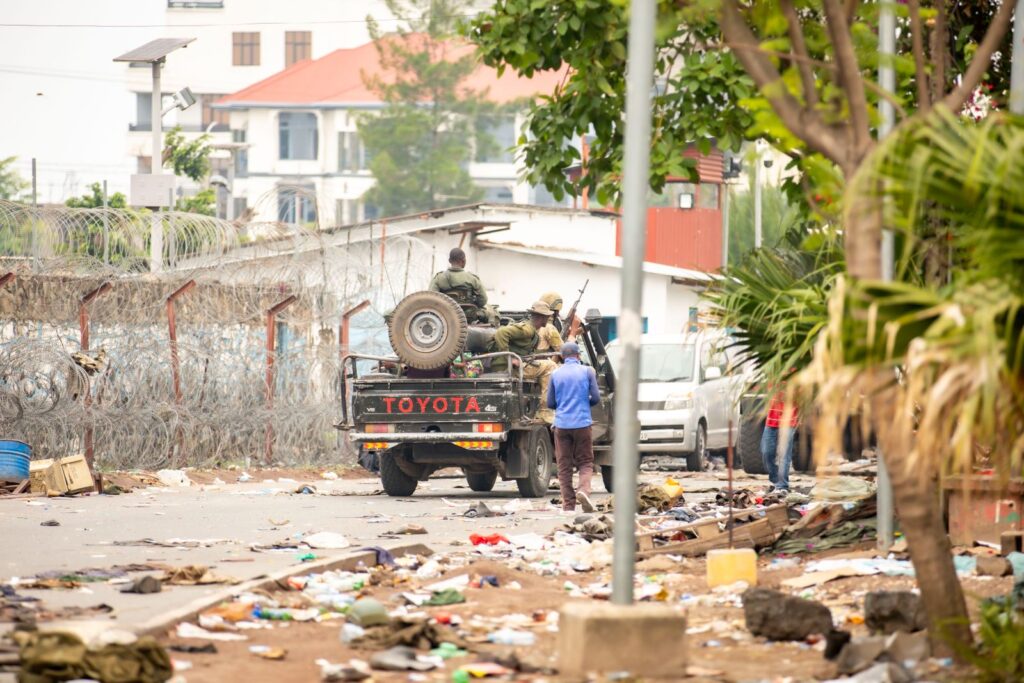
Belgium, Canada, Denmark, the European Union, France, Germany, the Netherlands, Sweden, Switzerland, the UK and the US have called on parties involved in efforts to end conflict in the Democratic Republic of the Congo to stick to existing agreements and pursue a peaceful settlement.
The International Contact Group for the Great Lakes region (ICG), chaired by France, urged parties to the Washington Accords and the Doha Framework to “remain committed and engage in good faith” and to meet their obligations without delay, the European External Action Service (EEAS) informed on Friday.
It backed mediation efforts including those of the African Union, led by the President of the Council of the Togolese Republic, and said regional leadership was important.
The organisation said it welcomed an African Union Commission statement issued on 19 October calling on all parties to exercise restraint.
The ICG also rejected what it described as pursuing political objectives through violence, citing the recently created FRN (Front pour la Refondation de la Nation).
Fighting in eastern DRC and civilian impact
The ICG stated that it remained deeply concerned about continued fighting in eastern DRC and the suffering of civilians.
All parties were urged to honour commitments made in Doha on 19 July 2025 to observe a ceasefire.
The escalating use of drones was described as having “grave consequences” for civilians and humanitarian workers.
The statement also referred to UN Security Council Resolution 2773, saying it called for the Rwanda Defence Forces to stop supporting the M23 armed group and to withdraw from DRC territory “without preconditions”, as well as for the dismantling of what it called illegitimate parallel administrations in DRC territory.
It also cited the resolution’s call for the “neutralization” of the FDLR, an armed group, and encouraged the Congolese government to present a clear action plan and timeline for implementing a disarmament, demobilisation and reintegration protocol for FDLR groups.
Against what it described as increasing humanitarian needs and an Ebola epidemic, the group urged all parties and armed groups to respect international humanitarian law and to ensure humanitarian actors had full, safe and unimpeded access to people in need.
