
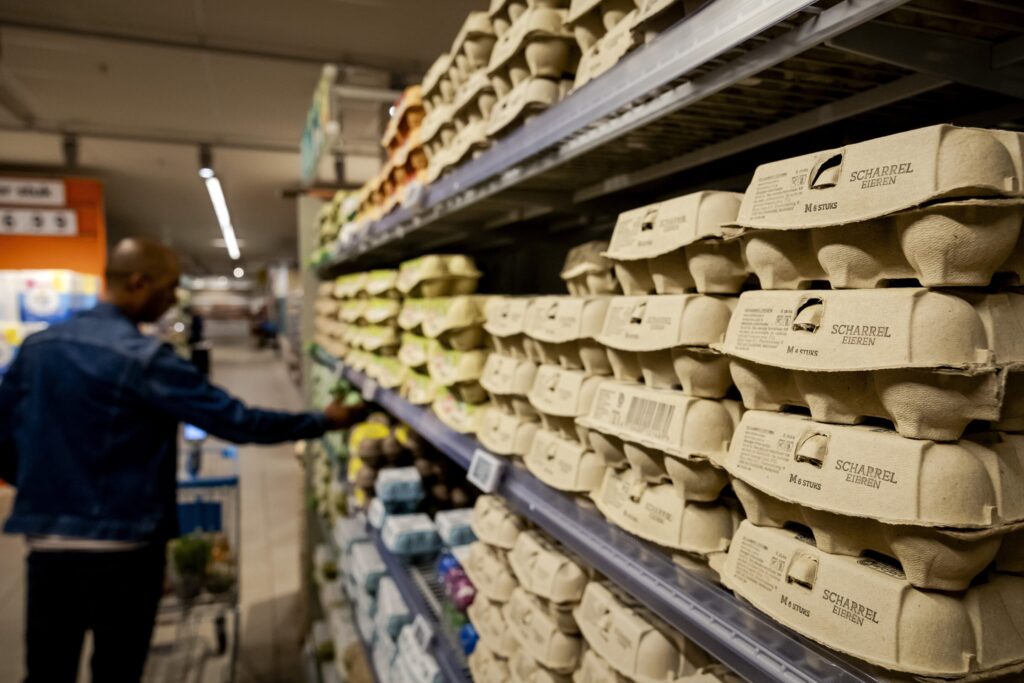
Culture shock can be experienced in many different ways when coming to Belgium. For some, it starts with the weather, others are surprised by the taxation, but sometimes, even simpler practices could blow one’s mind. Why does Belgium not keep eggs in the fridge?
"When I came here and I saw eggs being stored on shelves at room temperature, I was genuinely shocked. I really was not expecting it at all," Hristina, 21-years-old expat from Bulgaria, told The Brussels Times.
Even though Bulgaria and Belgium must both comply with the same EU laws regarding treatment and temperature regulation, differences in storage practices still exist – raising uncertainty among consumers.
"I even remember looking around the refrigerators to see if there were any other eggs, just so I wouldn’t have to buy the ones sitting on the shelves," she said. "I was so confused about how people could even consider leaving them out like that."
Is there good reason for mistrust?
The hidden hinge
Before diving into legal regulations and temperature questions, it is important to understand the structure of the egg and how this affects its treatment.
The key is held by the egg's cuticle, which is an invisible thin protein layer covering the eggshell, mostly known as the egg’s first line of defense against bacteria.
Different approaches across the world hinge on the decisions about whether the cuticle provides enough protection against bacteria such as Salmonella. In the US, for example, this layer is usually removed by washing the eggs before packaging and shipping phases of production.
As a result, where eggs are stored in supermarkets is not a marketing decision made by shop owners, but a consequence of the method of treatment and temperature requirements different governments impose.
For all the countries subject to the EU law, including Belgium, egg marketing is governed by Commission Delegated Regulation (EU) 2023/2465.

Illustrative image of eggs. Credit: Belga/Nicolas Maeterlinck
According to the regulation, in all EU Member States, washing and cleaning the eggs are forbidden due to the possibilities of damaging the eggshell, which plays the role of an “effective barrier against bacterial ingress.” Additionally, washing usually removes the cuticle, which could increase the risk for consumers.
If eggs remain unwashed and the natural protection – the cuticle – is untouched, there is no proven need to refrigerate them – which is consistent with the Belgian practice of storing eggs.
Although eggs are placed outside the fridge, they are still not subject to high temperature. In supermarkets, they are often placed on shelves close to refrigerators, where it tends to be slightly colder than in the rest of the shop.
This practice tends to hold true in people's homes as well. "My family keeps the eggs in the garage. It is not as cold as the fridge, but they are not at room temperature either," said Aaron, 27, from Belgium.
How time and temperature affect the quality of eggs
Two key factors that determine an egg’s life are the storage time and temperature. Although EU law does not require eggs to be refrigerated throughout the marketing process, research suggests that egg quality declines over time at all temperatures, but the decline is faster at higher temperatures. This includes weight loss and thinning egg whites.
Importantly, this does not mean eggs on the EU market are unsafe: refrigerated or not, eggs in Europe go through intense regulations which ensure their quality and consumers’ safety.
Belgium in not alone in storing its eggs outside the fridge. Others, such as the Netherlands or Italy, do the same.
In other European countries, mixed practices are followed. While a Portuguese family would usually preferd the fridge for their eggs, this preference is not a matter of mistrust. "In the store, they're not in fridges, but once you buy them you put them in. It extends their lifetime," said Ana, 27.
