
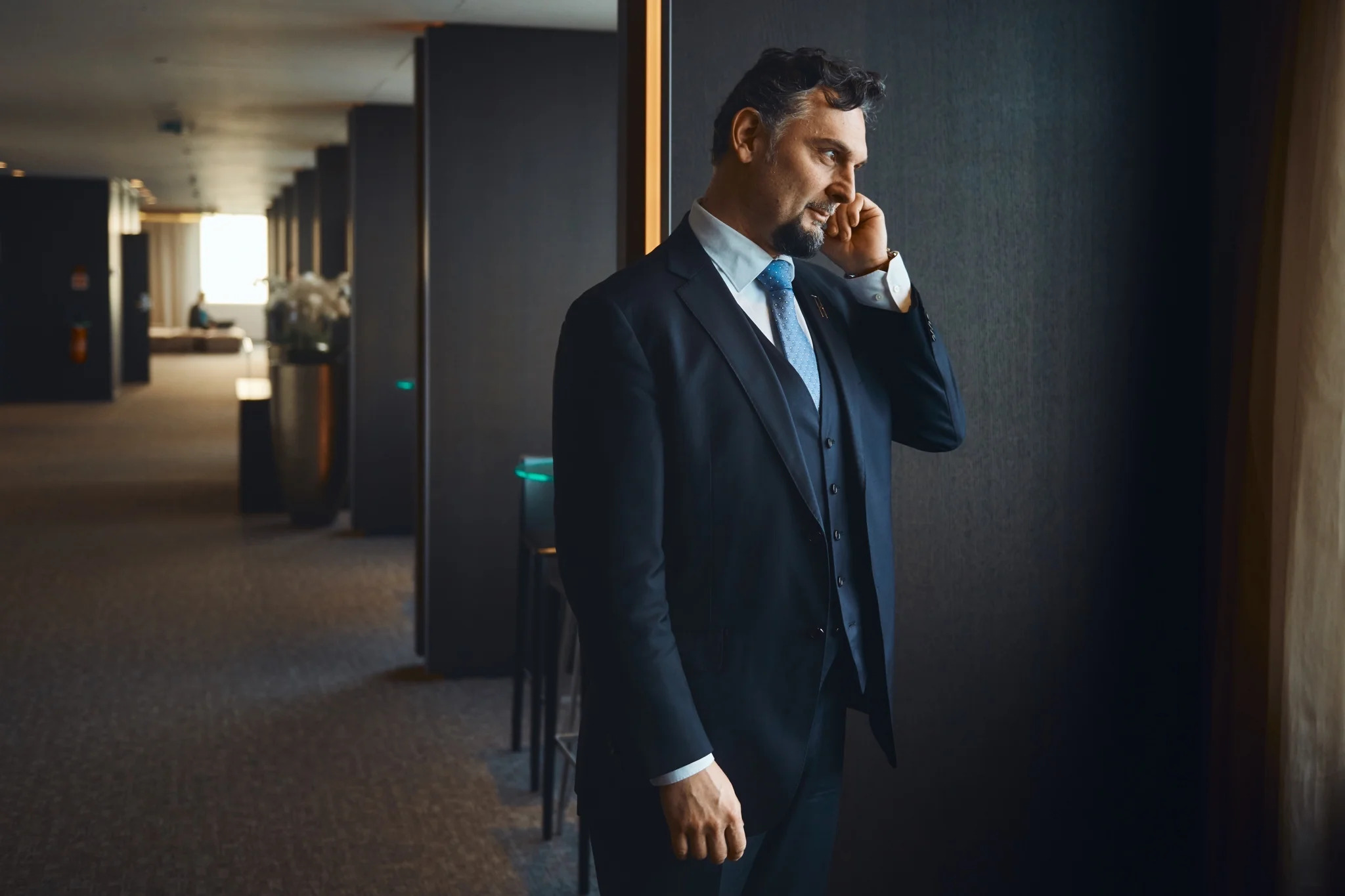
For 15 years, Nedzad Kamenica has prepared The Hotel Brussels for guests who arrive with motorcades. The threats have changed, from drones to smart glasses. The aim has not: nobody else should notice.
The biggest delegations to stay at The Hotel Brussels are American presidential ones, and they take the whole hotel, said Nedzad Kamenica, its security and diplomatic manager.
“In one way, that’s difficult to manage,” he said. “In another, it’s very easy: we have one client.”
Barack Obama stayed at the hotel on his first visit to Brussels as president, in March 2014, as the Belgian press reported at the time.
Most delegations are smaller, and come far more often. Brussels is home to the main institutions of the European Union, NATO’s headquarters and one of the largest diplomatic communities in the world, and every European Council summit brings a few of them to the 27-storey tower on Boulevard de Waterloo.
Each summit means a few busy days of preparation: protocol, the delegations’ own security teams, walk-throughs and small simulations to work out what each will need. Delegations at threat levels 1 and 2 are straightforward, Kamenica said. Level 3, a threat that is known, direct and likely, even if its details are not precise, takes more. Some of those visits come at the last minute.
“Quite simply, you run,” he said. “You know what you have to do. They know what they’re asking for. You just have to make it happen.” What counts then is time, and he finds it where he can. “I take it from my free time, and from my time with my family.”
The groundwork goes back to the building itself. Kamenica joined when Pandox, the Swedish hotel group, took over the former Hilton tower and began a two-year renovation of all 27 floors, and the security, he said, was designed in from the start. Today the hotel has its own security team on duty around the clock, every day of the year.
“We are a business hotel first,” Kamenica said. “In Brussels, business often arrives with its own security.”
Each delegation is given one point of contact, who looks after it from the first enquiry to departure and is the same person on its next visit. “A delegation does not want to explain itself twice,” he said. “They want to call the person they called last time.”
When a delegation takes over a floor, the security around the building steps up, and years of work with the police pay off. “It’s a direct contact, based on trust built over many years,” he said. “I know every level of command in the local police, and in the federal police. They can really make our job easier.”
Big delegations bring barriers and traffic restrictions to Boulevard de Waterloo, one of the city’s smartest shopping streets. After 15 years, Kamenica said, the boulevard knows the routine.
What has changed is the pressure. “People are much more stressed,” Kamenica said. “Social media doesn’t help, so people are much more reactive.” They are also more demanding, he added, and less predictable.
Delegations, he said, have been more on edge since the start of the war in Ukraine, and above all since the war in Iran began.
Brussels also brings risks of its own. “We know very well that Brussels is the heart of espionage in Europe,” he said, “and even one of the top spots in the world.”
Technology has added new ones. The team has already had to deal with drones circling the tower, he said, and smart glasses that can record are a growing concern for a hotel that hosts very confidential conferences for international organisations.
None of this is meant to reach the guest who has come to Brussels for a conference and simply wants breakfast. “The best security is the kind nobody thinks about,” Kamenica said. “Not the other guests. Not the kitchen. Not the minister, after the first night.”
When he stays in other hotels, he notices the gaps at once. “From the front door to the reception desk, if there is one, to the lifts, I see straight away what’s good and what isn’t,” he said. The most common weakness, in his view, is that nobody controls who comes in.
When a presidential delegation finally leaves, the team celebrates. “There’s an enormous amount of stress, an enormous amount of energy spent,” he said. “So we’re proud.”
Then the hotel goes back to its other guests. “My favourite guest,” he said, “is the one who checks out without knowing I was here.”
For meetings, events and delegation stays at The Hotel Brussels: meetings.thehotel-brussels.be
