
Just after 05:00 on Friday, Belgium's federal parliament passed a bill that allows police and immigration officers, under specific conditions and with prior judicial authorisation, to enter private homes to enforce removal orders, during a parliamentary hearing start started on Thursday evening.
The highly divisive bill has been the subject of debate for over a year, with 53% of Belgians supporting the legislation according to a survey conducted by human rights organisation 11.11.11.
During the bill's final parliamentary session, which lasted all night, the debate became incredibly heated, with MPs booing each other and trading verbal jabs the entire evening.
'Solidarity isn't a crime'
Debate over the bill began when Flemish far-right MP Barbara Pas (Vlaams Belang) requested that all "non-urgent" legislation on the agenda be tabled so parliament could focus on the ramifications of Prime Minister Bart De Wever (N-VA) submitting his resignation to the King earlier this week.
Several other MPs expressed a similar desire, including Francophone socialist Pierre-Yves Dermagne (PS), albeit for different reasons. He questioned why the Francophone progressive-centrist Les Engagés and other majority parties were keen to vote on the legislation a day after protests across Belgium occurred against the legislation.
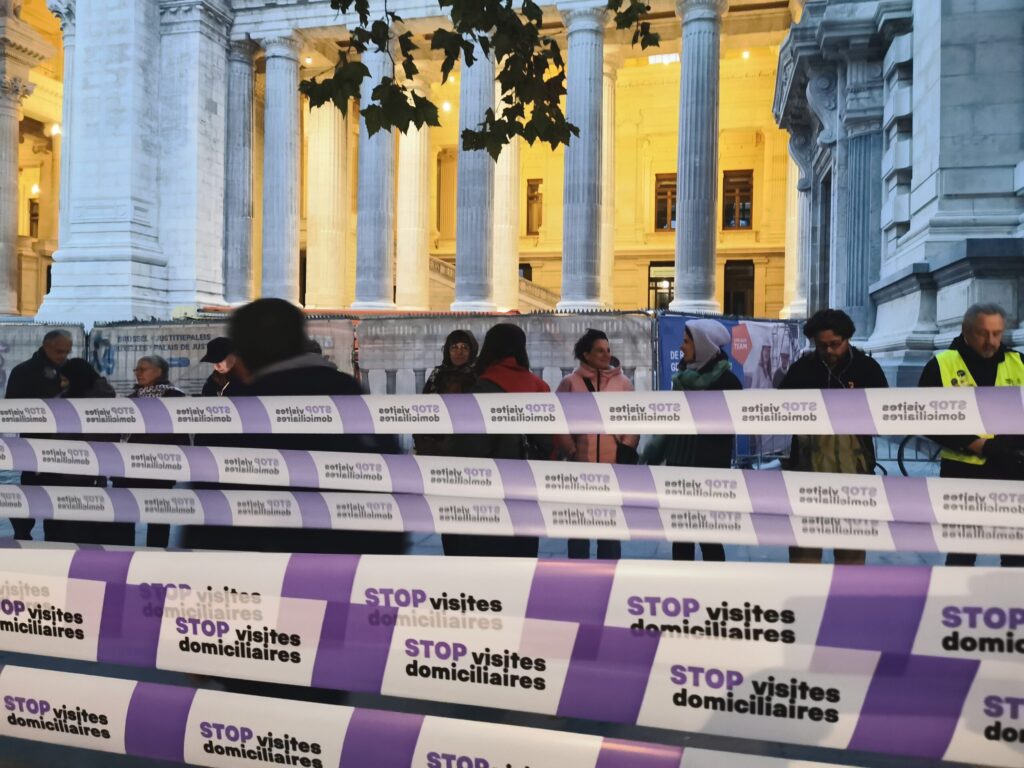
The organisers of those protests, No ICE in Belgium, told the Brussels Times that their "solidarity isn't a crime, and respect for fundamental rights is non-negotiable."
In Brussels, demonstrators formed a human chain around the Palais de Justice, while around 50 other rallies were organised in front of town halls across the country.
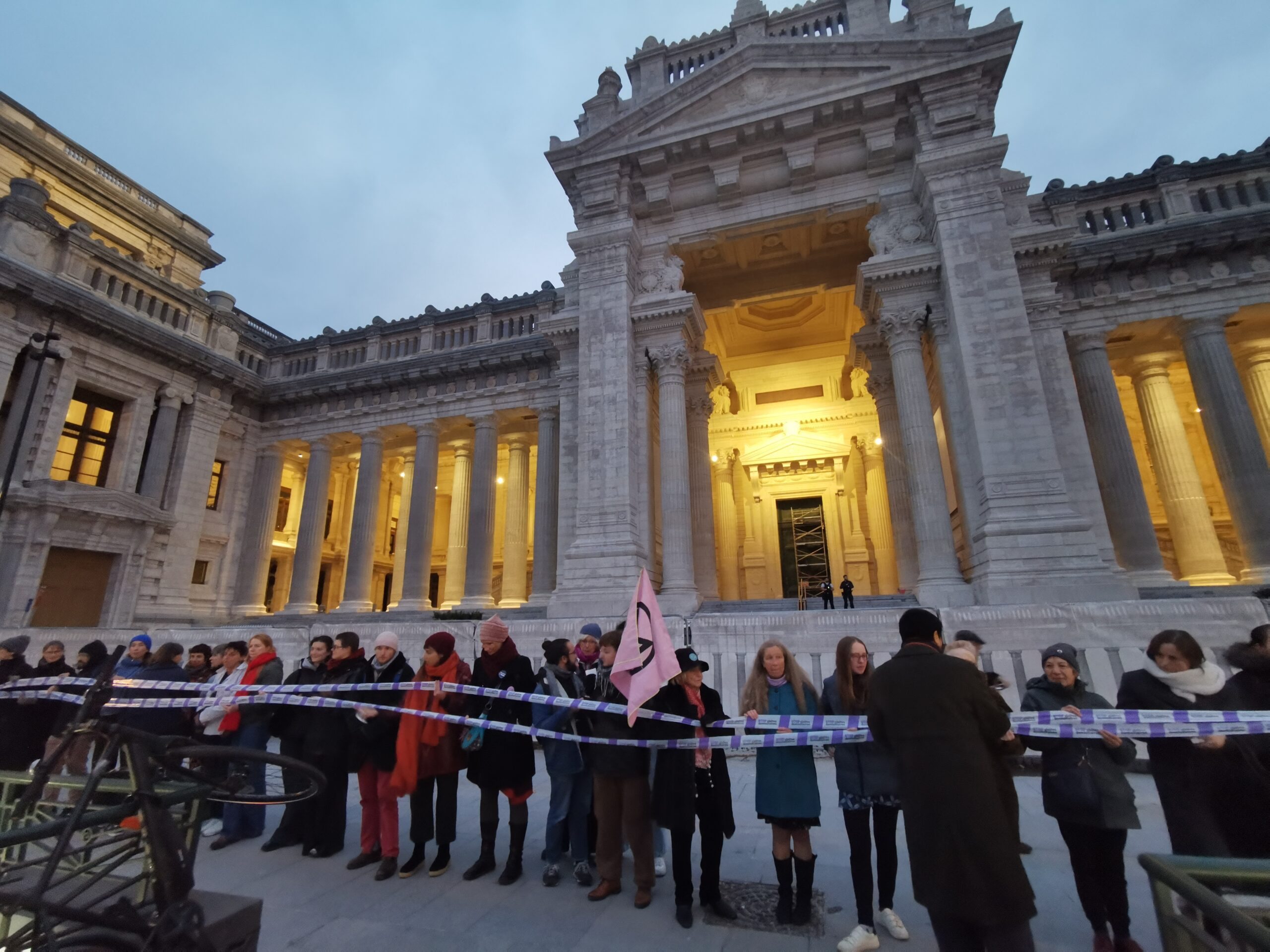
This image shows a human chain action by citizens and civil society organisations against the draft law on home searches, Wednesday 4 November 2026 in Brussels. Credit: Belga/Mateusz Kukulka
"We saw a strong mobilisation across Belgium last night to tell you, ladies and gentlemen of the parliament, to not support this bill authorising home visits we're discussing today," Dermagne said. "Seize this political opportunity to ensure that your speeches are consistent with your actions."
However, some MPs who support the legislation, like Michel De Maegd (Les Engagés), called these requests hypocritical.
De Maegd added that he believed some MPs only want to discuss legislation when conversations favour them, and when it no longer does, they begin to oppose democratic debates.
“There is a difference between doing politics and petty politics,” De Maegd said. “I want to point out on behalf of my group that we are here voting for a law that further pursues terrorists and who votes against that? ... Do not prevent the debate, listen to these arguments and respond with your own arguments.”
After a vote of 84-52 over whether or not the bill should be voted on during Thursday's debate, it was ultimately left on the parliament's agenda.
'A slap in the face'
When the bill was revisited on the floor, Maaike De Vreese (N-VA) began conversations by calling out misconceptions she believed certain MPs and NGOs were pushing. In particular, De Vreese questioned the demonstrations that had taken place the prior evening, asking if the protesters even understood what exactly they were protesting against.
"For whom, for God's sake, are you taking up with that human chain?" De Vreese asked. "It's a slap in the face to our police forces and immigration offices that are confronted with reality on a daily basis and carry out these home checks. But much worse, it's a slap in the face of the victim of these measures."
In response, Matti Vandemaele (Groen) mocked the legislation by questioning what it will achieve that the current statute doesn't.
"You say that with home entries, we will finally be able to tackle the pedophiles, rapists and terrorists!" he exclaimed. "But which of those categories can we currently not tackle with the tools we have now? Because that is what you're saying while everyone else in the hearings has indicated that this is total nonsense."
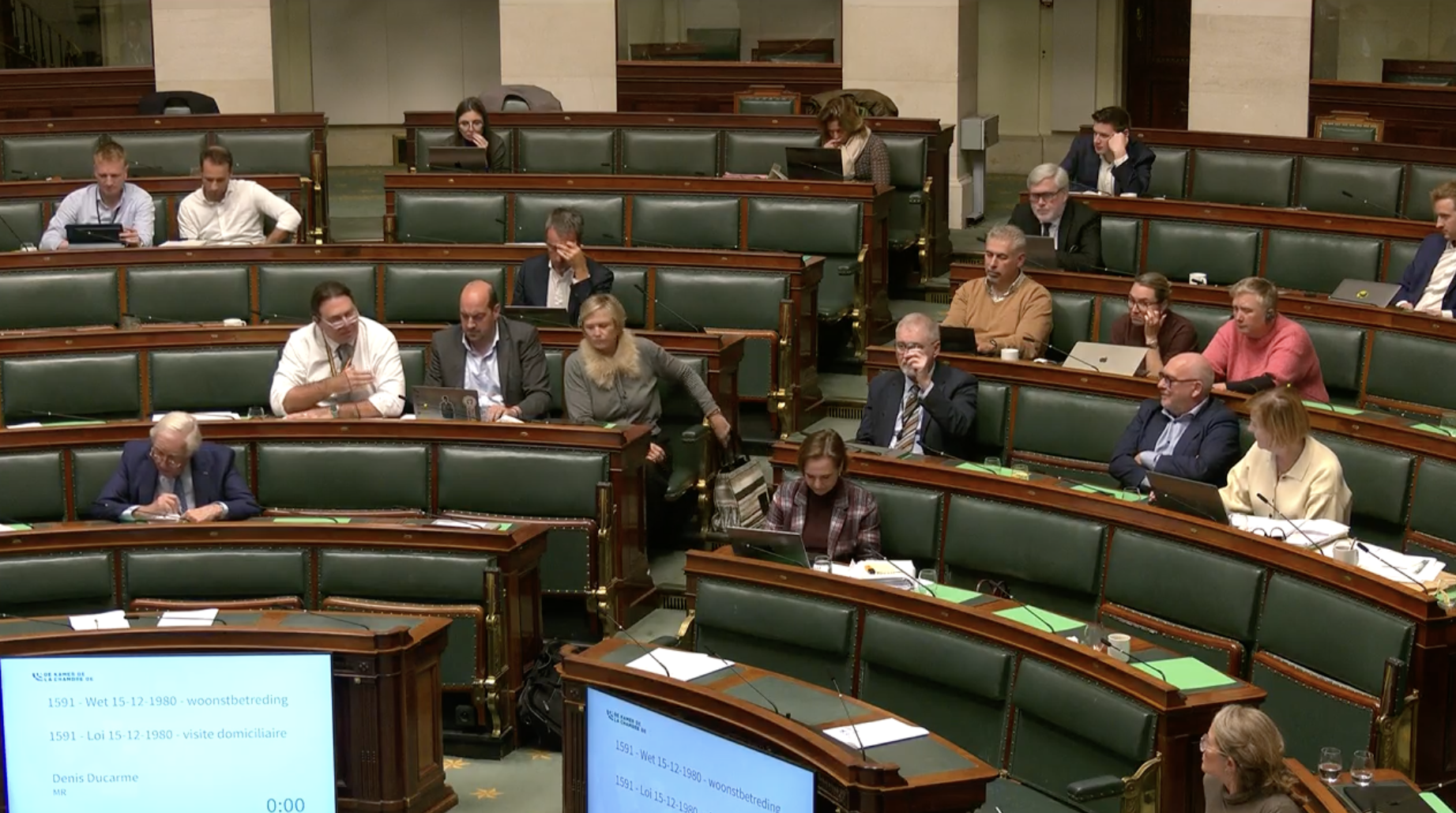
Screenshot from the bills debate. Credit: media.dekamer.be
Claire Hugon Lecharlier (Ecolo) added to Vandemaele's point, stating that police officers and other affected parties have asked her to vote 'no' on the bill. According to Lecharlier, this alone should be enough of a warning sign for the parliament to rethink the bill.
She added that some of the things she's heard supporters of the bill share are misguided and could unfairly stigmatise certain groups of people.
"I think you would do well to find out about the profile of perpetrators of sexual violence against minors," Lechalier said. "It's the fathers, brothers and cousins. So don't come and tell me that my daughter and other children are in danger because we are welcoming, when it's you who apparently has no knowledge of how sexual assaults against children occur."
In response to the questioning, De Vreese questioned if these conversations would even have to happen if there were stricter rules for removing illegal immigrants already in statute. In particular, she questioned why "illegal" immigrants, some of whom have committed crimes, are allowed to leave the country of their own free will.
"How many chances do these people actually get?" she questioned. "These people shouldn't even be here in the first place. They just have to leave, and they can cooperate right? But they don't do that, and they refuse to leave. What's more, they commit criminal acts on top of that!"
Empty seats and shouting matches
As the debate continued into late Thursday evening, the chamber became increasingly hostile. By 20:00, many MPs had left the chamber, something both Denis Ducarme (Reformis) and Sarah Schlitz (Ecolo) expressed their disdain for. After Schlitz called the nearly vacant room "disgusting," the debate was interrupted for nearly 20 minutes as the chamber descended into a shouting match.
When the debate recommenced, Khalil Aouasti (PS) questioned Asylum and Migration Minister Anneleen Van Bossuyt (N-VA), the bill's sponsor, over comments she's made.
"Do you agree with the idea that the threshold of the home is an obstacle to overcome, or do you agree that it is a freedom to preserve?" he asked.
Van Bossuyt did not have a chance to respond to this or any criticism for another seven hours.
Just after 05:00 on Friday, the bill was ultimately passed with 80 votes in favour, 35 against, and 12 abstentions.
"We can certainly call this a historic moment," Van Bossuyt said. "After years of political opposition and a great deal of misinformation, it can finally come into force. The law's aim is to deport rapists, drug offenders and hate preachers from the country. Those people will no longer be able to hide behind closed doors."
