
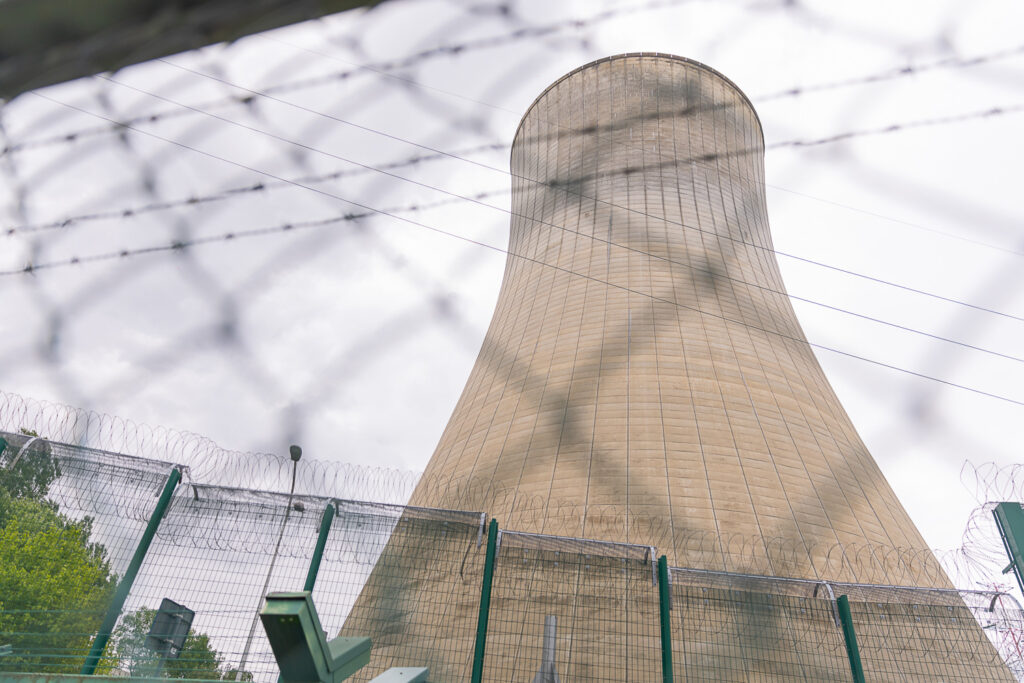
The Belgian federal government has once again failed to reach an agreement with energy company Engie over the takeover of the country's seven nuclear reactors.
The government had initially hoped to reach an agreement with Engie by the end of September, before pushing the deadline back to 4 November. However, talks have continued to stall, forcing both parties to extend negotiations for a second time.
According to De Standaard, Prime Minister Bart De Wever (N-VA) even commissioned draft legislation that would allow the government to expropriate Engie if necessary, although such a move may be considered unrealistic.
The ongoing federal budget crisis has further complicated negotiations. Reaching an agreement on a deal of this magnitude requires direct discussions between De Wever and Engie CEO Catherine MacGregor. However, the Prime Minister's attention is currently focused on resolving the budget deadlock.
A costly and risky takeover
The proposed acquisition would see the Belgian state take control of all seven nuclear reactors currently owned by Engie. However, experts have repeatedly warned about the financial risks associated with such a deal.
Beyond the purchase itself, the government would also have to account for significant costs linked to nuclear waste management and the eventual decommissioning of the facilities. These financial risks are particularly concerning given that only two reactors, and potentially a third, may ultimately be eligible for an extension of their operating lives.
Former Belgian Nuclear Research Centre director-general Carl Malbrain reportedly advised federal ministers this summer to prioritise offshore wind energy rather than pursue the nuclear takeover.
Even if an agreement in principle is reached by 12 December, a final deal could still take years to materialise. Previous negotiations between the Belgian government and Engie took three years to conclude.
Delays affecting Belgium's energy strategy
The uncertainty surrounding the nuclear takeover is also beginning to affect other major energy projects. Grid operator Elia is currently consulting the public on its planned investments in Belgium's high-voltage electricity network between 2028 and 2038. Decisions about extending or restarting nuclear reactors could significantly influence the infrastructure required in the coming years.
The uncertainty could also affect negotiations between Belgium and the United Kingdom over an additional electricity interconnector.
Millions of euros at stake
The stalled negotiations could also reopen discussions over the guaranteed electricity price for Doel 4 and Tihange 3.
Under the current arrangement, the reference price is set at just over €90 per megawatt-hour. When market prices fall below this level, the federal government must compensate Be-Nuc, the company that owns the two reactors and is jointly controlled by Engie and the Belgian state. When electricity prices exceed the guaranteed level, Be-Nuc must instead pay the difference to the government.
According to figures reported by De Standaard, the federal government paid €44.6 million to Be-Nuc and €5.1 million to Luminus last year. In the first quarter of 2026, the state received €23.9 million and €2.7 million from the two companies respectively.
Meanwhile, wholesale electricity prices have risen significantly, averaging €174 per megawatt-hour in October and reaching €248 per megawatt-hour so far in November.
On 4 November alone, when both Doel 4 and Tihange 3 were operating at full capacity, the difference between the guaranteed electricity price and actual market prices exceeded €8 million.
