
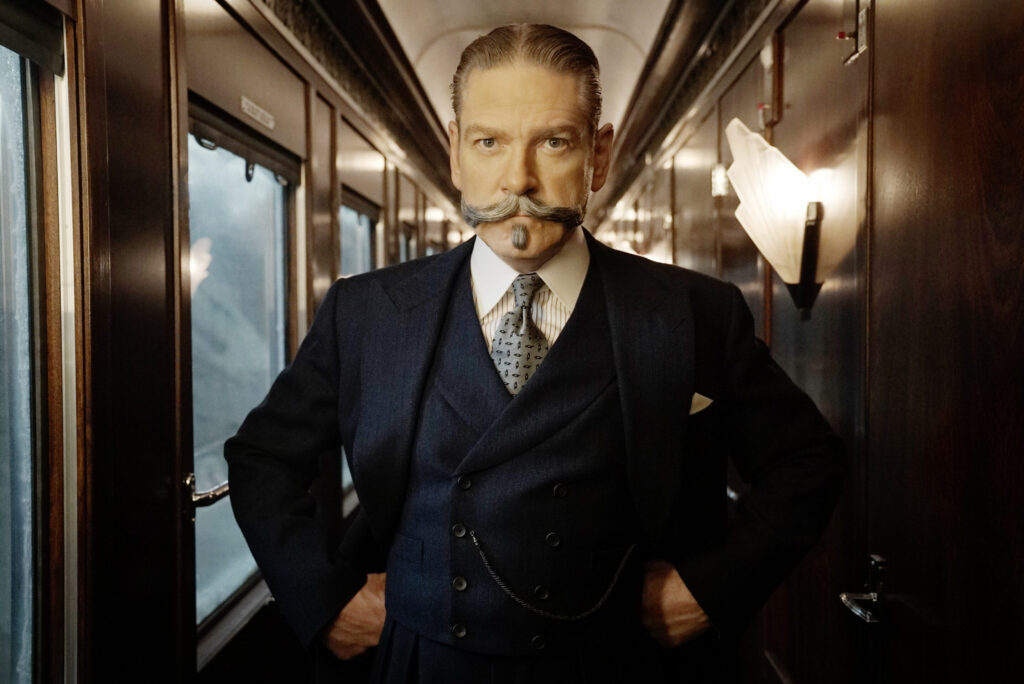
Belgian refugees who fled to Britain during the First World War may have inspired Agatha Christie to create Hercule Poirot, one of the most famous fictional detectives of all time.
The likelihood of this was underlined by Christie's great-grandson, James Prichard, at the opening of a major exhibition at the British Library in London, marking the 50ᵗʰ anniversary of the British crime writer's death.
Poirot, the meticulous, moustachioed Belgian detective who first appeared in The Mysterious Affair at Styles in 1920, became one of Christie's most enduring characters, appearing in more than 30 novels and numerous short stories.
But why did an English writer choose to make her detective Belgian rather than British?
The answer may well lie, at least in part, in the thousands of Belgians who sought refuge in Britain following Germany's invasion of Belgium in August 1914.
Christie, who was working as a volunteer nurse in her home town of Torquay during the war, would have encountered Belgian refugees, and their presence may have influenced her choice of nationality for Poirot.
"No one really knows," Prichard said, when asked about the character's origins.
"There is this story of her seeing the Belgian refugees in Torquay during the First World War and I'm sure that's part of it. I think she instinctively thought she needed an outsider. She didn't want the traditional British detective and I think that's where that came from."
The decision gave Christie a character who could observe British society from the outside, combining an eccentric personality with an exceptional ability to solve crimes.
A Belgian detective takes shape
The exhibition, which opened on October 30 and runs until June 20, 2027, includes Christie's personal notebooks, correspondence and other material documenting how she developed her characters and plots.
Curator Lucy Rowland said the author's encounters with Belgian refugees were likely to have been one of several influences behind Poirot. "I believe she was inspired not just by the Belgian refugees that she saw in Torquay but many other characters," Rowland said.
"She would quite often spot people and she always had one of her writing notebooks on her so she would make notes about various people she'd seen in order to form these characters."
Fellow curator Sophie Defrance said the notebooks contain everything from everyday observations and snippets of dialogue to shopping lists and ideas for future novels.
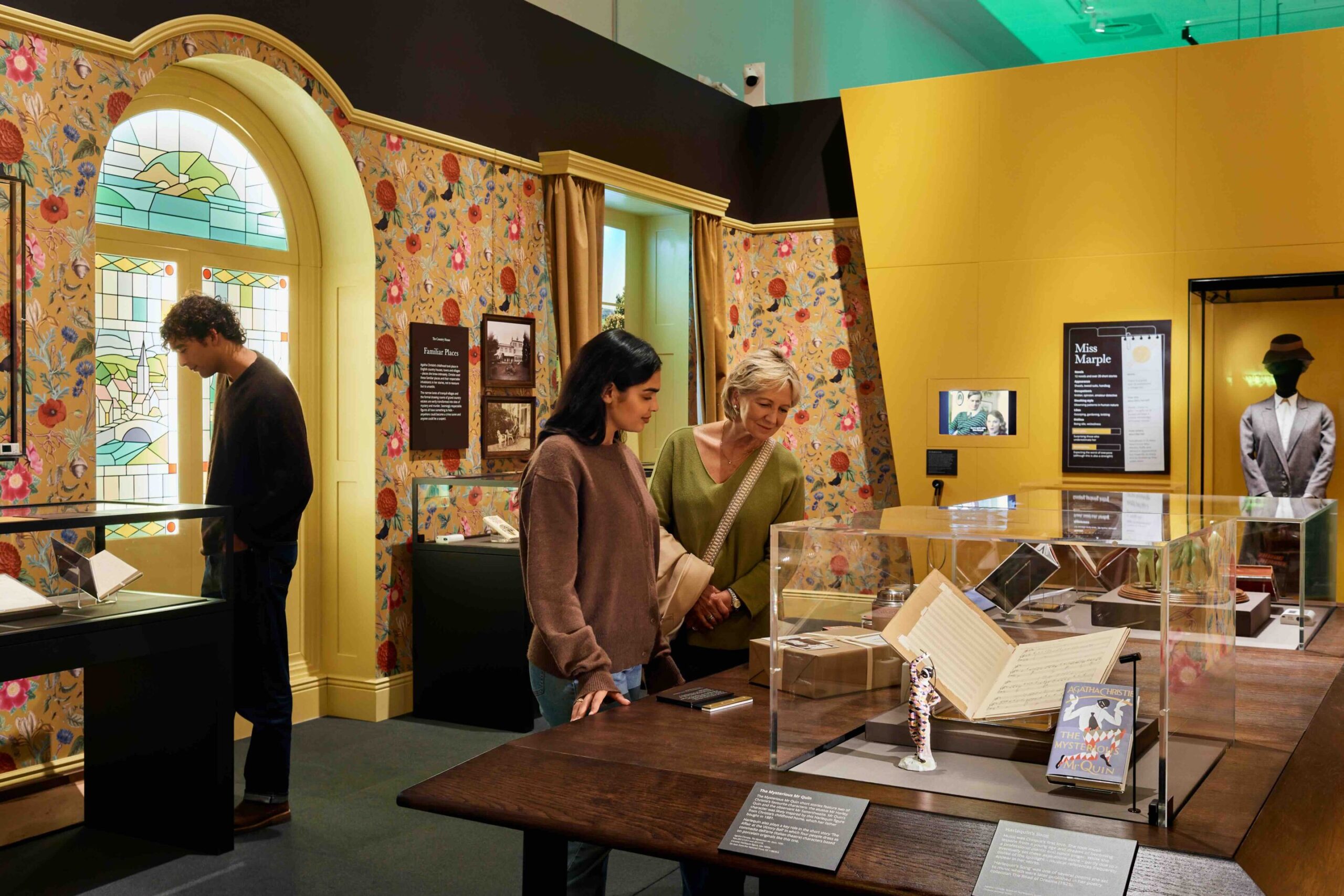
The Country House at Agatha Christie: A World of Mystery. Photo by Justine Trickett. Credit: British Library Board
One notebook for Death on the Nile even shows Christie considering whether Poirot or her other celebrated detective, Miss Marple, should solve the mystery, with a question mark beside their names.
Poirot eventually became an international literary phenomenon, known for his precise manners, elaborate moustache and insistence on using his "little grey cells" to solve crimes.
His fame was such that The New York Times published an obituary when Christie killed off the character in Curtain: Poirot's Last Case, published in 1975. A reproduction of the newspaper's front page is among the exhibition displays.
Christie herself had a complicated relationship with her creation. In a letter included in the exhibition, she described Poirot as "rather insufferable", adding that she expected him to resist retirement while he remained her chief source of income.
Belgian origins of the Orient Express
Poirot is not the only Belgian connection explored in the exhibition.
Another is the Orient Express, the luxury train made famous by Christie's 1934 novel Murder on the Orient Express, in which Poirot investigates a killing aboard a train stranded by snow.
Although closely associated with glamorous international travel, the original Orient Express was the creation of Belgian entrepreneur Georges Nagelmackers.
Born into a wealthy Belgian banking family, Nagelmackers founded the Compagnie Internationale des Wagons-Lits, which launched the luxury train service in 1883, initially connecting Paris and Vienna.
The company went on to operate an international network of sleeping cars and luxury trains, helping transform long-distance rail travel across Europe.
The exhibition includes an Orient Express-inspired carriage, highlighting how Christie's own travels influenced her fiction.
Prichard recalled that Christie first travelled on the train following her divorce from her first husband, Archie Christie.
She had initially considered a holiday in the Caribbean but instead decided to travel to Istanbul, later continuing to do archaeological excavations in the Middle East.
It was during those travels that she met archaeologist Max Mallowan, who became her second husband.
Christie's experiences aboard trains and her observations of fellow passengers subsequently provided material for several of her mysteries.
The Orient Express has remained closely associated with Poirot, not least through numerous screen adaptations, including Kenneth Branagh's 2017 film, which was produced by Prichard.
Poirot's Belgian birthplace
Belgium has also embraced Poirot as one of its own, despite his fictional origins.
The village of Ellezelles, in Hainaut province, claims to be his birthplace and has even produced what is presumably a fictional birth certificate for Hercule Jacques Poirot, dated April 1, 1850 and which is kept at the Maison du Pays des Collines. Fact or fiction, it doesn’t really matter. Maybe it would put Ellezelles on the map some day if someone sets up a Hercule Poirot exhibition or museum there...
A small statue of the detective can also be found at the very same Maison du Pays des Collines, reflecting the character's place in local folklore.
There are accounts that Christie herself visited Belgium in the 1960s with Mallowan and saw a museum dedicated to Poirot, although details of the visit and the museum remain uncertain.
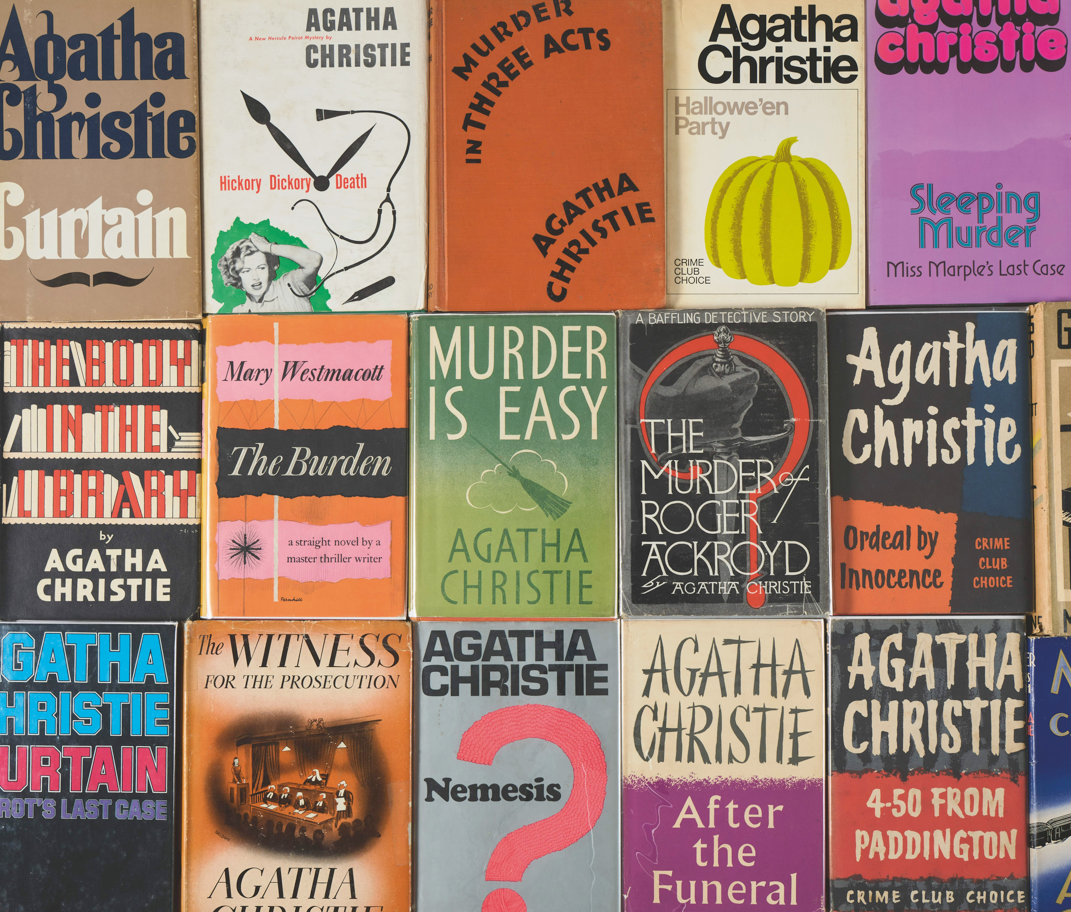
UK and US first editions.
The Belgian connections form part of a wider exhibition examining Christie's life and career, including her work in a First World War dispensary, where she acquired knowledge of medicines and poisons that later featured in her detective fiction.
Other displays recreate an archaeological excavation and a West End theatre, reflecting her travels and success as a playwright.
The exhibition also marks the centenary of The Murder of Roger Ackroyd, published in 1926, one of her best-known novels.
Born in Torquay in 1890, Christie wrote dozens of detective novels and short-story collections, as well as more than 25 plays. Her stage mystery The Mousetrap, which opened in London's West End in 1952, has become the world's longest-running play and is still running.
Christie died in 1976, aged 85, but her fictional Belgian detective remains one of the most recognisable characters in crime fiction.
Agatha Christie: A World of Mystery, is at the British Library in London until 20 June 2027.
