
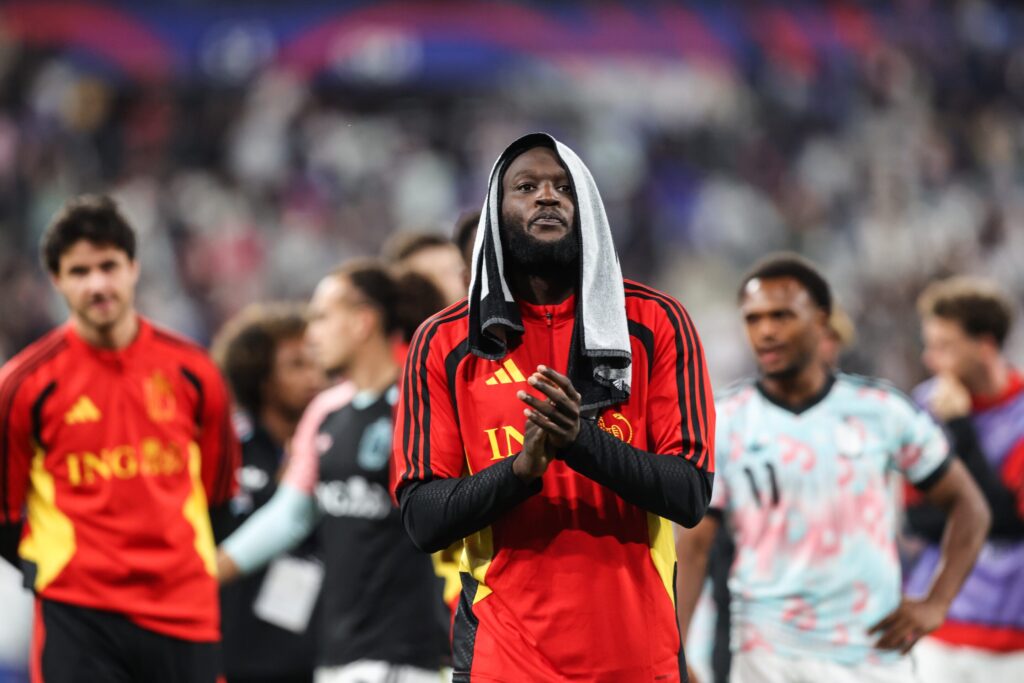
Those Belgian fans who stayed around for the full 90 minutes at Stade de France on 5 October witnessed a bitter 4-1 thrashing, marking Belgium's third defeat in five matches, and pushing them to the brink of relegation from the UEFA Nations League.
The side frequently occupying the top spot in the FIFA World Rankings over the last decade is now entering a new era. Several of Belgium's most iconic players, such as Vincent Kompany, Eden Hazard or Jan Vertonghen, have retired, while much of the burden is still shouldered by the remaining veterans on the roster.
Belgium is in need of a rebuild. The Dutch Mark van Bommel was appointed as the selection's head coach in the summer and has instilled some changes to the team's structure – but can the country ever be a European powerhouse again?
What changed since the World Cup?
Belgium's unexpected quarter-final run at the 2026 World Cup was far from straightforward. While performances wavered and a group-stage exit was on the cards for long stretches, it ultimately turned into a positive campaign thanks to a pair of strong displays in the knockout stages against Senegal and the USA respectively.
The tournament also proved an appropriate farewell for some of the longest-serving stalwarts; Thibaut Courtois, still one of the world's best in his position at 34, has not represented his country since. Axel Witsel has retired from international football, and Thomas Meunier lost his place in the team.
"Belgium’s squad has shifted," Scott Coyne, Belgian football consultant and producer of The Belgian Football Podcast, told The Brussels Times. "Kevin De Bruyne, Romelu Lukaku and Youri Tielemans remain as experienced pillars, but the majority of the squad is younger and less experienced at the absolute highest level."
All three names listed above were crucial in the Red Devils' recent win against Türkiye on 2 October: De Bruyne scored two goals, and Lukaku also got on the scoresheet later on. Tielemans chipped in with an assist.
"Belgium is in the middle of a managed, incomplete transition rather than a clean break," Coyne said. "That is both a strength and a sign that the handover is not yet complete."
'Recalibrated expectations are required'
With two wins and two losses from the opening four Nations League games, the Belgian national team finds itself in limbo. Their current third-place position would condemn them to a two-legged relegation play-off.
While previously, fans were dreaming of silver (and the team repeatedly got close to it), the perspective has now changed altogether.
"The focus has quickly shifted to avoiding relegation from Nations League Group A," Coyne said. "Supporters who treat these breaks as opportunities to assess the project will find more enjoyment and less frustration than those still measuring everything against the peak of the previous generation."
"The squad is changing; the expectations should change with it."
With a new, youthful team playing intense attacking football, it is easy for fans to see the positives for the time being. Van Bommel, having taken over the reins in late July, has already shown willingness to hand opportunities to talented youngsters.
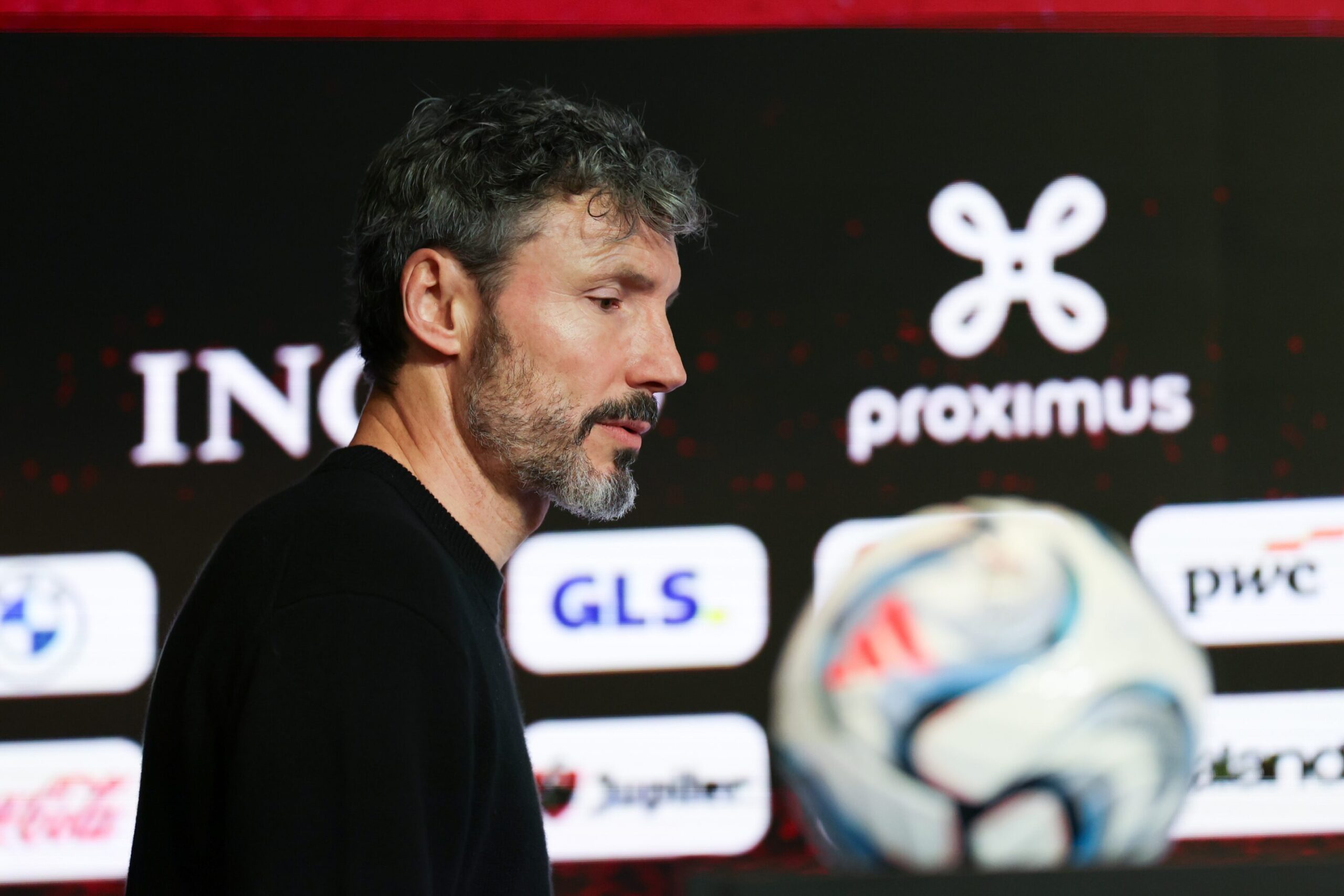
Belgium's head coach Mark van Bommel pictured during a press conference to announce the selection of the Red Devils, the Belgian national soccer team, at the national training center in Tubize, Friday 6 November 2026. Credit: Belga/Bruno Fahy
In essence, the key word remains patience. While the current squad has less players with world-class ability or potential, they could end up as a more cohesive unit than the previous iterations.
"The ‘golden generation’ was golden in talent, not in trophies," said Sutirth Mukherjee, a football scout and data advisor for professional clubs in Belgium and abroad. "A third place in 2018 remains the best finish. It would be better to develop a proper team led by a good coach rather than a bunch of talented individuals playing together."
Coyne agreed: "The current and emerging players form a solid, technically proficient, and relatively well-rounded squad capable of competing at a high level and occasionally troubling stronger sides. Some analyses even argue the next group may be more balanced overall than the star-heavy previous peak."
Without standout names and game-changers, Belgium's baseline performances might improve. The overall expectation of the team's ceiling in the future, however, is more modest. "The sheer individual difference-making quality and 'we can beat anyone on our day' aura of the 2014–2018 core has not been fully replicated," Coyne warned.
"I'd judge this team as a top-ten side with ability to reach quarter-final level rather than a title contender at this point; I don't see them among the closest Euro 2028 favourites," Mukherjee said.
Belgium 'remains a genuine hotbed'
As the Red Devils find themselves in the middle of a rebuild, the question arises: how long until we have another "golden era" to witness?
Belgium has a history of producing elite-level talent and staying ahead of the curve when it comes to youth development. But despite constant improvements and a firm focus on youngsters, it would be unreasonable to expect the country to continue churning out global stars in every age group, according to Coyne.
"Belgium produced an unusually dense cluster of world-class or near world-class players in a narrow age band roughly born 1986–1993: Hazard, De Bruyne, Lukaku, Courtois, Kompany, Vertonghen, (Toby) Alderweireld, Witsel, plus strong supporting figures.
"Another group with multiple Ballon d’Or-contender-level talents arriving simultaneously is rare for any nation of Belgium’s size; that level of clustering is inherently exceptional," Coyne said.

Romelu Lukaku. Credit: Belga
Mukherjee said the processes are in place for continued success. "Youth development is still good. [...] Belgium still exports top-tier players." The only warning sign has been the relative lack of minutes for home-grown players in the Jupiler Pro League. "If it continues, it will have a negative impact overall."
For now, the gargantuan task is replacing De Bruyne and Lukaku, both over 30 years old. The former has been the creative engine behind all of Belgium's successes in the 2010s, and has no like-for-like replacement.
Lukaku's sheer knack for goal is an especially difficult skill to coach. "Post Lukaku, no really good strikers have come up who can be considered at the very top level," Mukherjee added.
Coyne summed up the expectations for the coming years. "Another identical peak is not the base-case expectation. A strong, modern, competitive Belgium that punches above its population weight is."
