
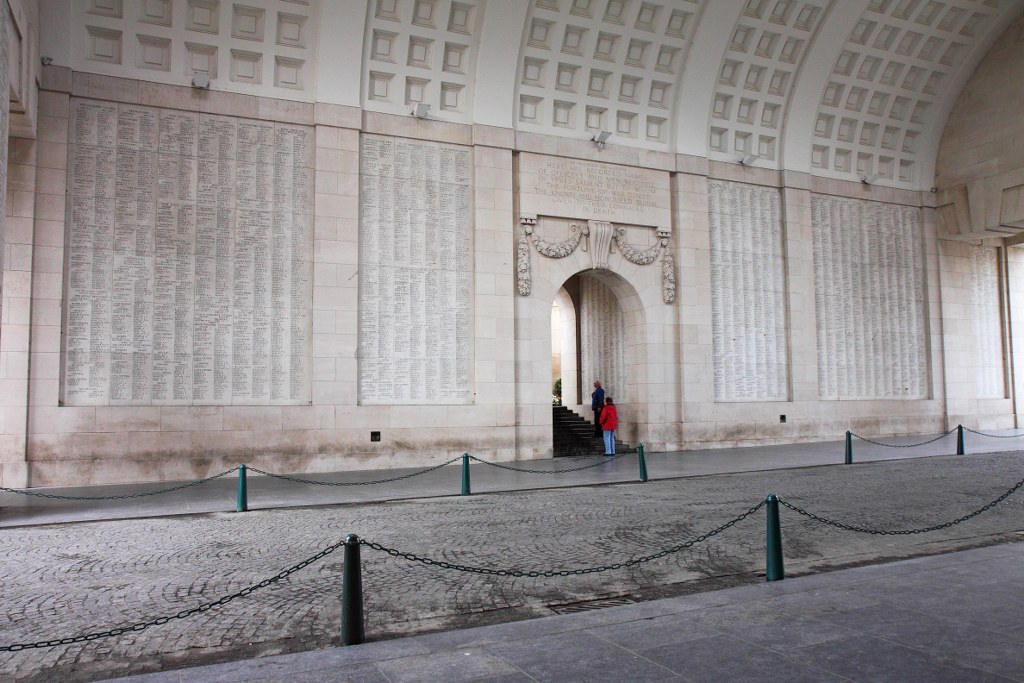
On 11 November each year, large crowds gather under the Menin Gate in Ypres to hear local buglers play the Last Post.
The monument that serves as a memorial to missing soldiers was unveiled almost one hundred years ago in the summer of 1927. Since then, buglers from the Ypres fire brigade have played almost every night at 8 pm, apart from the years when the country was under Nazi occupation.
Designed by the architect Reginald Blomfield, the massive gate carved with more than 54,000 names was not welcomed by everyone.
The poet Siegfried Sassoon, who served as a soldier during World War One, described it in a poem as a “sepulchre of crime.” But the monument has become a powerful peace symbol over the years, attracting ever larger crowds on Armistice Day.
By 2019, it was clear that the monument was in need of urgent repair. A major six-million euro renovation project was carried out with funding from the Commonwealth War Graves Commission, along with support from the UK, Australia, Canada, India, New Zealand and South Africa.
Support also came from the Flemish government, which contributed €1.6 million, and the city of Ypres, which provided a further €300,000. The Flemish government also added a green roof to contribute to sustainability. The arch also has LED lighting that softens as the Last Post is played.
There is a special ceremony tomorrow, 11 November, at 11 am to mark the exact hour when the Armistice was declared in 1918.
This is the main event of the day when ambassadors, officials and choirs attend, wreaths are laid and thousands of poppies are released to float down from the three holes in the roof of the arch.
Built as a monument to the missing soldiers of the First World War, the Menin Gate might now be seen as a monument to the victims of all wars, everywhere.
