
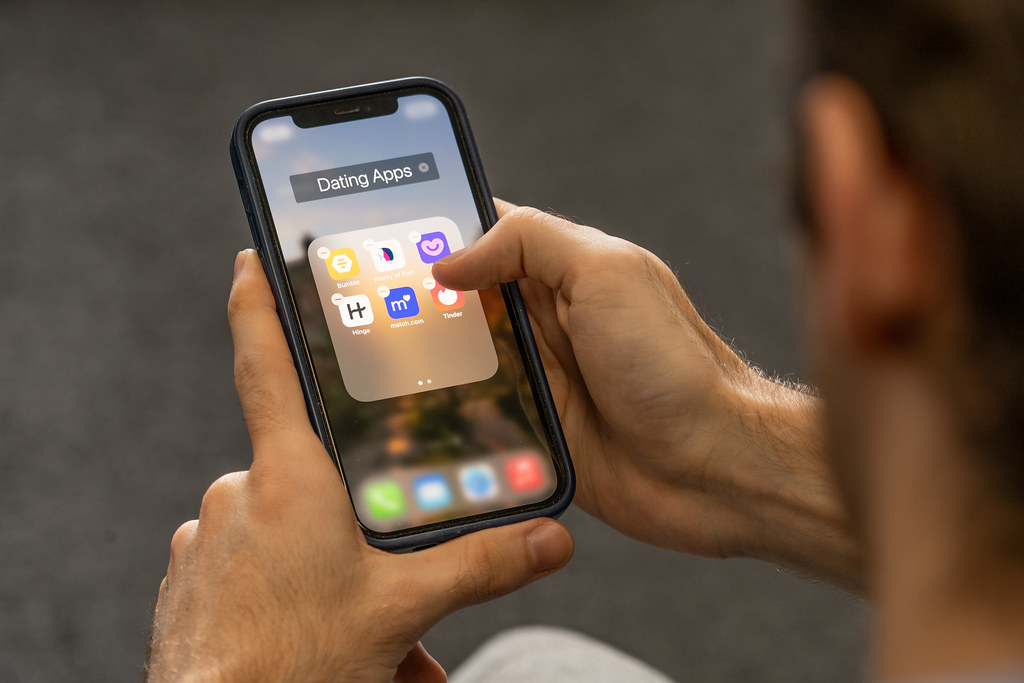
Between endless swiping, awkward first dates, ghosting and the occasional dating disaster, finding a partner can seem more exhausting than exciting.
In the era of online dating platforms, speed dating and many other matchmaking options — which in theory should make finding love easier — why has choosing the right person become so difficult? Researchers point to several different factors.
According to a 2025 study by Galaxus conducted in Switzerland, Germany, Austria, France and Italy, between 19% and 33% of respondents across the five countries reported that online dating had led to a committed relationship.
However, negative experiences were just as common, with respondents reporting bad encounters between 17% and 38% in each country. Additionally, 65% of surveyed dating apps users in Europe said they had been ghosted while 40% admitted ghosting someone themselves.
Another study conducted in 2024, concluded that 42% of surveyed Belgian singles were disappointed by dating apps, while just a bit over 42% reported they had met their partner online. If people manage to actually end up a committed relationship online, what is the secret ingredient to success?
Abundance of choice & what is the role of having standards
Among the reasons for the difficulties in settling down for a partner is the concept of choice overload. For Lara Hallam, researcher at the University of Antwerp and digital dating expert, the “choice overload paradox” is key to these challenges, because it makes people more hesitant in their decisions.
The basic idea is similar to when you are looking for a pair of jeans, but the shop just has too many options you don’t know which one would fit best. (Obviously this is an extremely simplified example, but the analogy is there.)
“There are so many people that you don’t know who to choose in this scenario,” she said. Additionally, due to the abundance of choice, people might be less inclined to settle down for minor things, Hallam noted. These details can be little habits such as keeping socks in bed or other patterns that “are not always fundamental for a relationship.”
Echoing this view, Femke Konings, an online relationships researcher at KU Leuven’s Media Psychology Lab, highlighted the wide variety of “ideal” accounts online. “Apps allow you to swipe through a seemingly endless pool of potential partners,” Konings said.
Building on this, the single choice of one partner might trigger what Konings described as “choosing is losing” dynamic. Online daters might often experience the worry that if they settle down for one person, they might not be able to explore further matches, especially if their “perfect” match is just a few swipes away.
Rather than focusing on compatibility, some daters develop specific checklists, covering everything from height and profession to appearance and lifestyle. But what happens if they don’t tick all the boxes? They get rejected? Doesn’t this sound like a recruitment process? It probably does.
This in addition to the choice overload, according to the two researchers, further complicates finding a partner to settle down with.
Digital dating app infrastructure & the creation of ‘stickerbooks’
Konings explained that the infrastructure of the dating apps themselves also is a major contributing factor to the problem. “They are designed in a way that makes people make a very quick judgement based on very limited information,” she said.
In this way, it is easy to discard people simply based on a few photos without even getting to know them. And who knows, maybe these are not their best photos, or they are not just very photogenic.
The gamification behind digital dating apps, further explained Hallam, makes it “fun” to constantly swipe, transforming the seemingly serious action of looking for a partner into a game of match or no match. The structure behind apps such as Tinder or Grindr is visual-first, focusing on photos accompanied by a short bio and several prompts that are supposed to give more information to potential matches.
“Many times, judgement is made very quickly and often it almost turns into a game,” Konings said.
The researcher explained that it’s seen as a game of how many matches people can get from “perfect profiles,” which Konings described as accounts where people present themselves in a perfect way, often sexualized and representing certain traditional gender norms.
Konings described this as a “sticker book,” in which people on digital dating apps collect the number of “nice matches.” Some people according to Konings don’t go beyond the surface level of swiping and actually try to explore potential compatibility.
While not all users approach dating apps this way, Konings argued that their design can encourage such behaviour by turning the search for a partner into a game of accumulating matches.
It’s inevitable for people who want to find matches online to escape the visual first aspect of the game. But finding a platform where they can share more about themselves and be assessed on more than just looks can be quite the help.
“Applications such as Bumble or Hinge, where you have a more elaborate profile might give you some more clues,” said Hallam.
The dating app fatigue phenomenon
Repeated disappointments can leave some dating app users feeling exhausted, frustrated, and reluctant to continue looking for a partner online. For Konings, the phenomenon of dating app burnout or dating app fatigue focuses on people who are “really fed up with their experiences.”
Similarly, due to the big pool of potential partners, daters need to be able to filter through who might be a good match for them. The seemingly unlimited pool of potential partners seems to create an unlimited amount of work for those who are on the dating scene.
Neither endlessly swiping based on photos, nor investing too much time in every match would necessarily be productive. Even dating every single person would require a big time investment, explained Hallam, noting that this could also put people off from the dating scene.
“People might think this is taking too much of their time and energy,” explained Hallam.
How do we then find the perfect match if we have to overcome so many hurdles?
Dos and don’ts
While there is no formula for a successful online dating experience, experts advise that limiting swipes and being yourself when developing your account are quite important.
Looking at the accounts and thinking whether they could be compatible and actually figuring out whether they’re interesting for you is something to also take into account. “Try a conversation with them to escape the hot or not game,” advised Konings.
She also suggested that when uploading pictures online it’s important to stay close to your true personality. “Try to be authentic, to stay close to your true self, and not have only pictures of yourself in a sexualized way if that's not your goal for the app,” she said, adding that it’s good to include some personality characteristics.
In addition, Hallam advises that instead of focusing on just attractiveness, partner seekers should look for people who share similar values and worldviews.
“I think it important to find somebody who shares the same beliefs or thought about how they want to live their life like you – whether this is having children, developing professionally or simply sharing the same faith,” she explained.
According to Hallam, another way to tackle this is having what she describes as ‘online dating literacy,’ namely the skills that allow dating app users to recognize traps, how to spot red flags, and how to stay safe. In this way, daters would be able to potentially have a better experience.
Understanding dating literacy is similar to understanding digital media or internet literacy. According to Hallam, dating literacy should focus on knowing what the potentials pitfalls and what implications our actions have on other people’s actions as well as recognising unhealthy behaviours and red flags. That for her is beneficial, especially if young people apply these methods to their future dating endeavours.
