
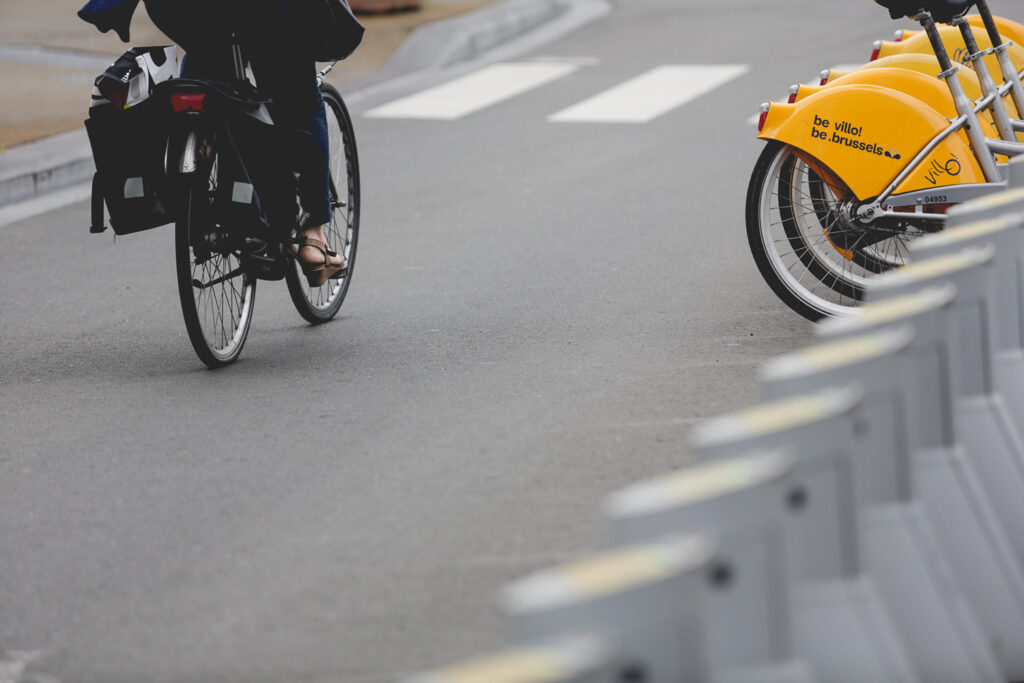
Brussels’ parliamentary Mobility Committee on Tuesday approved a new framework for shared mobility in the capital, ensuring dockless shared bicycles can remain in use until new licences issued under a future ordinance take effect in 2028.
The proposal, tabled by the ruling majority’s political groups, creates a new legal framework for dockless shared bicycles.
Shared e-scooters, however, will disappear from the streets on 1 January, while shared scooters will remain available.
If approved in a plenary session before the end of the year, the new legal framework will set clearer rules for all operators.
The ordinance sets out who may take part in public tenders, what fees operators must pay and which fines may apply.
Each applicant will be assessed according to the same criteria.
A transitional regime will also apply until May 2028, after the Council of State annulled all existing permits for dockless shared bicycles and e-scooters at the end of July, following a legal challenge by one operator.
As a result, dockless shared bicycles will remain on the streets without interruption, with a temporary cap of 2,500 bicycles per operator.
The limit is intended to prevent mandatory parking areas from becoming overcrowded.
The transitional regime announced by the government in August has now been incorporated into a text submitted in June by Groen group leader Stijn Bex, in collaboration with the other majority parties.
Until 1 May 2028, any operator meeting the conditions will be allowed to deploy up to 2,500 dockless shared bicycles, as well as shared scooters, for which one or two licences will be issued.
The text was approved by nine votes in favour - from the majority-, with three votes against, from the PTB, and three abstentions from Ecolo, Team Fouad Ahidar and the N-VA.
