
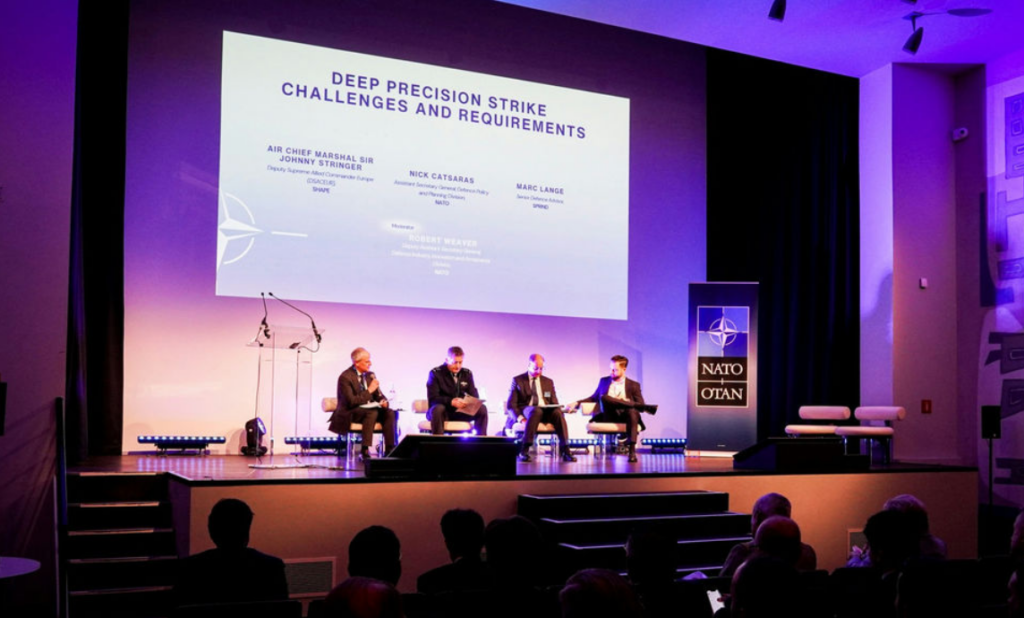
NATO brought together Allied nations, defence companies and start-ups in Brussels on Tuesday to discuss how to deliver “deep precision strike” capabilities for deterrence and defence.
The meeting followed NATO’s publication of “aggregated demand signals” at the NATO Summit Defence Industry Forum in Ankara on 7 July, the alliance said in a statement on Wednesday.
NATO describes aggregated demand signals as a way of setting out priority capability needs across the alliance.
Deep precision strike capabilities — systems designed to hit targets at long range with accuracy — are among NATO’s five priority aggregated demand signals.
NATO said the focus was on delivering capabilities that are cost-effective, interoperable and “future-proof”.
The event also sought to improve industry’s understanding of NATO priorities and military requirements, while increasing Allies’ awareness of “available and alternative solutions.”
Missiles, drones and maritime systems
Allies need a mix of capabilities ranging from cruise missiles to drones and maritime strike systems to maintain “credible deterrence and defence”, NATO said.
It also stated that industry needs secure procurement commitments, alongside the ability to produce equipment at speed and scale.
NATO highlighted multinational initiatives including its Deep Strike Drone and Ground-Based Precision Strike Capabilities High Visibility Projects, saying these are intended to centralise national requirements, support industrial planning and production over time, and speed up procurement processes.
