
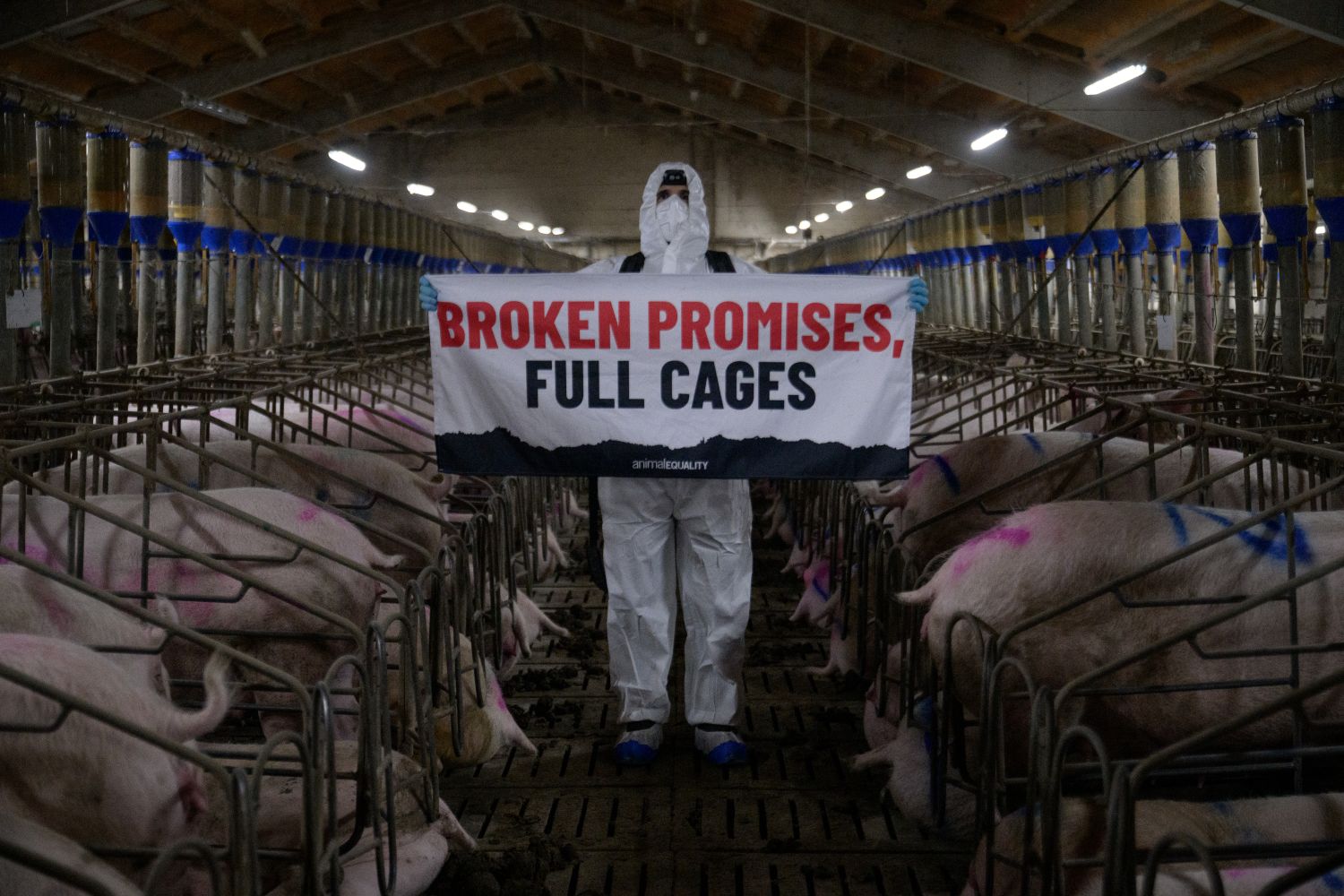
These images, which we gathered in cage farms in Spain and Italy, do not come from the past: they show the same cages the European Commission committed to eliminating in 2021.
That year, 1.4 million citizens signed the European Citizens' Initiative "End the Cage Age," and the Commission responded by promising a legislative proposal to ban cages on European farms by the end of 2023. But 2023 passed without any proposal. After delays and broken promises, July's Livestock Strategy restated this commitment. Meanwhile - for the third year in a row - the revision of animal welfare legislation has been left out of the Commission's 2027 Work Programme, with no public explanation.
This is not a lack of information, anyone working in Brussels knows exactly what a cage looks like and the problems it causes for the animals. What has been missing is political will, and to see where it went, you only need to look at who has had the most access to the European Commission's offices.
The Commission's transparency register shows that, between mid-December 2024 and March 2026, Commissioners Várhelyi and Hansen and their cabinets declared at least 46 meetings with representatives of the factory farming industry on animal welfare. With animal protection organisations, there were just seven in total. This is not an agenda detail, but a power imbalance that translates into time, arguments and priorities.
Our access-to-documents requests showed us what happened at that time. Nineteen days after the Commission took office, a coalition of factory farming associations wrote to Commissioner Hansen's Cabinet asking for a meeting. The same arguments recur throughout the minutes: costs, investment, transition periods, market impact.
Copa-Cogeca wrote to the Commission that it wants a transition of at least fifteen years, meaning cages until 2045, yet the study commissioned by that same lobby calculates that moving hens out of cages immediately would cost less than 1% of the egg sector's profits. The Commission, for its part, has confirmed that an internal file exists on the reform and on the follow-up to citizens' initiatives, but has withheld it in full. We have requested a review.
Citizens, meanwhile, have spoken out again to stop cages. More than 190,000 people responded to the Commission's own public consultation on farm animal welfare published in April 2026, and 99% of responding citizens rated ending cages for hens as important or very important. While the animal farming industry has so far been heard, citizens, by contrast, have received promises and long waits.
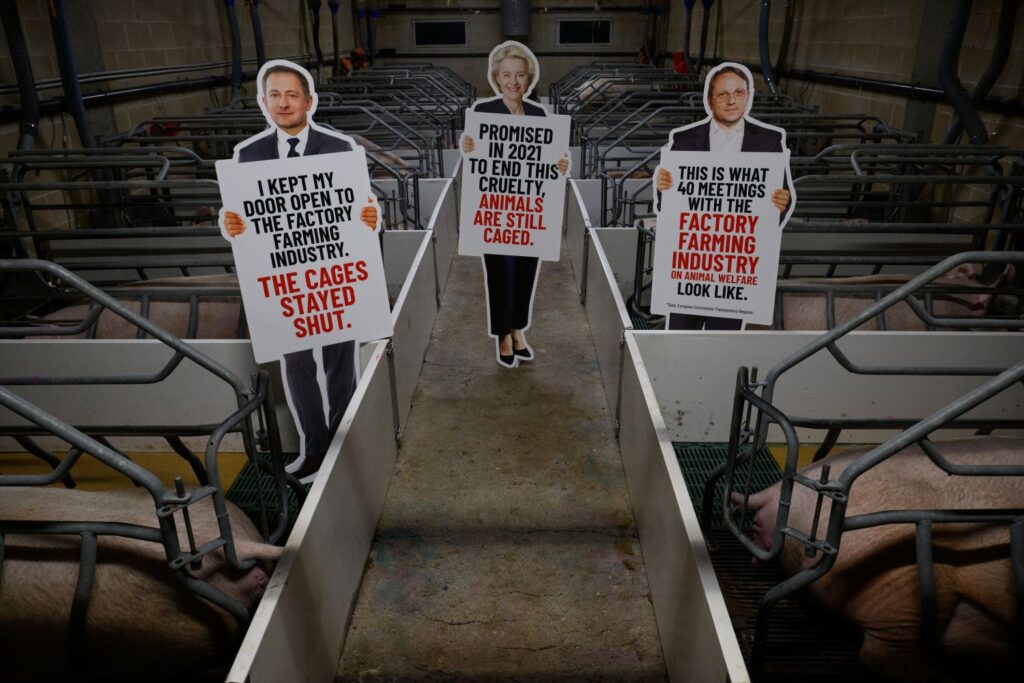
That is why we brought life-size silhouettes of President von der Leyen and Commissioners Hansen and Várhelyi into the farms, to confront them with their own commitments and responsibilities. Von der Leyen has led the Commission throughout this period, while Várhelyi and Hansen have held their portfolios since December 2024. They are the ones with the power to propose the law, and so far they have chosen not to.
Our demands are precise and are born from the promises made in 2021 by the Commission. By 2026, we are asking for an ambitious proposal that bans cages for hens, ends the killing of male chicks and imposes equivalent welfare requirements on imported products, with no dilution through long transition periods, exemptions or economic-impact arguments. By the second quarter of 2027, we are asking for a proposal to eliminate cages for mother pigs, with clear dates and timelines.
There is also a question that goes beyond animals. The European Citizens' Initiative is the only tool through which people can formally put an issue on the Commission's agenda. If an initiative that gathered 1.4 million signatures can sit idle for five years while the industry sits at the table, it is not only animals who lose credibility, but citizens' trust in the European institutions.
We will be back in Brussels from 22 to 25 November, together with activists from across Europe. And we will keep coming back until the cages are empty.
By Matteo Cupi, Vice President of Animal Equality Europe
This is a political advertisement paid for by Animal Equality (www.animalequality.org), featuring cardboard cut-outs placed inside factory farms. The depiction of the politician does not imply endorsement of the campaign or affiliation with Animal Equality
