
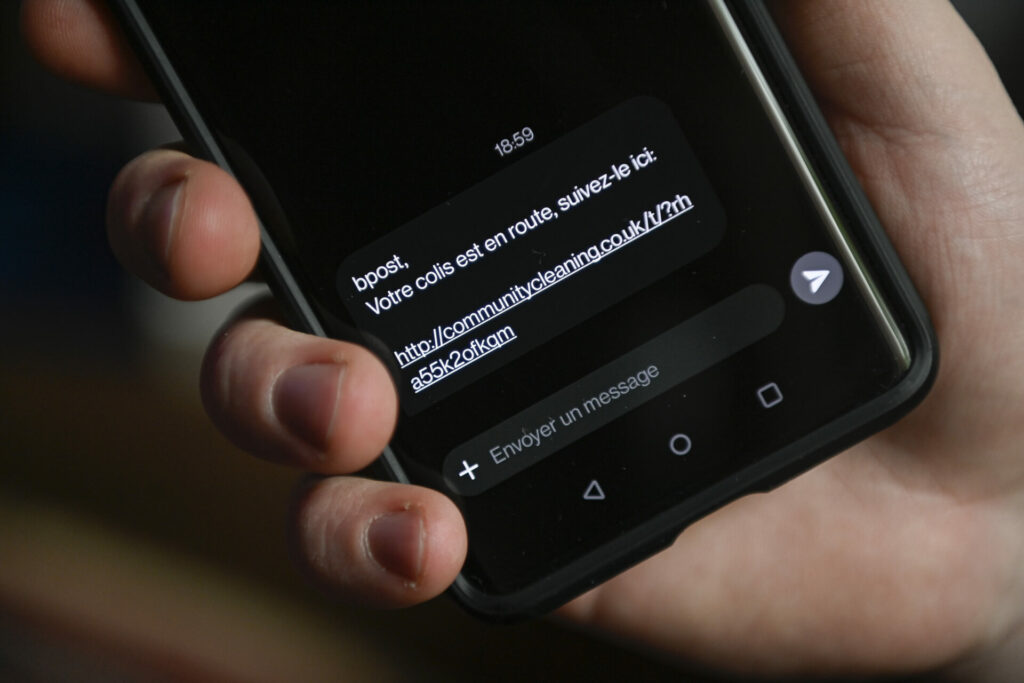
The Belgian Federal Government has announced a new action plan to combat online fraud, introducing 29 measures aimed at preventing phishing, improving fraud detection and strengthening the prosecution of cybercriminals, reports Het Laatste Nieuws.
Thousands of Belgians fall victim to phishing scams every year, sometimes losing their entire savings. In some cases, banks refuse to reimburse victims after determining that they acted with gross negligence. To combat these phishing scams, the plan includes additional security measures for the popular identification app Itsme and the creation of a national anti-phishing unit.
Presented by Consumer Protection Minister Rob Beenders (Vooruit) and Interior Minister Bernard Quintin (MR), the government’s new strategy is built around four priorities: preventing phishing attempts, detecting fraudulent activity more quickly, responding more effectively, and improving the prosecution of those responsible.
Facial recognition as a new tool
One of the key measures involves introducing facial recognition as an additional security feature for Itsme. The technology will compare a scan of the user’s face with the photograph on their electronic identity card to strengthen identity verification.
The government also plans to accelerate the blocking of suspicious websites and improve information-sharing between banks to identify fraudulent accounts more quickly. Another major initiative is the establishment of a National Phishing Unit, which will coordinate police efforts to identify criminal networks operating across Belgium.
According to Beenders, the unit has already been established and the necessary police officers have been appointed. By centralising information collected by different local police zones, investigators will be better equipped to identify fraud patterns, analyse criminal methods and establish links between suspects.
Beenders claims that Belgium is the first EU country to introduce such a comprehensive strategy against online fraud.
