
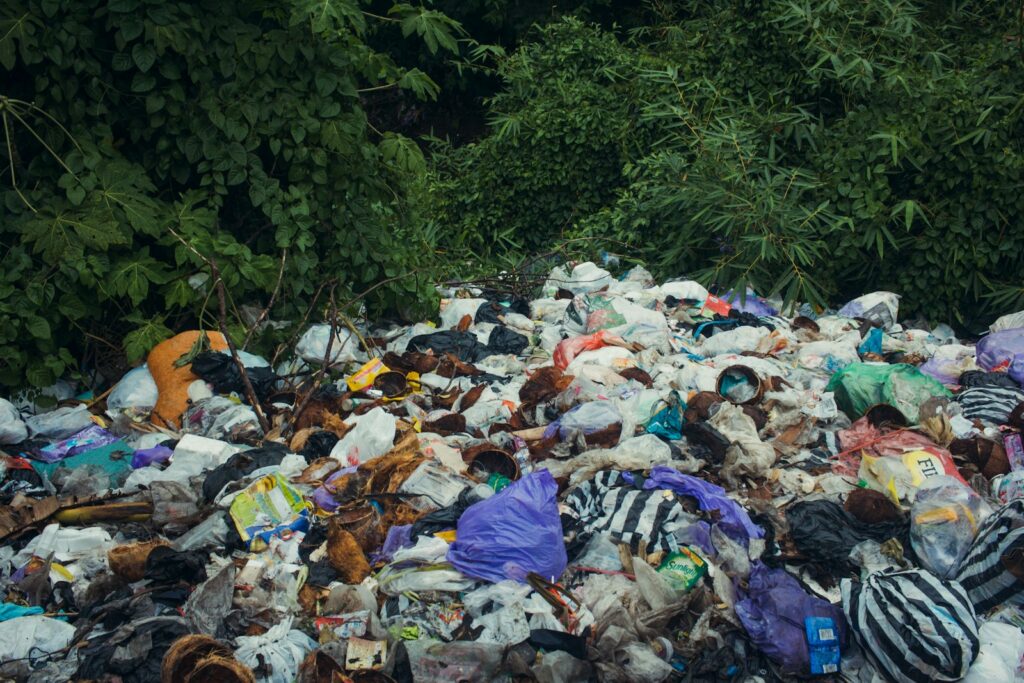
EU countries generated 2.3 million tonnes of textile waste in 2024, with households responsible for more than half.
A total of 1.4 million tonnes of textile waste were treated during the year, representing 63% of the amount generated, Eurostat reported on Thursday.
Italy produced the largest volume of textile waste at 441,736 tonnes, and also recorded the biggest amount treated and recycled at 280,680 tonnes.
France followed with 339,965 tonnes generated and 258,129 tonnes treated, while Germany generated 212,107 tonnes and treated 207,156 tonnes.
Treatment covers what happens to waste after collection, including recycling, burning, or disposal in landfill.
Most treated textiles went through recovery operations
Most textile waste treatment in the EU involved “recovery” operations — processes that extract value from waste, such as recycling or incineration that generates energy — accounting for 91% of treated textiles, Eurostat said.
Recycling made up 78% of treated textile waste, while incineration with energy recovery accounted for 13%, according to the figures. A further 8% of textile waste treatment was landfilled, while incineration without energy recovery represented 1%.
Italy and France reported the highest share of recycled textile waste at 98% each, followed by Lithuania at 87% and Slovenia at 83%.
Latvia recorded 0% recycling, while Estonia reported 5% and Romania 23% based on 2022 data.
