
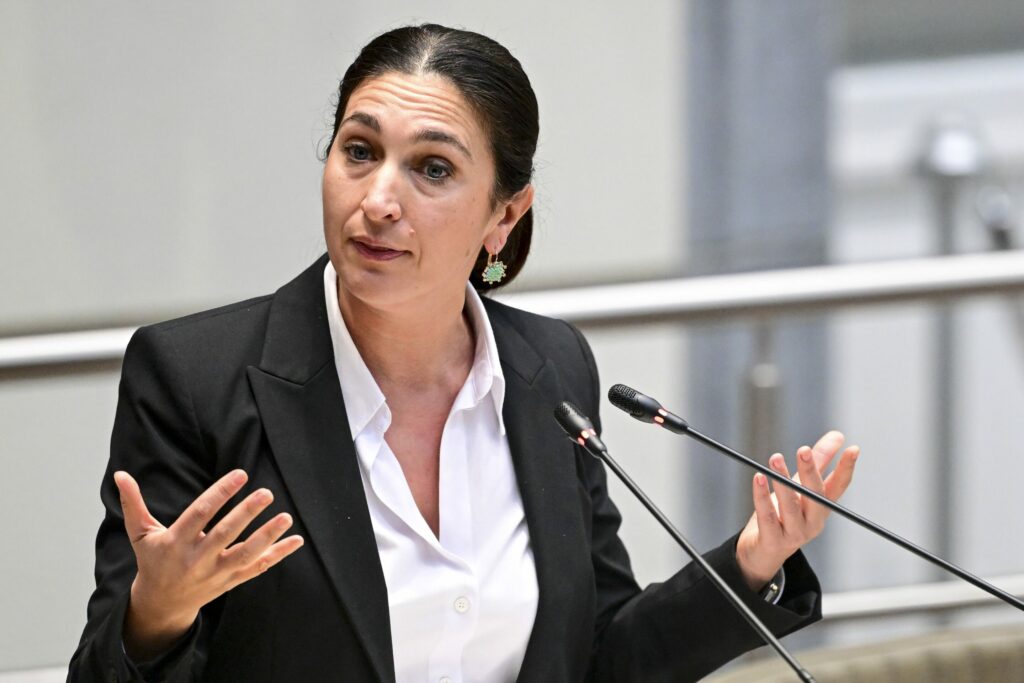
Flemish Education Minister Zuhal Demir is preparing a new action plan to encourage more secondary school pupils to choose science, technology, engineering and maths subjects after the share opting for STEM fell to its lowest level in a decade.
The Flemish government has promoted STEM through an action plan since 2012 and is aiming to raise participation to 40.25% by 2030. However, in the 2025-2026 school year, only 35.52% of pupils in Flemish secondary education chose a STEM pathway. That was down from 37.18% in 2014-2015.
The number of girls choosing STEM also remains low, particularly in dual-finality programmes, formerly known as technical secondary education, where the share is 15.93%, and in labour-market finality programmes, formerly known as vocational secondary education, where it is just 4.46%.
Related News
- Women in Brussels 'filmed without their knowledge' by men wearing Meta smart glasses
- Why Virgin's 2031 London-Brussels service could struggle to succeed
- Jobseekers in Brussels are struggling to find roles – here's why
In university-preparatory programmes, the proportion of girls choosing STEM is higher, at 48.5%.
Demir said a fresh approach is needed. “For years we have tried to get children interested in science and technology, but that alone is not enough,” she said.
She said pupils should be introduced to science and technology from an early age, including in nursery school, by letting them build things, experiment, visit companies and meet people who work with science and technology every day.
At the same time, the government will investigate why girls are less likely to choose STEM and why so much talent is lost, especially at the transition to higher education.
Since September 2026, science and technology have already been given a more prominent place in the minimum attainment targets for primary education.
