
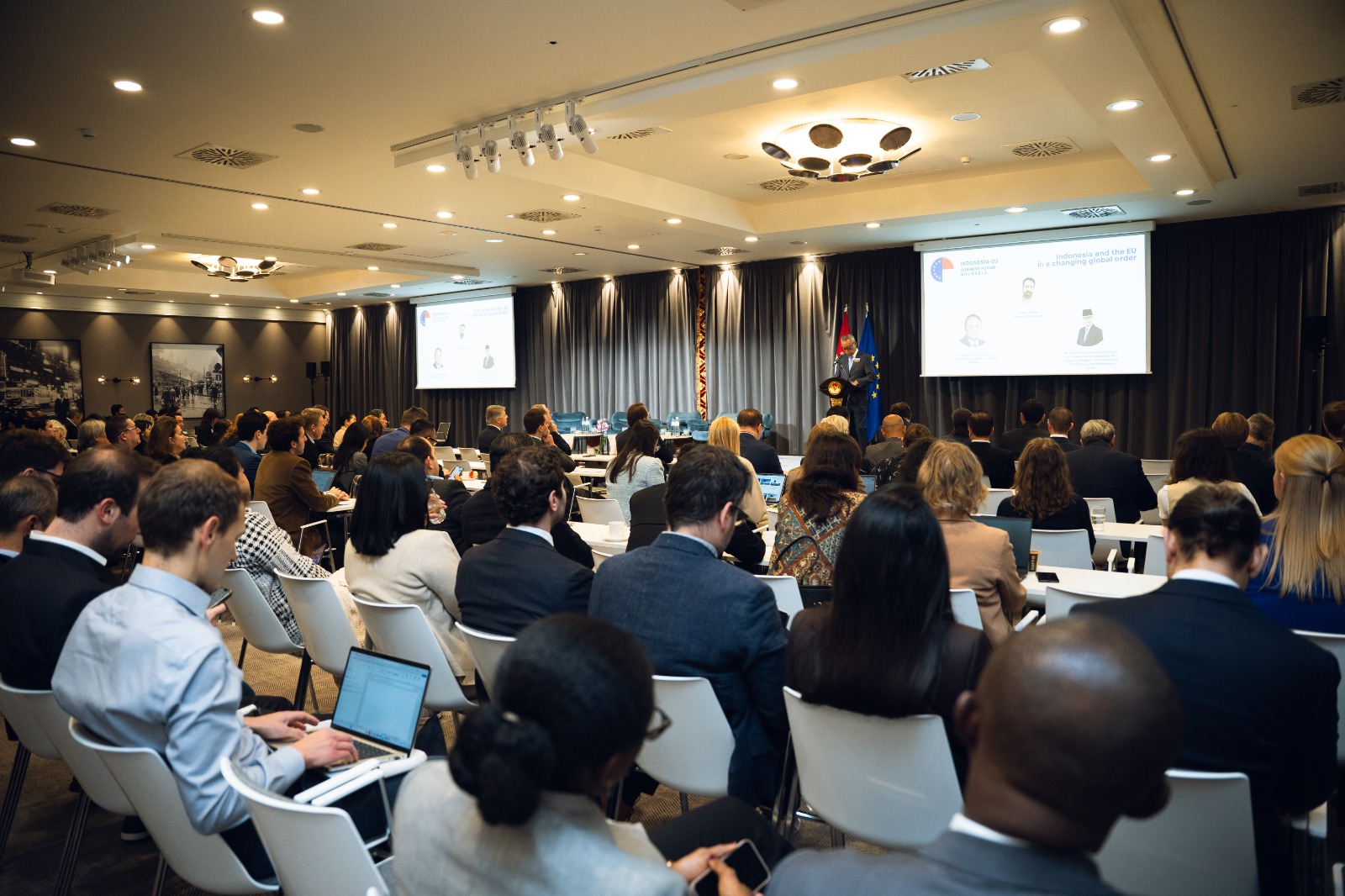
Amid continued geopolitical uncertainty, supply-chain disruptions and growing competition for critical resources, the relationship between the European Union and Indonesia is becoming increasingly important.
This was the clear message that emerged from the Indonesia-EU Business Forum, organised by The Brussels Times and the Embassy of Indonesia in Brussels on 6 November, where policymakers, business leaders and industry representatives gathered to discuss the next phase of economic cooperation between the two partners.
At the centre of the discussions was the EU-Indonesia Comprehensive Economic Partnership Agreement (CEPA) – scheduled to take effect early next year – which many speakers argued is far more than a conventional trade agreement.
Rather than focusing solely on tariffs and market access, participants repeatedly described the deal as a framework for a broader strategic partnership encompassing investment, industrial cooperation, energy transition, digitalisation and sustainable development.
“The agreement is not the end of the journey. It is the beginning of a much closer economic partnership,” emphasised Rosan Perkasa Roeslani, Indonesia’s Minister of Investment and Downstream Industry.
Europe is seeking to diversify supply chains and deepen relationships with trusted partners, and the agreement with Indonesia forms part of the EU's Global Gateway strategy to convert political cooperation into concrete investment opportunities and projects, according to Olivér Várhelyi, Commissioner for Health and Animal Welfare.
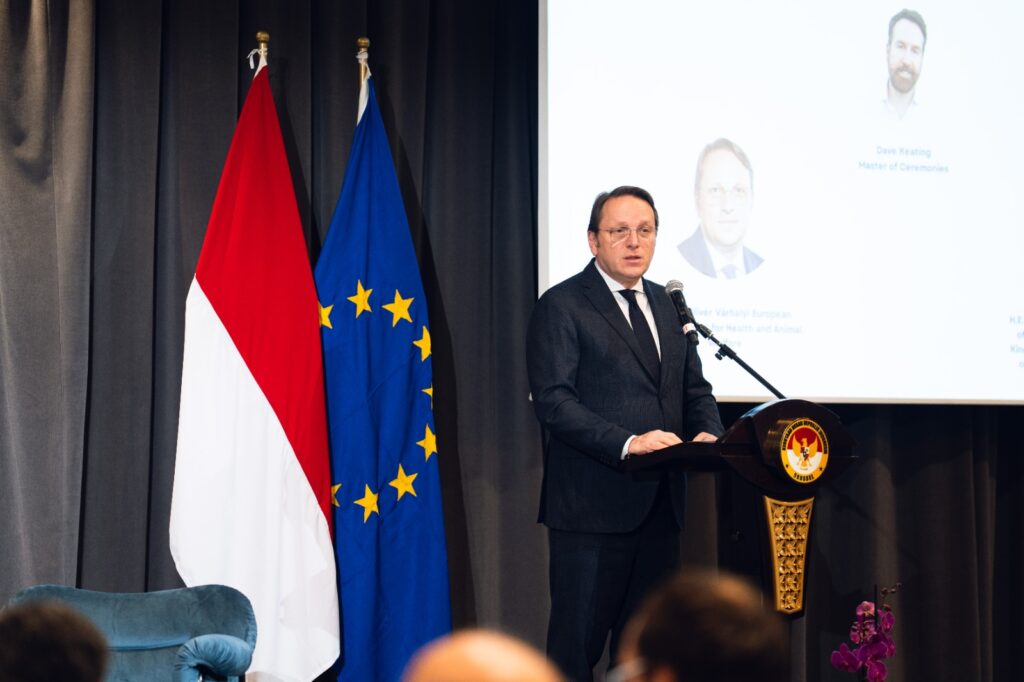
European Commissioner for Health and Animal Welfare Olivér Várhelyi delivers a keynote address at the Indonesia–EU Business Forum in Brussels on 6 November 2026. Credit: Gilles Njaheut / The Brussels Times
He noted that the success of the CEPA will be measured in its ability to generate increased trade, investment and economic opportunities for businesses and citizens on both sides. “Europe is ready to bring investment, innovation and expertise to build economic ties that benefit both of us.
“Predictable and reliable partnerships matter more than ever,” he said.
The economy of Indonesia is growing at around 5% annually, according to Andy Rachmianto, the Ambassador to Belgium, Luxembourg and the EU. However, he told the forum attendees that the country wants not just to increase its GDP but to create higher-value industries, better jobs and more opportunities for its young population.
While he said CEPA, along with the Investment Protection Agreement, will reduce tariffs on most goods traded between Indonesia and the EU, strengthen cooperation on services and investment and improve legal certainty for investors, Rachmianto nevertheless pointed out that several key challenges remain, including concerns over EU deforestation regulations, carbon policies and due diligence requirements.
But Rachmianto also welcomed the memorandum of understanding between Indonesia Battery Corporation, a state-owned holding company to build an integrated electric vehicle battery and downstream nickel industry, and Belgian battery technology company Avesta on solid-state battery technology and energy storage. The MoU, which was signed at the end of the forum, is the type of partnership that the agreement can bring about, he said.
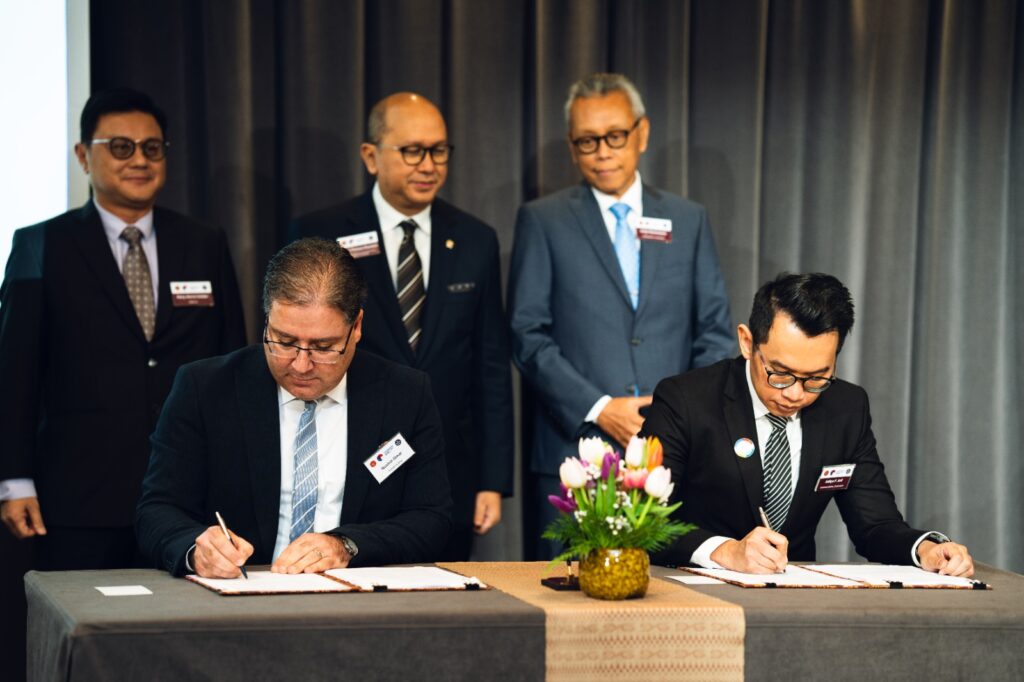
An MoU between Indonesia Battery Corporation and Belgian battery technology company Avesta was signed at the event, aiming to jointly work on an electric vehicle battery and downstream nickel industry. Credit: Gilles Njaheut / The Brussels Times
Building a strategic economic relationship
The broader significance of CEPA was reinforced during the forum’s first panel discussion on the future of EU-Indonesia economic relations. The agreement represents a “significant turning point”, according to Daneme Prasta Daniel, Secretary of the Directorate General for International Trade Negotiations, Ministry of Trade of Indonesia. “It's not only about reducing tariffs or increasing trade investment, but more importantly, transforming our relationship from a traditional trading partnership into more comprehensive, balanced and forward-looking strategic partnership.”
Nevertheless, Daniel emphasised that the 25 chapters of the CEPA commit to eliminating more than 98% of Indonesian tariffs on EU goods and vice versa in accordance with WTO rules. Both sides are demonstrating their commitment to openness and rules-based trade at a time when protectionist tendencies are becoming more common globally, he said.
Similar sentiments were expressed by Silvia Formattini, Deputy Chief Negotiator for CEPA for the European Commission. Formattini highlighted the agreement’s breadth, encompassing investment facilitation, digital trade, critical raw materials, renewable energy and supply-chain cooperation. She also emphasised that the CEPA has been tailored to reflect the economic priorities of both partners.
The European Parliament’s standing rapporteur for Indonesia in the INTA Committee Iuliu Winkler described CEPA as a “new generation” trade agreement that balances economic objectives with broader concerns around resilience, sustainability and security. For him, the agreement's greatest value lies not in legal provisions but in its potential to improve livelihoods and create opportunities. “Trade is about people. Trade is about jobs. Trade is about shared prosperity.”
However, the discussion focused on some key concerns, including the need to support the competitiveness of small and medium-size enterprises. The panellists agreed that the agreement would reduce administrative burden, improve access to information, simplify compliance requirements and help small businesses take advantage of export opportunities.
Trade minister Daniel also acknowledged existing tensions over environmental regulations, but he argued that the CEPA creates institutional mechanisms to resolve issues through dialogue rather than litigation. He stressed the importance of helping Indonesian SMEs adapt to emerging environmental and regulatory standards so that they can fully benefit from the agreement.
Investing in energy transition
Another major focus of the forum was the green transition and opportunities for cooperation towards this goal. The Just Energy Transition Partnership was repeatedly identified as a key mechanism for mobilising financing and expertise.
The importance of regulatory certainty was highlighted, with Tomas Anker Christensen, Principal Adviser to the Director-General, DG ENER, European Commission, underscoring that “a predictable regulatory environment gives investors confidence”.
Renewable energy, solar power, geothermal energy, battery storage, electricity grids and waste-to-energy systems were all cited as potential areas for European investment. For Indonesia, these technologies support industrial development and energy security. For Europe, they represent opportunities to deploy expertise, strengthen partnerships and support global climate objectives.
Muhammad Rumi Djalil, Secretary General of Indonesia Palm Oil Strategic Studies, highlighted the role of palm oil by-products and waste streams in the production of sustainable aviation fuels and advanced biofuels.
Although he acknowledged that traditional palm oil cultivation remains controversial, he argued that waste-derived feedstocks have the potential to deliver much lower environmental impacts and can support Indonesia's contribution to the clean energy transition. However, he said that compliance with EU sustainability legislation is challenging for small businesses and insisted that "regulation works best when smallholders can see both the obligations and the incentives".
According to Khairul Abdi Nasution, Director of Finance and Human Resources, Tolan Tiga Indonesia, a core subsidiary of SIPEF, sustainability has already become embedded in the operating models of many palm oil producers. “Sustainability is no longer a separate programme; it is part of how the business operates,” he said.
Nasution highlighted investments in biogas and Bio-CNG technology across the company's Indonesian palm oil mills. Five of its seven mills now capture methane for biogas production, while two have progressed to Bio-CNG, supplying renewable fuel to customers including Unilever. These projects help reduce greenhouse gas emissions while transforming waste into valuable resources.
He also pointed to efforts to improve supply-chain traceability, reuse agricultural waste and develop biochar production to enhance soil health and reduce reliance on chemical fertilisers. Sustainability investments can also make strong business sense, he said. “We are not creating new resources. We utilise the existing resources. We put the value on that,” he explained, highlighting opportunities from waste-to-energy projects and carbon-credit generation.
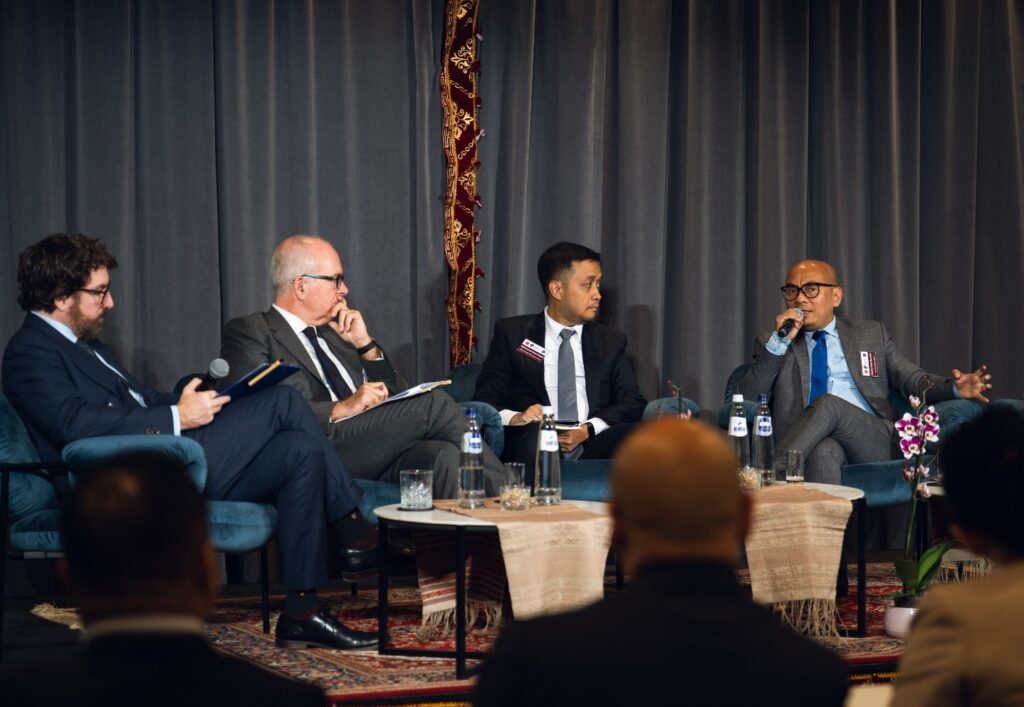
Panel with Tomas Anker Christensen (European Commission, DG ENER), Muhammad Rumi Djalil (IPOSS) and Khairul Abdi Nasution (SIPEF) discussing clean energy, sustainable connectivity and investment opportunities. Credit: Gilles Njaheut / The Brussels Times
Indonesia’s industrial ambition
A consistent theme throughout the forum was Indonesia’s determination to move beyond its traditional role as a supplier of raw materials. In his keynote address, Minister of Investment and Downstream Industry Rosan Perkasa Roeslani outlined an ambitious vision for Indonesia’s economic transformation.
Indonesia has built much of its recent growth on natural resources, but the government's goal is increasingly to retain more value domestically through processing and manufacturing. “We do not want to remain a supplier of raw materials. We want to build the entire ecosystem.”
This ambition was particularly evident in discussions surrounding critical minerals and battery production. Indonesia possesses some of the world's largest nickel reserves, making it a critical player in the global transition towards electric vehicles and renewable energy storage.
Rather than exporting raw materials, Indonesian policymakers are seeking to develop complete industrial ecosystems encompassing processing, battery production and advanced manufacturing.
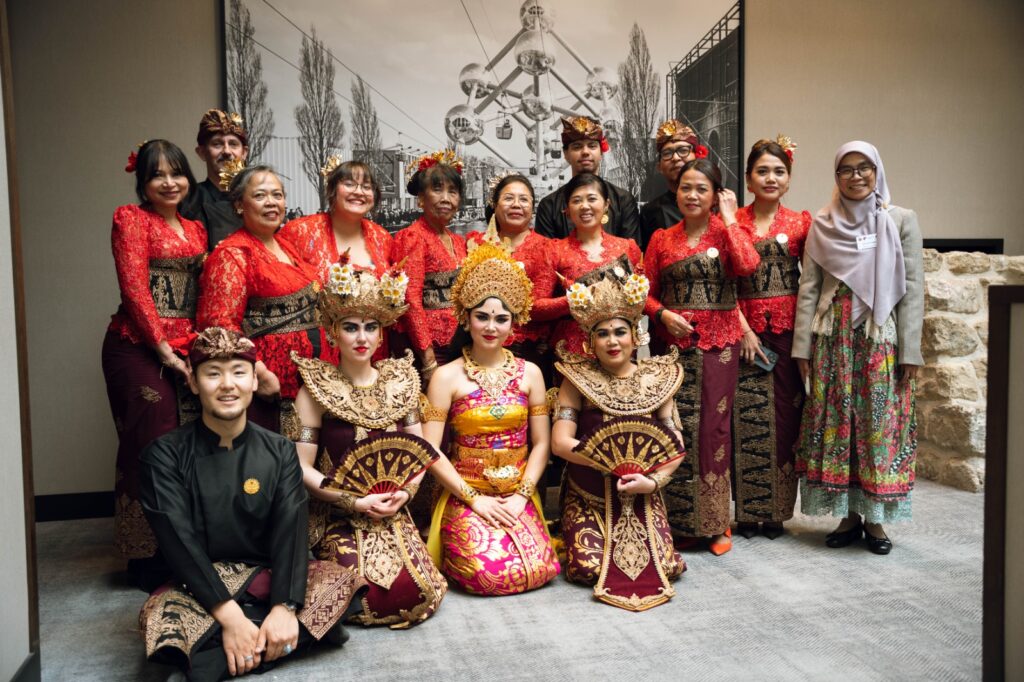
Indonesian culture and food was also celebrated during the event. Credit: Gilles Njaheut / The Brussels Times
“We want to participate across the entire battery value chain, not only to maximise value creation but also to develop technology, capabilities and human capital,” affirmed Aditya F. Arif, CEO of Indonesia Battery Corporation. He highlighted the country’s broader objective to develop domestic expertise alongside industrial capacity, ensuring that Indonesia captures a larger share of future economic value.
Indeed, Dany Amrul Ichdan, Vice President Director of MIND ID, the state-owned holding company for the mining and mineral sector, encouraged investors to look beyond traditional mining activities. “The opportunity is not just in mining itself, but in looking beyond the mine and developing downstream industries and strategic materials.”
Resilience through partnership
Digital technology emerged as another pillar of future cooperation. Olivier Bringer, Head of Unit, Policy Outreach and International Affairs, DG CONNECT, European Commission, emphasised Indonesia’s importance within Europe’s international digital strategy. While Europe seeks greater technological sovereignty, he stressed that this objective can only be achieved through deeper partnerships. “Europe's objective is not to build technological sovereignty alone, but to strengthen it through deeper cooperation with trusted partners such as Indonesia,” he said.
Cooperation opportunities span telecommunications networks, digital infrastructure, cloud services, artificial intelligence and emerging technologies, while semiconductors are widely recognised as one of the most strategic sectors in today’s economy.
Lode Lauwers Senior Vice President, Business Development & Sales, at Leuven-headquartered Interuniversity Microelectronics Centre (imec), argued that successful semiconductor ecosystems are inherently international. “No country can do everything alone in semiconductors; success depends on finding your place within the global ecosystem.” His message echoed a broader theme heard throughout the forum: resilience should be achieved through diversification and partnership, not isolation.
Indeed, a striking feature of the discussions was the degree of alignment between European and Indonesian priorities. European representatives consistently emphasised investment, technology, innovation and resilient supply chains, while Indonesian speakers focused on industrialisation, value-added manufacturing, job creation and sustainable growth. Far from being contradictory, these goals are highly complementary.
The forum highlighted that Indonesia offers scale, resources, industrial ambition and access to one of the world's fastest-growing regions. Europe, meanwhile, brings capital, technology, expertise and global market access. The challenge now is to seize the opportunities!
