
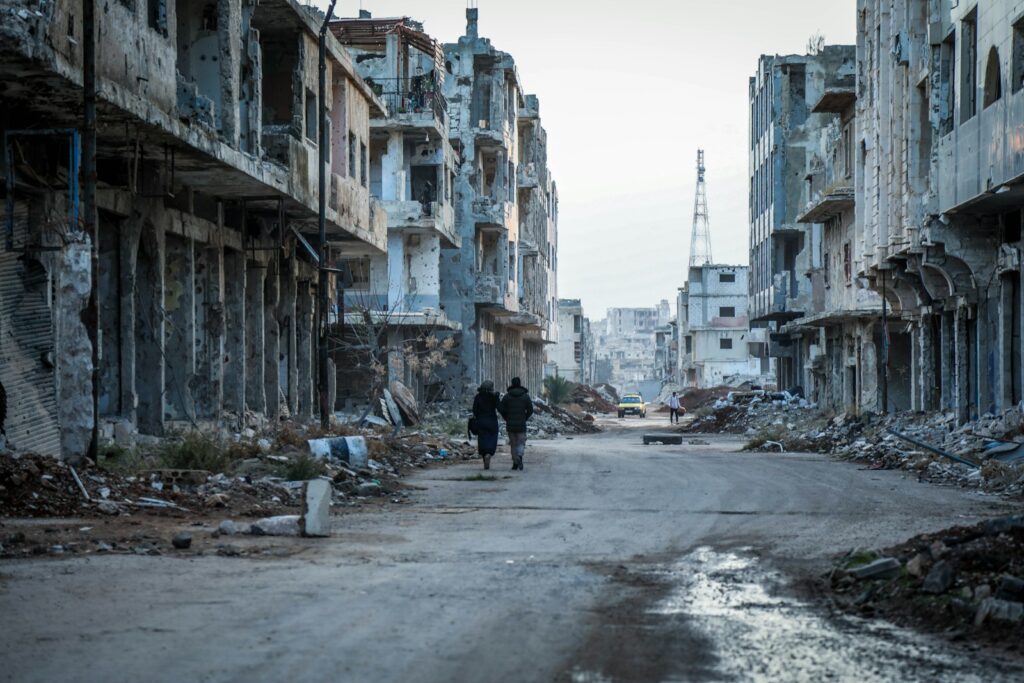
The Syria Partnership Coordination Forum has met in Damascus for the first time, bringing together the EU, Syria and international partners to discuss recovery and reconstruction.
The meeting included EU member states, the G7, Arab countries, the United Nations and international financial institutions such as the World Bank, the European Investment Bank and the European Bank for Reconstruction and Development, alongside civil society, the European Commission informed in an announcement on Tuesday.
The forum was co-chaired by Syria and the EU, and opened by the Commissioner for the Mediterranean, Dubravka Šuica, and Syria’s Foreign Minister Assaad Al-Shaibani.
Šuica launched a “Syria Technical Assistance Hub” during her second visit to the country, which the Commission said would support Syrian institutions with capacity-building and reforms.
The Commission noted that Šuica also witnessed the signing of new EU-funded contracts linked to the rule of law, an enabling business environment and support for small and medium-sized enterprises — smaller firms that employ a limited number of people.
Trade and energy talks also featured
Syria signed an undertaking to implement the EU’s Registered Exporter system during a bilateral meeting between Šuica and Al-Shaibani, the Commission said.
The system is used by the EU to certify exporters and can allow goods to qualify for preferential tariff treatment under the bloc’s Generalised Scheme of Preferences.
Šuica also visited the Deir Ali Power Plant with Syria’s Deputy Minister of Energy Ibrahim Al-Adhan and European Investment Bank Vice President Gelsomina Vigliotti, where they discussed Syria’s energy infrastructure and possible future EU engagement with other partners.
The Commission said the coordination forum was launched after the fall of the Assad regime at the end of December 2024 and following the Brussels IX Conference in March 2025.
EU support for Syria has included €175 million announced in June 2025 and around €620 million for 2026 – 2027 to support recovery and provide humanitarian aid.
“A peaceful, stable and inclusive Syria is important for Syrians, to the region and to Europe,” Šuica stated.
